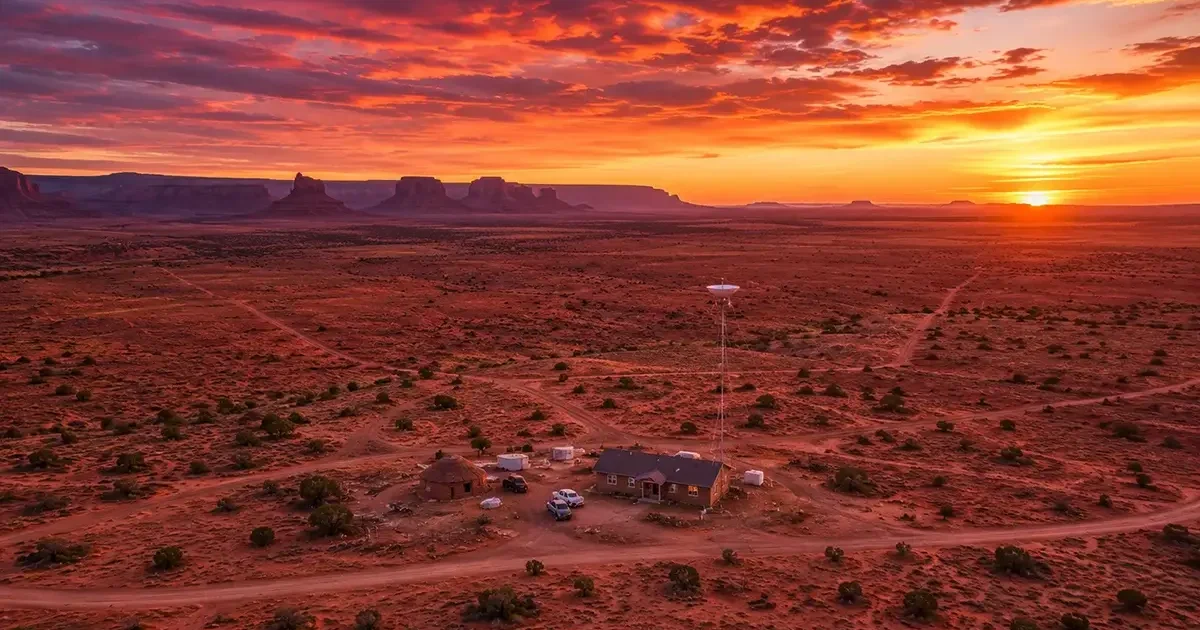
Arizona’s rural broadband landscape is defined by the state’s extraordinary geographic and cultural diversity — from the Navajo Nation’s vast high desert reservation lands that cover one-quarter of the state, to the remote ranching communities of southeastern Arizona’s Sky Islands mountain ranges, to the agricultural communities of the Salt River Valley’s rural fringe and the Colorado River’s farming corridor. Arizona has some of the most extreme rural connectivity gaps in the continental United States, driven by the combination of vast distances, sparse population on tribal and rural lands, and terrain that ranges from flat desert (ideal for wireless coverage) to rugged mountain ranges and deep canyon country (extremely challenging for any infrastructure). In 2026, Starlink’s universal coverage, the Navajo Nation’s active tribal broadband programs, and federal BEAD Program investment are creating the most significant rural Arizona connectivity improvements in the state’s history. This complete guide covers rural internet options across all of Arizona’s distinct regions.
In This Guide
- Arizona Rural Broadband Overview
- Best Internet by Arizona Region
- Starlink in Arizona
- Navajo Nation and Tribal Broadband
- Arizona Electric Cooperatives
- Arizona State Broadband Programs
- Desert Heat and Starlink Installation
- Arizona Agriculture and Connectivity
- Practical Tips for Rural Arizona Residents
- Frequently Asked Questions
Arizona Rural Broadband Overview
Arizona covers 113,990 square miles — the 6th largest state by area — with a population of approximately 7.4 million people, but most of that population is concentrated in the Phoenix and Tucson metropolitan areas. The vast rural stretches of northern Arizona (Navajo and Hopi tribal lands), eastern Arizona’s agricultural and ranching communities, and western Arizona’s river corridor and desert communities have connectivity situations ranging from marginal to nonexistent in the absence of satellite connectivity.
According to the FCC National Broadband Map, Arizona has one of the highest concentrations of unserved rural addresses of any southwestern state, driven primarily by the Navajo Nation’s 17.5 million acres of reservation land and the state’s large rural territories between the Phoenix and Tucson metro areas. The state’s unique combination of vast tribal lands, extreme desert and mountain terrain, and sparse rural population creates a broadband infrastructure challenge that requires multiple technology approaches and sustained investment to address.
Arizona has 14 rural electric cooperatives serving members across the state’s rural territory, and several have been active in broadband deployment. The state’s tribal utility authorities — particularly the Navajo Tribal Utility Authority (NTUA) — have been among the most active in deploying broadband on tribal lands using tribal resources and federal tribal broadband funding.
Best Internet by Arizona Region
Northern Arizona / Colorado Plateau (Coconino, Navajo, Apache Counties)
Northern Arizona’s Colorado Plateau — dominated by the Navajo Nation and Hopi tribal lands, the Grand Canyon, and the Flagstaff-Williams corridor — has the state’s most severe rural broadband challenges outside of tribal lands. Communities along I-40 (the Route 66 corridor) have better connectivity than remote reservation and rural communities. Flagstaff has competitive urban broadband; communities in the surrounding Coconino County rural areas depend on telephone company DSL and Starlink. The Colorado Plateau’s open landscape provides excellent Starlink installation conditions from most property locations.
Eastern Arizona / White Mountains (Graham, Greenlee, Apache Counties)
Eastern Arizona’s agricultural and ranching communities in the Safford Valley, Clifton-Morenci copper mining country, and the White Mountains recreation and timber communities have limited broadband options outside of major towns. Graham County’s Safford Valley irrigation agriculture communities have telephone company DSL of varying quality. The White Mountains’ timber and recreation communities (Show Low, Pinetop-Lakeside) have cable coverage; surrounding rural communities depend on Starlink. Eastern Arizona Electric Cooperative has been exploring broadband programs for its members.
Southeast Arizona / Sky Islands (Cochise, Santa Cruz Counties)
Southeastern Arizona’s remarkable Sky Islands terrain — isolated mountain ranges rising dramatically from desert grassland, containing some of North America’s most remarkable biodiversity — creates connectivity challenges similar to those of Colorado’s mountain communities. The Tucson metro’s southeastern fringe has cable and DSL coverage; communities in the Sulphur Springs Valley’s ranching country, Sierra Vista’s surrounding rural areas, and the remote mountain communities of the Chiricahua and Huachuca ranges depend on Starlink and limited WISP coverage.
Western Arizona / Colorado River Corridor (La Paz, Mohave Counties)
Western Arizona’s Colorado River corridor communities — Bullhead City, Lake Havasu City, Parker, and surrounding areas — have cable coverage in the main resort towns with rural areas beyond depending on Starlink and cellular. The vast western Arizona desert interior between the river corridor and the Phoenix metro has essentially no fixed broadband infrastructure. Mohave Electric Cooperative serves members in this region with broadband development programs.
Navajo Nation: The Largest Tribal Broadband Challenge in the US
The Navajo Nation — at 17.5 million acres, the largest Native American reservation in the United States by area — spans Arizona, New Mexico, and Utah and has been one of the most documented and most severe rural broadband challenges in the country. The Nation’s 170,000+ enrolled members living on the reservation have faced connectivity deficits that have been specifically highlighted in congressional testimony, federal broadband reports, and digital equity advocacy as one of the most urgent broadband equity situations in America.
The Navajo Tribal Utility Authority (NTUA) has been the primary driver of broadband development on Navajo Nation lands, deploying fiber and fixed wireless using tribal utility revenues and federal funding including USDA ReConnect grants and NTIA tribal broadband program awards. NTUA’s broadband programs have made meaningful progress in connecting Navajo communities — but the scale of the Nation’s territory and the sparse settlement pattern of traditional Navajo homesteads creates per-household construction costs that challenge even heavily subsidized deployment economics.
Starlink has been widely adopted across Navajo Nation lands as an immediate broadband solution, enabling telehealth appointments with Indian Health Service facilities, distance education for Diné students, and cultural preservation work documenting elders’ knowledge that can be shared with the diaspora Navajo community. For Navajo Nation tribal members, contact NTUA about current tribal broadband programs and any group purchasing arrangements before ordering individual residential Starlink service. NTUA can be reached through their website at ntua.com for current service availability by community.
Arizona Electric Cooperatives and Broadband
Arizona has 14 rural electric cooperatives serving members across the state’s rural territory:
- Mohave Electric Cooperative: Serving members in Mohave County’s western Arizona communities with broadband development programs.
- Sulphur Springs Valley Electric Cooperative: Serving members in Cochise County’s agricultural communities with expanding broadband programs.
- Graham County Electric Cooperative: Serving members in Graham County’s Safford Valley agricultural communities with broadband development.
- Trico Electric Cooperative: Serving members in the Tucson metro rural fringe with broadband expansion.
- Duncan Valley Electric Cooperative: Serving members in the Clifton-Morenci area with broadband programs.
Arizona State Broadband Programs
Arizona’s broadband programs are coordinated through the Governor’s Office on Tribal Relations and the Arizona Commerce Authority. Arizona received approximately $816 million in BEAD Program federal funding — a substantial allocation reflecting the scale of the state’s tribal and rural broadband gap. Arizona’s BEAD implementation specifically prioritizes the Navajo Nation and other tribal lands as the state’s highest-urgency broadband deployment zone, followed by rural agricultural and ranching communities in the eastern, northern, and western counties.
Desert Heat and Starlink Installation Considerations
Arizona’s extreme summer temperatures — regularly exceeding 110°F in the desert communities, with some locations recording temperatures above 120°F during peak summer heat events — create specific Starlink installation considerations that differ from most continental US locations:
- Dish operating temperature rating: Starlink’s Gen 3 dish is rated for operating temperatures up to 50°C (122°F) — at the upper limit of Phoenix-area summer temperatures. During the most extreme heat events, ensure the dish has some shade or north-facing orientation to reduce direct sun exposure during peak afternoon hours.
- Cable protection from UV degradation: Arizona’s intense UV radiation degrades standard outdoor cables significantly faster than in cooler climates. Use UV-resistant cable conduit or UV-rated outdoor cable for any exposed cable runs. Exposed black cable runs absorb heat that can exceed the cable’s temperature rating in direct Arizona summer sun.
- Router placement: The Starlink router must be in a climate-controlled space. Placing the router in an uninsulated garage, outdoor enclosure, or any space that reaches summer temperatures above 50°C will shorten router lifespan and may cause thermal shutdowns during peak heat periods.
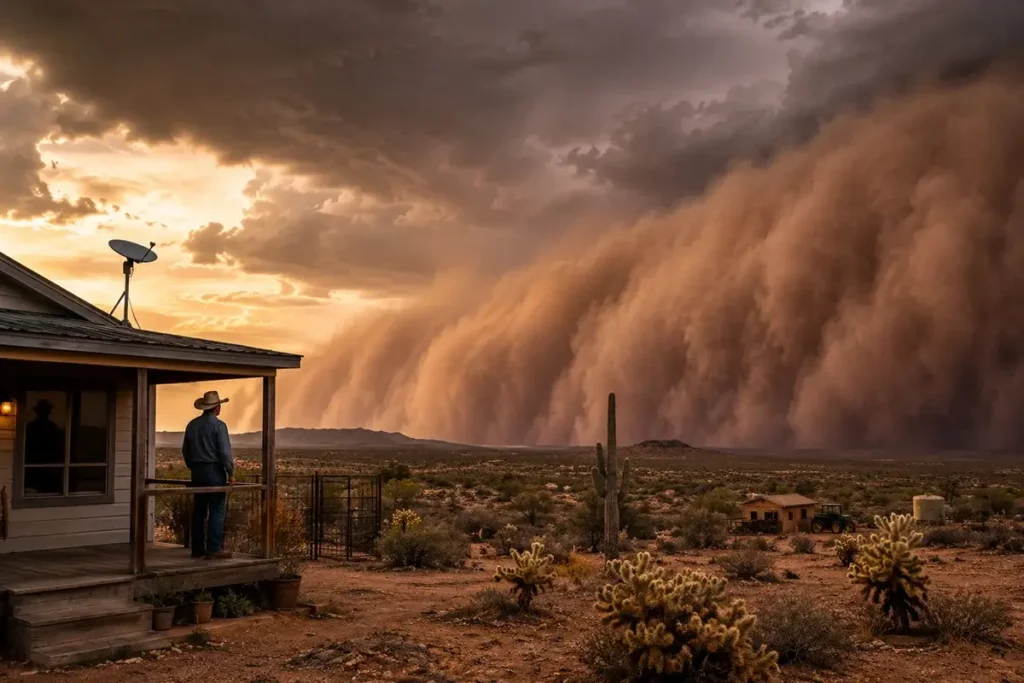
- Monsoon considerations: Arizona’s July–September monsoon season brings intense lightning, heavy rain, and dust storms (haboobs) that can affect outdoor equipment. Proper lightning surge protection on the router’s power input is important for Arizona Starlink installations. The dish’s IP56 weatherproofing handles monsoon rain; heavy dust may require periodic cleaning of the dish surface.
Arizona Agriculture and Connectivity
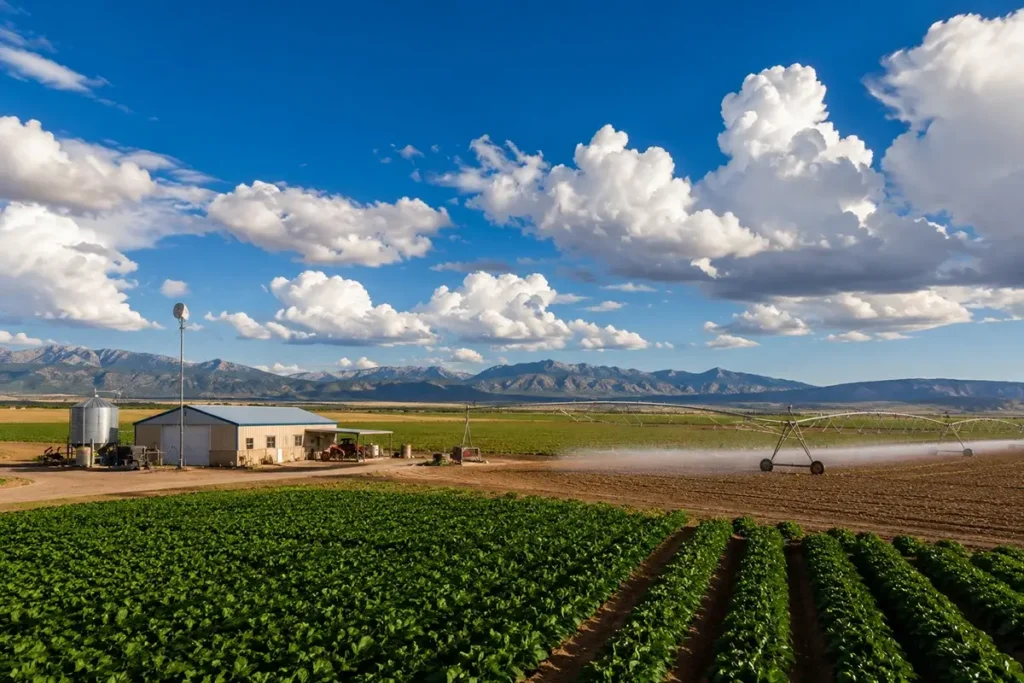
Arizona’s agricultural economy — heavily irrigated crops including cotton, alfalfa, lettuce, melons, and citrus in the Colorado River and Salt River valley systems — requires broadband for precision irrigation management, commodity market access, and increasingly for the automated irrigation control systems that maximize water efficiency in one of America’s most water-constrained agricultural environments. The Sulphur Springs Valley’s cattle ranching operations and the Safford Valley’s agricultural communities have specific connectivity needs that Starlink and electric cooperative broadband programs are increasingly addressing.
Water management connectivity is particularly critical for Arizona agriculture. The state’s agricultural operations depend on sophisticated irrigation scheduling and monitoring systems that conserve water resources in a desert environment where water costs and availability constraints directly determine farm profitability. Remote monitoring of irrigation infrastructure — pivots, drip systems, and water delivery schedules — requires reliable broadband that allows real-time adjustments from the farm office rather than requiring physical inspection of every field system. According to the Arizona Department of Agriculture’s water management resources, precision agriculture and connected irrigation management are priorities for Arizona’s sustainable agricultural future — connectivity is the enabling infrastructure for these water conservation technologies.
Practical Tips for Rural Arizona Residents
- Navajo Nation and tribal members: Contact NTUA about tribal broadband programs and group purchasing arrangements before ordering individual Starlink service. Tribal programs may offer better pricing or infrastructure appropriate to community-level deployment.
- Desert heat management: Protect cable runs from direct sun using conduit. Keep the Starlink router in an air-conditioned space year-round. During extreme heat events (110°F+), monitor dish performance — the built-in thermal management maintains operation but may reduce performance near the temperature limits.
- Sky Island mountain community residents: Sky obstruction assessment is essential for the southeast Arizona mountain communities where ridges can block northern horizon access. Use the Starlink app scanner from your property before ordering.
- Contact your electric cooperative. Arizona cooperatives including Sulphur Springs Valley Electric, Graham County Electric, and Mohave Electric have active broadband programs that may serve your area at lower cost than satellite.
Frequently Asked Questions
What is the best internet for rural Arizona outside of Phoenix and Tucson?
For rural Arizona properties beyond the Phoenix and Tucson metropolitan areas’ cable and DSL coverage zones, Starlink is the most universally available and reliably performing broadband option. The Arizona desert’s flat to rolling open terrain provides excellent Starlink installation conditions with no sky obstruction concerns at most rural property locations. Check your local electric cooperative’s broadband programs as a potentially lower-cost alternative where cooperative fiber or fixed wireless is available. Tribal members on Navajo Nation or other Arizona reservation lands should check tribal utility programs before ordering individual satellite service.
Does Starlink work on the Navajo Nation reservation?
Yes. Starlink is available throughout Arizona including across the entire Navajo Nation reservation. The reservation’s open high desert terrain provides ideal Starlink installation conditions with essentially unrestricted sky access from most property locations. The monthly cost ($120 Standard) represents a meaningful portion of household income for many Navajo families — check NTUA tribal programs and FCC Lifeline eligibility ($9.25/month discount for qualifying households) for cost assistance options available to tribal members on the reservation.
When will BEAD funding reach rural Navajo Nation communities in Arizona?
Arizona’s BEAD implementation specifically prioritizes Navajo Nation communities as the state’s highest-urgency deployment zone. However, coordinating BEAD deployment on tribal lands requires working within the Navajo Nation’s sovereign authority over its territory — NTUA is the primary partner for broadband deployment on Nation lands. Realistic timelines for BEAD-funded wired infrastructure reaching the most remote Navajo homestead communities range from 2028–2033, given the scale of the territory and the complexity of deployment in remote desert terrain. In the interim, Starlink and NTUA’s existing wireless deployments provide the most immediately accessible connectivity for tribal members.


Leave a Reply