
Vermont’s rural broadband challenge is one of the most paradoxical in the United States — a state that has been a national leader in rural broadband policy and investment for over a decade, yet still has significant unserved rural communities in the Green Mountains, the Northeast Kingdom, and the remote agricultural valleys of the state’s distinctive landscape. Vermont has the third-smallest state population in the country (approximately 650,000 residents) but has punched far above its weight in broadband policy through innovative tools like Communication Union Districts (CUDs) and sustained state investment. In 2026, Vermont’s broadband landscape is one of active progress — meaningful improvements in many communities alongside persistent gaps in the most remote areas. This complete guide covers rural internet options across Vermont’s distinct regions.
In This Guide
- Vermont Rural Broadband Overview
- Best Internet by Vermont Region
- Starlink in Vermont
- Vermont’s Communication Union Districts
- Vermont State Broadband Programs
- The Northeast Kingdom: Vermont’s Connectivity Frontier
- Remote Work and Rural Vermont
- Vermont Agriculture and Connectivity
- Practical Tips for Rural Vermont Residents
- Frequently Asked Questions
Vermont Rural Broadband Overview
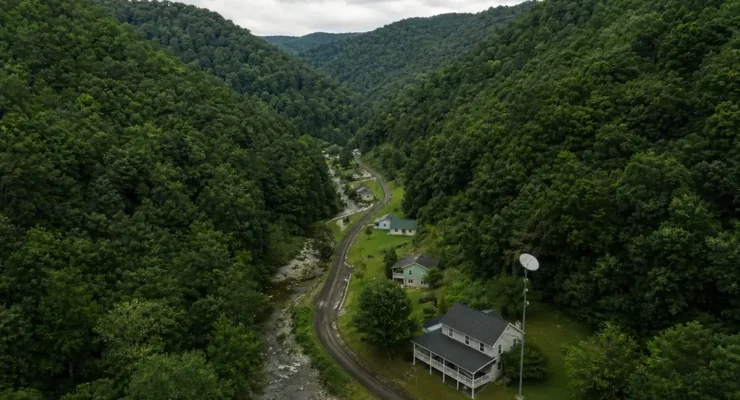
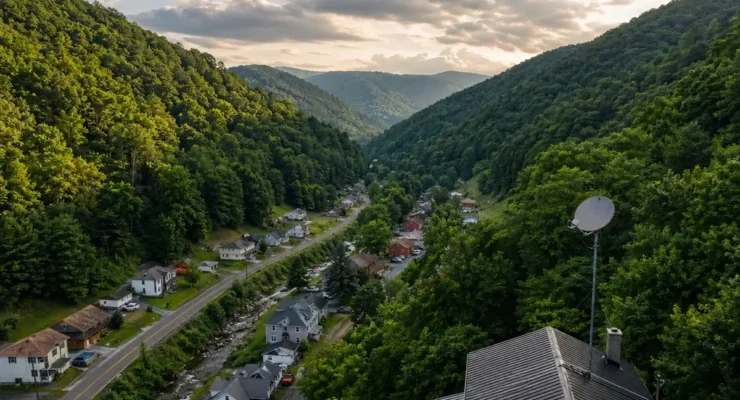
Vermont’s broadband landscape reflects the state’s character — progressive in policy, creative in institutional innovation, and confronting a physical challenge that no amount of policy innovation fully overcomes: a small, rural state with mountainous terrain, dense forest cover, and dispersed population that makes broadband infrastructure deployment expensive on a per-household basis.
According to the FCC National Broadband Map, Vermont has significant concentrations of unserved rural addresses in the Northeast Kingdom (Essex, Orleans, Caledonia counties), the Green Mountain communities, and rural agricultural towns throughout the state’s characteristic town-meeting governance landscape. Vermont has made meaningful progress reducing its rural broadband gap through sustained investment — the state is measurably better connected than it was five years ago — but the geographic challenge ensures that gaps will remain for years in the most remote communities.
Vermont has pioneered the Communication Union District (CUD) model — a unique Vermont municipal structure that allows towns to form utility districts specifically for broadband deployment, similar to the water and sewer districts that have provided these utilities to rural Vermont communities for decades. Vermont’s 12 CUDs are among the most innovative rural broadband governance structures in the country, providing a pathway for communities to take ownership of their broadband future rather than waiting for commercial ISP investment that may never arrive.
Best Internet by Vermont Region
Champlain Valley (Chittenden, Franklin, Grand Isle Counties)
Vermont’s Champlain Valley — the agricultural plain along Lake Champlain between Burlington and the Canadian border — has the state’s best rural connectivity, driven by Burlington’s urban infrastructure and the relatively flat terrain that reduces infrastructure deployment costs. Rural communities within the Burlington-South Burlington metro’s orbit have some cable and fiber coverage. Grand Isle County — the Lake Champlain island communities — has connectivity challenges driven by island geography but generally open sky access for Starlink over the lake.

Green Mountains (Washington, Lamoille, Orange Counties)
Vermont’s Green Mountain communities — ski resort towns and surrounding rural agricultural communities — have variable connectivity driven by the resort economy’s infrastructure investment in the ski communities and limited options in the surrounding hill towns. Montpelier and Barre have adequate urban broadband; rural Washington County communities outside the state capital orbit depend on telephone company DSL and Starlink. The mountain terrain creates sky obstruction considerations for some valley-bottom properties — ridge and hillside communities typically have better sky access.
Northeast Kingdom (Essex, Orleans, Caledonia Counties)
Vermont’s Northeast Kingdom — the three-county region in the state’s northeastern corner — is Vermont’s most rural and least connected territory. Essex County is the least densely populated county in New England east of Maine’s northern counties. The Northeast Kingdom’s iconic working landscape of dairy farms, forests, and small mill towns has some of the state’s most severe broadband gaps, though active CUD programs are making progress in reaching these communities. See the dedicated Northeast Kingdom section below.
Southern Vermont / Windham and Bennington Counties
Southern Vermont’s communities — the ski resort area around Mount Snow, Stratton, and Bromley, and the traditional Vermont hill towns around Brattleboro and Bennington — have variable connectivity. The ski resort communities have investment-driven infrastructure; the surrounding hill towns depend on telephone company DSL and Starlink. Southern Vermont’s proximity to Massachusetts has driven some infrastructure investment from the Springfield and Northampton metro area’s infrastructure influence.
Vermont’s Communication Union Districts: A National Innovation
Vermont’s Communication Union Districts represent the most innovative rural broadband governance approach of any US state. CUDs are formed by groups of Vermont towns that pool their resources and authority to plan, finance, and oversee broadband network construction in their member communities — similar to how Vermont’s rural electric cooperatives deployed electricity to the state’s farms and villages in the 1930s and 1940s.
Vermont’s 12 active CUDs include:
- ECFiber (East Central Vermont Telecommunication District): One of the nation’s most successful community-owned rural fiber networks, serving 45 Vermont towns with fiber broadband — a model for community-owned broadband nationwide.
- NEK Broadband: Serving the Northeast Kingdom’s most remote communities with fiber deployment using state and federal funding.
- Champlain Valley Communications Union District: Serving rural Champlain Valley communities.
- Southern Vermont Communications Union District: Serving southern Vermont communities with broadband development.
Vermont CUD members should contact their specific CUD about current fiber availability and deployment timelines — ECFiber and NEK Broadband in particular have been making significant progress and may serve your community or have deployment planned.
Vermont State Broadband Programs
Vermont’s broadband programs are coordinated through the Vermont Community Broadband Board (VCBB) and the Department of Public Service. Vermont received approximately $178 million in BEAD Program federal funding — a smaller allocation reflecting the state’s small population, but the per-capita investment is significant. Vermont’s BEAD implementation specifically prioritizes the Northeast Kingdom and Green Mountain communities with the highest concentrations of unserved addresses.
Vermont has operated state broadband grant programs since 2008, making it one of the longest-running state broadband investment programs in the country. The state’s sustained investment, combined with the CUD model’s community ownership structure, has produced measurably better rural connectivity outcomes than comparable small rural states that have relied on commercial ISP deployment alone. For current information on Vermont broadband programs and CUD contact information, visit the Vermont Department of Public Service broadband page.
The Northeast Kingdom: Vermont’s Connectivity Frontier
Vermont’s Northeast Kingdom (NEK) — Essex, Orleans, and Caledonia counties — is one of New England’s most rural and most connectivity-deficient territories. Essex County’s communities (Island Pond, Canaan, Norton on the Canadian border) have connectivity situations comparable to rural Maine’s most remote areas, with distances from major infrastructure and very sparse population that create extreme per-household deployment costs.
NEK Broadband’s active fiber deployment — funded by Vermont state grants and BEAD Program investment — represents the most significant broadband infrastructure investment in the Northeast Kingdom in the region’s history. NEK Broadband’s community-owned model ensures that the fiber network serves residents’ interests rather than investor returns, and the community ownership structure creates long-term accountability for service quality and pricing.
For NEK residents not yet within NEK Broadband’s deployment footprint, Starlink provides the most immediately available broadband. The forested terrain of the NEK creates sky obstruction considerations — use the Starlink app scanner from your property before ordering, particularly for any property in the dense boreal forest of Essex County. Open hay field and pasture properties with southern exposure typically have excellent sky access.
Remote Work and Rural Vermont
Vermont has been one of the most deliberate states in attracting remote workers to rural communities. The state’s Remote Worker Grant Program — which offered $10,000 grants to remote workers who relocated to Vermont — generated national attention and demonstrated that rural states can actively recruit the remote work demographic rather than passively waiting for market forces. While the original grant program has concluded, Vermont has embedded remote worker attraction in its broader rural economic development strategy.
For rural Vermont communities, adequate broadband connectivity is the prerequisite that determines whether remote worker attraction strategies can succeed. A remote worker considering a Vermont hilltop property asks one question before any other: can I work here? ECFiber’s community fiber in the 45 towns it serves has definitively answered “yes” for those communities — and the economic development outcomes (population stabilization, new small businesses, higher property values) are being documented as evidence for the ROI of community broadband investment in rural New England.
Practical Tips for Rural Vermont Residents
- Check your CUD first. Vermont’s 12 CUDs are among the most active community broadband organizations in the country. ECFiber serves 45 Vermont towns with gigabit fiber — if you’re in ECFiber territory, this is unambiguously the best option. Check your town’s CUD membership and current fiber availability before ordering any other service.
- Northeast Kingdom residents: Contact NEK Broadband directly about current deployment maps for your specific community. NEK Broadband’s fiber deployment is actively expanding — your area may be in an upcoming deployment phase that makes Starlink a short-term bridge rather than a long-term solution.
- Vermont winter Starlink: Vermont’s heavy snowfall — particularly in the Green Mountains and Northeast Kingdom — requires attention to dish mounting angle for snow shedding. The built-in heater handles typical Vermont snowfall. At extreme cold below -20°F (common in Essex County), monitor dish performance and keep the router in a heated space.

Frequently Asked Questions
What is ECFiber and does it serve my Vermont town?
ECFiber (East Central Vermont Telecommunication District) is a community-owned fiber network serving 45 Vermont towns in central and eastern Vermont. It is one of the nation’s most successful examples of rural community-owned broadband — delivering gigabit fiber to rural Vermont communities at competitive rates. Check ECFiber’s coverage map at ecfiber.net to see if your town is in the service area. If not, check which CUD serves your area and their current deployment status. If no CUD serves your community, Starlink at $120/month is the recommended broadband option while CUD coverage eventually expands to your area.
Does Vermont have programs to help rural residents afford internet?
Vermont’s BEAD Program implementation requires funded ISPs to offer affordable plans for qualifying low-income households. Vermont’s CUD-owned networks have often been established with affordability as a community priority — ECFiber’s community ownership structure means pricing decisions prioritize member service rather than investor returns. The FCC Lifeline Program ($9.25/month discount) applies to qualifying low-income Vermont households regardless of provider. Contact your CUD or the Vermont Department of Public Service’s broadband team about current affordability programs available in your specific community.
Vermont Dairy Farming and Precision Agriculture Connectivity
Vermont’s dairy farming economy — one of the state’s most important agricultural sectors and a defining element of the Vermont landscape — has become increasingly technology-dependent in ways that require reliable broadband. Robotic milking systems (DeLaval, Lely, GEA Farm Technologies) that are increasingly common on Vermont dairy farms require broadband connectivity for the monitoring, herd management software, and remote diagnostic access that make these systems function optimally. A robotic milker that loses internet connectivity cannot receive remote diagnostic support from the manufacturer or the farm’s veterinarian — an operational gap that can mean delayed detection of health issues in the milking herd.
Vermont’s dairy farms are also participating in precision nutrition and herd health management platforms that require continuous data connectivity to update feed recommendations based on production data, reproductive status, and health indicators for individual cows. ECFiber’s community-owned fiber network has specifically highlighted dairy farm connectivity as a key economic development benefit of its deployment — enabling technology adoption on Vermont farms that improves milk production efficiency and reduces the labor cost of managing modern dairy herds.
Vermont Ski Communities and Year-Round Connectivity
Vermont’s ski resort economy — Stowe, Killington, Sugarbush, Mad River Glen, and dozens of smaller mountains — creates connectivity demand in mountain communities that benefit from both tourism investment in resort-area infrastructure and the year-round residential population that has grown as remote work has enabled skiers and outdoor enthusiasts to live in mountain communities full-time rather than as weekend visitors only. The communities surrounding Vermont’s ski resorts have seen meaningful broadband improvement driven by the dual demand of ski tourism and remote worker residential demand — and Vermont’s CUD model has accelerated this improvement by providing a community ownership pathway for broadband deployment that doesn’t depend on commercial ISP economics.


Leave a Reply