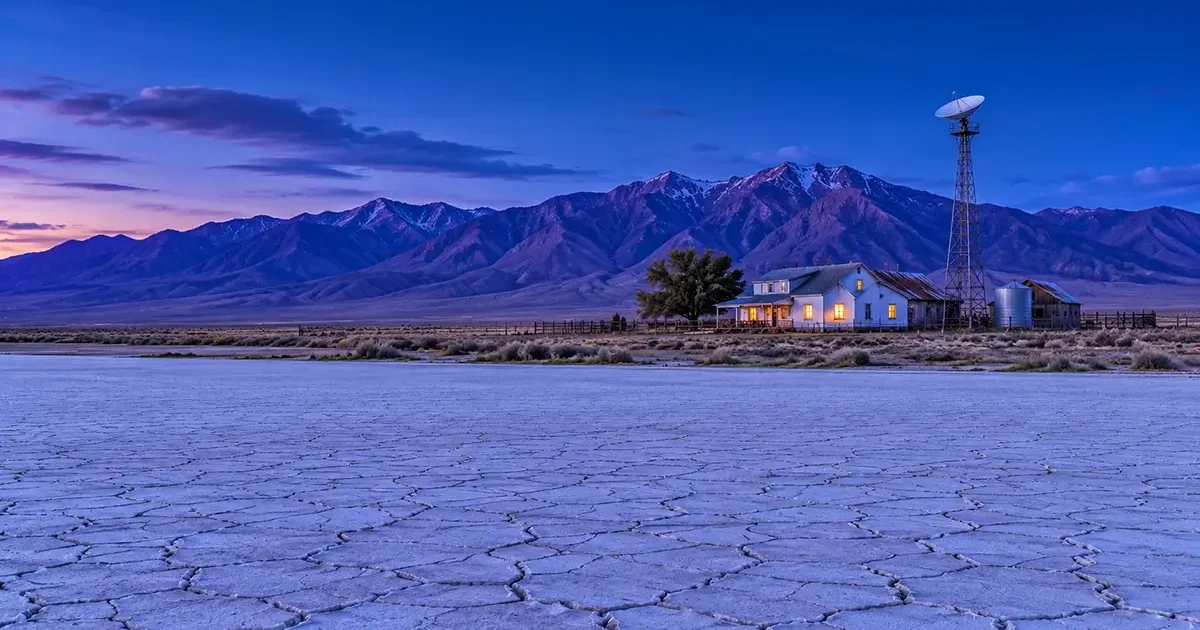
Nevada’s rural broadband challenge is shaped by the state’s extraordinary emptiness — the most urban state in the United States by percentage (over 90% of Nevadans live in urban areas), Nevada simultaneously has some of the most remote and sparsely populated rural territory in the continental United States. Once you leave the Las Vegas and Reno metropolitan areas, Nevada becomes a vast landscape of desert basin and range topography, ancient mountain ranges, and isolated small communities that may be 100 miles from the nearest city with no fixed broadband infrastructure in between. The state’s rural population — approximately 300,000 people outside the metro areas — faces connectivity challenges as severe as any state in the West. In 2026, Starlink’s universal coverage and Nevada’s BEAD Program investment are creating the most meaningful rural broadband improvement the state has ever seen. This complete guide covers rural internet options across Nevada’s distinct regions.
In This Guide
- Nevada Rural Broadband Overview
- Best Internet by Nevada Region
- Starlink in Nevada
- Nevada Tribal Communities and Connectivity
- Nevada Telephone Cooperatives and Electric Utilities
- Nevada State Broadband Programs
- Mining, Ranching, and Rural Nevada Connectivity
- Basin and Range Terrain: Starlink Considerations
- Practical Tips for Rural Nevada Residents
- Frequently Asked Questions
Nevada Rural Broadband Overview
Nevada covers 110,572 square miles — the 7th largest state by area — but contains only about 300,000 rural residents outside the Las Vegas and Reno-Sparks metropolitan areas. This extreme population concentration creates broadband infrastructure economics where commercial ISPs have essentially no incentive to invest in rural Nevada’s vast distances and sparse populations, leaving rural Nevada among the most commercially underserved rural territories in the western United States.
According to the FCC National Broadband Map, Nevada has significant concentrations of unserved rural addresses in its rural interior counties — Nye County (the third-largest county in the continental US by area at 18,147 square miles), Elko County’s vast northeastern ranching territory, Lander and Eureka counties’ mining and ranch communities, and Esmeralda County (one of the least-populated counties in the continental United States). These counties cover vast territory with small populations, creating per-household broadband construction costs that commercial deployment cannot justify at any realistic price point without substantial government subsidy.
Best Internet by Nevada Region
Northern Nevada / Elko and Great Basin Ranching Country
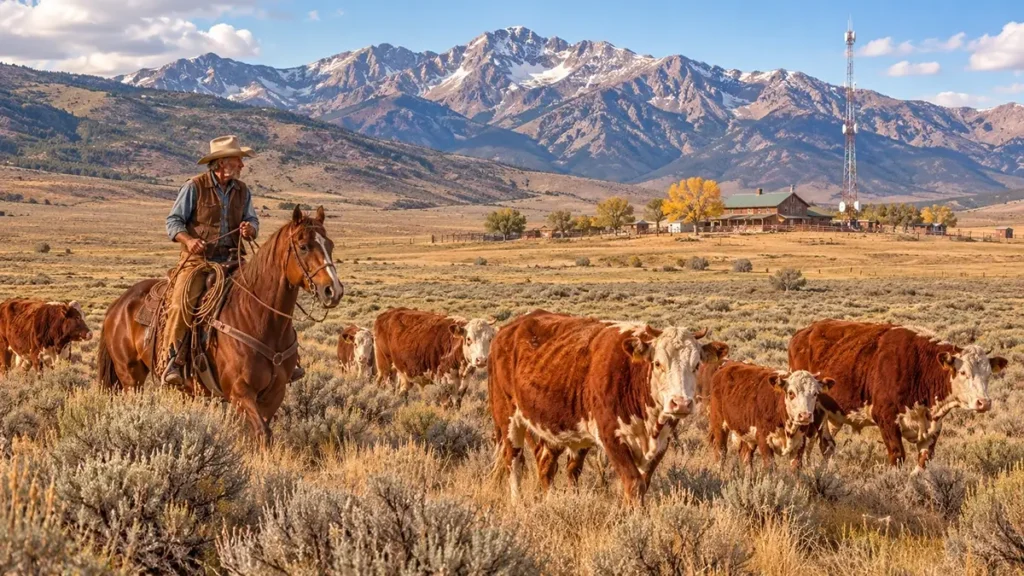
Elko County’s cattle ranching communities — the Elko-Spring Creek area and the vast ranch country extending north toward Idaho and east toward Utah — have moderate connectivity in the Elko-Spring Creek urban area with very limited options in the surrounding ranching territory. Elko has cable from Charter Communications; the vast rural ranch country beyond Elko’s immediate orbit depends on Starlink for any broadband-quality internet. The Great Basin’s wide valley floors and mountain range terrain provides variable Starlink installation conditions — open valley floors have excellent sky access, while properties on narrow valley margins with adjacent mountain ranges may need sky obstruction assessment.
Central Nevada / Mining and Ranch Country (Lander, Eureka, Nye Counties)
Central Nevada’s mining and ranching communities — Austin, Battle Mountain, Eureka, Ely, Tonopah, and the vast distances between them — have essentially no fixed broadband infrastructure beyond the limited telephone company DSL available in town centers. The rural properties between these isolated communities depend entirely on Starlink for any broadband-quality connectivity. Nye County — covering 18,147 square miles — has Pahrump (a growing exurban community near Las Vegas) with cable broadband and virtually nothing else in its enormous rural territory. The valley floor terrain throughout central Nevada provides excellent Starlink installation conditions with essentially unrestricted sky access.
Southern Nevada / Rural Clark County and Laughlin
Rural Clark County — the territory outside the Las Vegas metropolitan area — includes communities like Searchlight, Laughlin (on the Colorado River), and the remote communities of the Spring Mountains and River Mountains. Laughlin has cable broadband from its tourism economy; rural communities throughout Clark County beyond the metro area depend on Starlink and cellular coverage along highway corridors. T-Mobile and Verizon have better cellular coverage in rural southern Nevada than in the more remote central Nevada counties due to proximity to Las Vegas’s tower infrastructure.
Western Nevada / Carson Valley and Rural Washoe County
Western Nevada’s Carson Valley agricultural communities — Minden, Gardnerville, Genoa, and surrounding ranching and alfalfa farming operations — have better connectivity than most of rural Nevada, driven by proximity to the Reno-Sparks metro and the Carson City state capital. Some rural communities in the Carson Valley have cable or WISP coverage. Communities away from the main valley have Starlink as the primary option. Churchill County’s Fallon area (agricultural and naval air station community) has moderate connectivity from the military installation’s infrastructure influence.
Nevada Tribal Communities and Connectivity
Nevada has 27 federally recognized tribal nations — one of the highest counts in the West outside of Alaska and California — with reservation and colony lands spread across the state’s rural territory. Many Nevada tribal communities are small colonies adjacent to rural towns, while others have more substantial reservation lands in remote rural areas. The Walker River Paiute Tribe, the Pyramid Lake Paiute Tribe, the Shoshone-Paiute Tribes of Duck Valley (straddling the Nevada-Idaho border), and the Te-Moak Tribe of Western Shoshone Indians all have rural reservation lands with significant broadband access challenges.
Nevada’s BEAD Program implementation specifically addresses tribal lands as a high-priority deployment zone, and several Nevada tribal nations have pursued broadband connectivity using tribal gaming revenue and federal tribal broadband funding. The NTIA Tribal Broadband Connectivity Program has funded broadband projects on Nevada tribal lands across multiple grant rounds. Tribal members should contact their tribal government about current broadband programs before ordering individual satellite service.
Nevada State Broadband Programs
Nevada’s broadband programs are coordinated through the Nevada Governor’s Office of Science, Innovation and Technology (OSIT). Nevada received approximately $331 million in BEAD Program federal funding — significant relative to the state’s rural population, reflecting the scale of the rural territory requiring coverage. Nevada’s BEAD implementation priorities include the central Nevada mining and ranch communities, tribal lands, and the most isolated rural communities in Nye, Esmeralda, and Lander counties that have never had any viable broadband option.
Mining, Ranching, and Rural Nevada Connectivity
Nevada’s economy has historically been defined by two industries: mining (gold, silver, copper, lithium, and other minerals in some of the world’s most productive mineral districts) and ranching (cattle on the vast Great Basin rangelands). Both industries have specific broadband connectivity needs that Starlink is addressing in the remote locations where these operations occur.
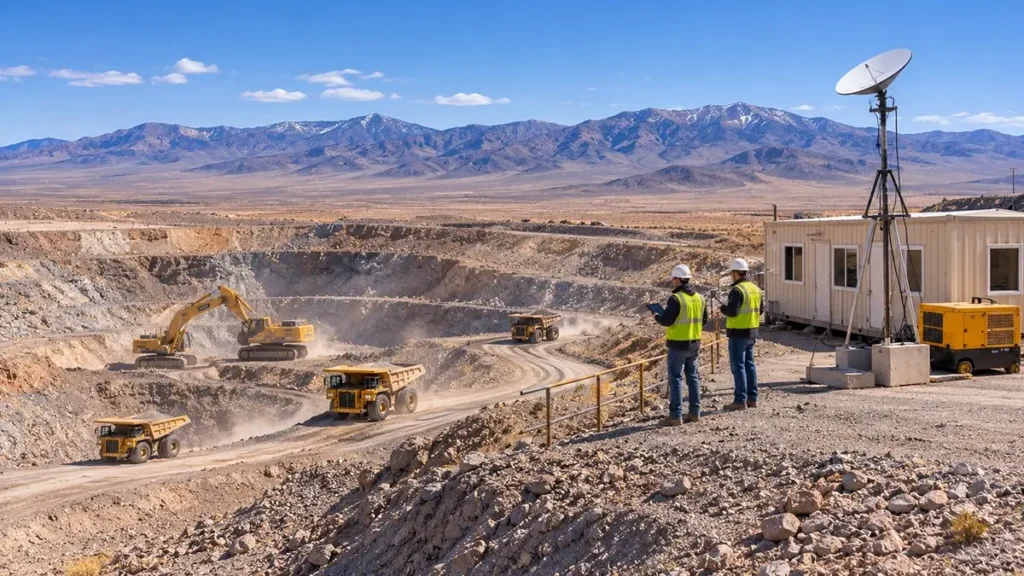
Nevada’s mining industry is experiencing a significant expansion of lithium mining in Esmeralda and Humboldt counties as demand for electric vehicle battery materials grows — Nevada has some of the world’s largest lithium deposits and is the only US state with commercial lithium production. These remote mining operations require connectivity for equipment monitoring, safety systems, communications with distant headquarters, and the administrative functions of multi-million-dollar extraction operations. Starlink Business has been deployed at several Nevada lithium and gold mining operation sites, enabling modern operational management at remote sites that previously had only satellite phone communication.
Nevada’s cattle ranching operations — some of the largest in the continental United States in terms of acreage — have specific remote monitoring needs for water infrastructure, livestock location tracking, and range condition monitoring that Starlink enables in remote Great Basin locations where no other broadband option exists. A Nye County ranch covering hundreds of thousands of acres can deploy Starlink at the ranch headquarters and use LoRaWAN sensor networks to extend monitoring capability across the entire operation range, creating connected ranch management capability that was simply impossible before the LEO satellite era.
Basin and Range Terrain: Starlink Installation Notes
Nevada’s characteristic basin and range geology — alternating wide flat valleys (basins) and parallel mountain ranges — creates a distinctive Starlink installation environment. The good news for most rural Nevada residents: the wide valley floors that contain most rural Nevada communities and ranch headquarters have excellent Starlink sky access with no terrain obstruction from the generally distant mountain ranges. Properties in the valley interior, away from the immediate mountain range margins, typically see essentially unrestricted northern sky access.
The consideration arises for properties at the valley margins — homesteads and ranches tucked against the base of the mountain ranges — where the adjacent mountains create northern horizon obstruction depending on how close the property is to the range front and how high the mountains rise. Use the Starlink app scanner for any Nevada property at the valley margin before ordering, particularly in the narrow valleys of northern Nevada where the basin width is limited. For properties in wide valleys like Smoky Valley, Railroad Valley, and the Carson Valley, sky access is generally excellent from any property location.
Practical Tips for Rural Nevada Residents
- Central Nevada residents: Starlink is your primary and often only viable broadband option. The wide valley floors throughout central Nevada deliver excellent Starlink performance in the ultra-low-density coverage cells — commonly 110–140 Mbps in the most remote areas.
- Northern Nevada ranching operations: Starlink Priority with Verizon cellular backup is the recommended configuration for large ranch operations where connectivity is critical for operational management and commercial activities.
- Nevada mining operations: Starlink Business at remote mining sites provides reliable broadband for SCADA systems, worker communications, and administrative operations. The self-installation capability enables rapid deployment at new project sites without requiring a service technician visit to remote locations.
- Nevada extreme heat: Similar to Arizona, Nevada’s summer temperatures exceed 110°F in the southern valleys. Protect cable runs from direct sun with conduit, keep the router in climate-controlled space, and monitor dish performance during extreme heat events.
Frequently Asked Questions
What is the best internet for rural central Nevada?
Starlink is definitively the best available broadband for virtually all rural central Nevada properties. The wide basin floors throughout Nye, Lander, Eureka, and Esmeralda counties provide excellent installation conditions and the ultra-low-density coverage cells deliver some of the fastest rural Starlink performance in the western United States. Order Starlink without hesitation — the hardware arrives within a week and the installation on flat Nevada desert terrain takes 1–2 hours. No waitlist, no contract, and performance that will likely be the best internet connection the property has ever had.
Is T-Mobile Home Internet available in rural Nevada?
T-Mobile Home Internet availability in rural Nevada is primarily limited to communities near the I-80, US-95, and US-93 highway corridors where T-Mobile has adequate tower density for home internet quality service. In the most remote central Nevada communities — Austin, Eureka, Ely, Tonopah — T-Mobile availability is marginal or nonexistent for home internet quality service. Check T-Mobile’s eligibility checker at your specific address, but for most rural Nevada properties beyond the main highway corridors, Starlink is the only viable broadband option.
Remote Work and Rural Nevada
Nevada’s rural communities — particularly the scenic communities near Lake Tahoe, the Carson Valley, and the communities surrounding the Reno metro in Washoe County — have seen meaningful remote worker in-migration. Nevada’s combination of no state income tax, dramatically lower rural real estate costs compared to California’s Sierra Nevada communities across the border, and Nevada’s outdoor recreation access (skiing, hiking, mountain biking, hunting, fishing) creates a compelling rural lifestyle proposition for remote workers who can maintain career connectivity via Starlink.
The Carson Valley’s agricultural communities in Minden and Gardnerville offer large rural properties at a fraction of the cost of comparable California properties across the Sierra Nevada divide — and Starlink delivers broadband performance adequate for professional remote work to these communities where cable or fiber may not yet reach. Several Carson Valley real estate agents report that Starlink availability has become a positive listing feature that remote worker buyers specifically seek, opening these communities to a buyer pool that previously required fiber or cable connectivity.
For the more remote central Nevada communities — Battle Mountain, Ely, Tonopah — remote work represents a potential economic development pathway that connectivity enables. A resident of Ely with Starlink can access remote employment opportunities with employers anywhere in the country, potentially breaking the economic isolation that has constrained rural central Nevada community development for decades. Starlink’s transformation of remote Nevada communities from digitally isolated to broadband-connected has created genuine economic development opportunities that BEAD Program investments will further expand as wired infrastructure eventually reaches these communities.
Is there internet available in remote rural Nevada ranches?
Yes. Starlink is available throughout Nevada including in the most remote Nye, Esmeralda, Lander, and Eureka county ranch properties. Nevada’s open basin and range terrain provides ideal Starlink installation conditions with essentially unrestricted sky access from any valley floor or ridge-top location. Performance in Nevada’s ultra-low-density coverage cells is frequently among the fastest rural Starlink performance in the western United States — commonly 110–145 Mbps download speeds in the most remote areas where very few users share the coverage cell capacity. Order Starlink without hesitation for any rural Nevada ranch property — the hardware arrives within a week and the installation on flat Nevada terrain takes 1–2 hours.



Leave a Reply