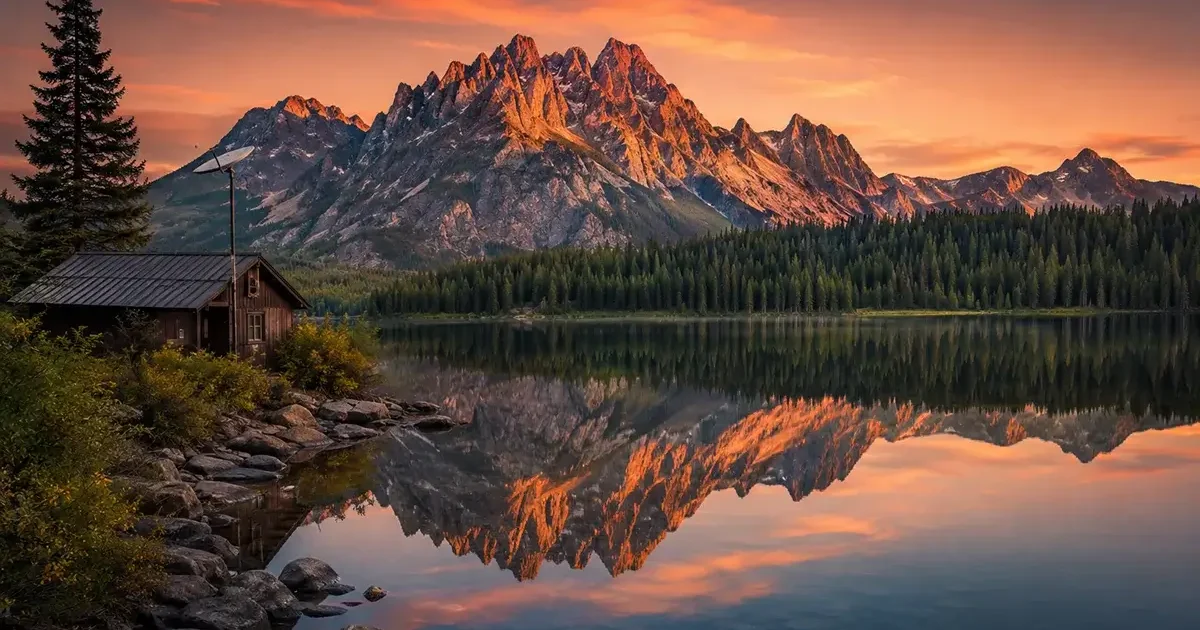
Idaho’s rural broadband landscape spans the full spectrum of connectivity outcomes — from mountain communities with essentially no viable internet option to agricultural valleys with expanding fiber programs and improving cellular coverage. As one of the fastest-growing states in the nation over the past decade, Idaho has seen its rural broadband challenges simultaneously intensify (more people moving to rural areas expecting connectivity) and attract more investment (growth driving infrastructure economics that previously didn’t exist). The state’s geography — the deep canyons and steep ridges of the Salmon River Mountains and Clearwater River country in the north, the vast Snake River Plain agricultural corridor in the south, and the remote high desert country of the state’s southeast — creates wildly different connectivity profiles across the state. This complete guide covers rural internet options across Idaho’s diverse regions in 2026.
In This Guide
- Idaho Rural Broadband Overview
- Best Internet by Idaho Region
- Starlink in Idaho
- Cellular Coverage in Rural Idaho
- Idaho Rural ISPs and Cooperatives
- Idaho State Broadband Programs
- Idaho Agriculture and Connectivity
- Connectivity for Remote Recreation Areas
- Practical Tips for Rural Idaho Residents
- Frequently Asked Questions
Idaho Rural Broadband Overview
Idaho is a state where population growth has dramatically outpaced telecommunications infrastructure investment in rural areas. The influx of remote workers and families seeking the Idaho lifestyle — mountains, outdoor recreation, lower cost of living relative to California and Pacific Northwest metros — has increased demand for rural broadband at the same time that the state’s existing infrastructure is clearly inadequate for modern needs. Communities like McCall, Sandpoint, Cascade, Stanley, and Salmon that have seen significant new resident populations arriving with remote work expectations have found their existing internet infrastructure profoundly insufficient.
According to the FCC National Broadband Map, Idaho has significant concentrations of unserved and underserved addresses in its northern mountain counties, the Frank Church Wilderness corridor, the remote southeastern high desert, and agricultural communities far from the Snake River Plain’s main commercial corridor. The state’s largest cities — Boise, Nampa, Meridian, Idaho Falls, Pocatello — have competitive broadband from cable and some fiber providers. Rural Idaho’s situation is dramatically different.
Idaho has been an active participant in federal broadband programs — the state has received multiple USDA ReConnect grants and is implementing BEAD Program funding through the Idaho Office of the Governor’s Chief Information Officer. Electric cooperatives and rural telephone companies are increasingly active broadband deployers, and Starlink has been transformative for Idaho’s most remote communities.
Best Internet by Idaho Region
North Idaho (Benewah, Latah, Clearwater, Idaho, Shoshone Counties)
North Idaho’s rugged Clearwater River country and the forested mountains of the Idaho Panhandle present serious terrain challenges for broadband infrastructure. The Clearwater River canyon — one of the deepest river gorges in North America — creates extreme shadow zones for wireless coverage. Communities along US-12 (the Lolo Pass corridor) and US-95 (Lewiston to Coeur d’Alene) have corridor coverage, but communities on side roads and in tributary valleys may have no fixed broadband option. Several north Idaho telephone cooperatives serve portions of this region. Potlatch No. 1 Federal Credit Union and North Idaho Electric have both explored broadband for members. Starlink performs well for ridge-top and slope properties with adequate sky clearance.
Central Idaho (Valley, Custer, Lemhi, Butte Counties)
Central Idaho is among the most remote and least-connected rural territory in the continental United States. The Frank Church-River of No Return Wilderness — the largest wilderness area in the lower 48 states — lies at the heart of this region. Valley County (McCall) has seen significant population growth from Boise metro migrants, driving demand for connectivity that existing infrastructure cannot meet. Lemhi County (Salmon) and Custer County (Stanley, Challis) have essentially no fixed broadband infrastructure in most of their territory. Starlink has been transformative for residents of these communities — often providing the first-ever broadband-quality internet connection. Cellular coverage from any carrier is essentially limited to the main valley towns; vast stretches of US-93 and Idaho Route 75 have no cellular coverage at all.
Snake River Plain (Twin Falls, Jerome, Minidoka, Cassia Counties)
The Snake River Plain’s agricultural communities have better connectivity than Idaho’s mountain regions due to flatter terrain that facilitates infrastructure deployment and the economic incentive of serving Idaho’s most productive agricultural areas. Twin Falls and its surrounding communities have cable internet; rural agricultural properties beyond the cable plant depend on telephone company DSL, rural WISPs, and Starlink. The flat terrain of the Snake River Plain makes Starlink installation completely straightforward — essentially no obstruction concerns from ground level anywhere in the plain. T-Mobile Home Internet is available at some Snake River Plain addresses along major highway corridors.
Southeast Idaho (Bannock, Power, Caribou, Bear Lake Counties)
Southeast Idaho’s agricultural and high desert communities have a mix of telephone cooperative DSL in communities and Starlink for rural properties between towns. Pocatello anchors this region with cable and some fiber service. Caribou County and Bear Lake County — bordering Utah and Wyoming — are among the state’s most sparsely populated and have limited telecommunications infrastructure. The wide-open high desert of southeast Idaho provides excellent Starlink sky views with no terrain obstruction concerns.
Idaho Rural ISPs and Cooperatives
- Idaho Telephone Company: Serving rural communities in Adams and Valley counties with telephone and DSL service, exploring broadband upgrades.
- Custer Telephone Cooperative: Serving Custer County communities including Challis with telephone and broadband services in one of Idaho’s most remote counties.
- Consolidated Telephone Company: Serving rural central Idaho communities with telephone and broadband.
- Midvale Telephone Exchange: Serving Washington County rural areas in western Idaho.
- Clearwater Power Company: Idaho electric cooperative exploring broadband opportunities for members in Clearwater and Lewis counties.
- Fall River Electric Cooperative: Serving eastern Idaho members in Fremont and Madison counties with electricity; exploring broadband deployment.
Idaho State Broadband Programs
Idaho’s broadband programs are coordinated by the Idaho Office of the Governor’s Chief Information Officer (OCIO). Idaho received approximately $584 million in BEAD Program federal funding — a significant per-capita allocation reflecting the state’s combination of rural geography and significant unserved populations.
Idaho has also been active in the USDA ReConnect Program, with several Idaho telephone cooperatives and WISPs receiving ReConnect grants for rural broadband infrastructure across multiple funding rounds. The Idaho OCIO maintains a broadband resources webpage for residents seeking information about state programs and funded deployment projects. Rural Idahoans can check whether their address is within a funded project area and contact the relevant ISP for service timelines.
Idaho Agriculture and Connectivity
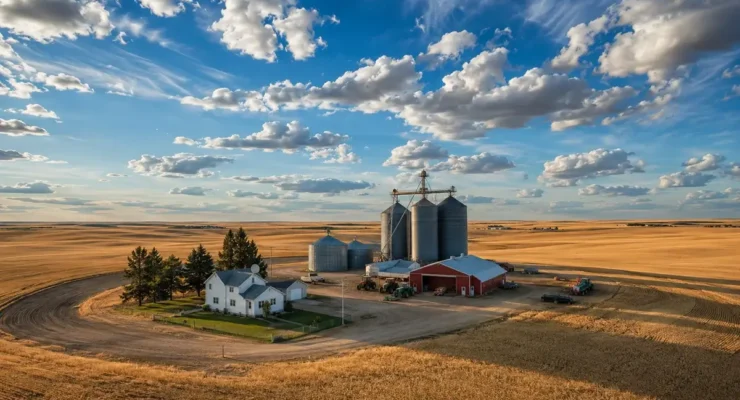
Idaho agriculture — potatoes, dairy, beef, sugar beets, hops, trout aquaculture — is among the most productive per-acre agricultural output of any western state. Modern Idaho farms are increasingly dependent on precision agriculture technology, and the connectivity needs of agricultural operations drive much of the rural broadband demand in the Snake River Plain and surrounding agricultural communities.
Starlink has been widely adopted by Idaho farm operations that lack access to cooperative fiber or cable. The flat Snake River Plain terrain makes Starlink installation effortless and performance consistently strong in the low-density agricultural coverage cells. For farm operations requiring real-time GPS correction signals, in-cab cellular data from the major carriers (Verizon has the strongest rural Idaho agricultural corridor coverage) remains the most reliable approach for in-field operations, with Starlink providing the farmstead broadband backbone for office operations, precision ag software sync, and equipment telematics data management.
Connectivity for Remote Idaho Recreation Areas
Idaho’s outdoor recreation economy — hunting, fishing, rafting, skiing, hiking — increasingly intersects with the broadband question. Outfitters and guide services operating in remote Idaho wilderness need connectivity for booking, communication, and emergency coordination. Remote Idaho lodges and vacation properties need internet for guests who expect connectivity even in wilderness settings.
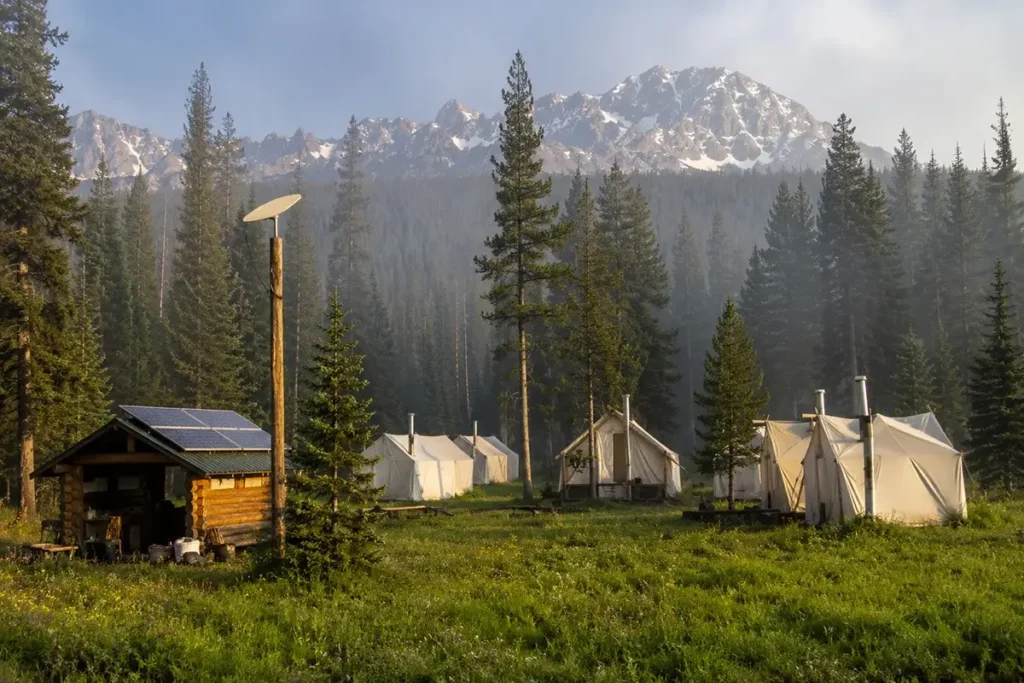
Starlink has enabled internet connectivity at remote Idaho locations that previously had none — float camps on the Middle Fork of the Salmon, hunting lodges in the Frank Church Wilderness, backcountry ski yurts, and remote guest ranches throughout central Idaho. The Starlink dish requires power (available from solar in most off-grid recreation settings) and a clear sky view (most Idaho wilderness camping areas have excellent sky access). This combination of solar-powered Starlink has become the standard connectivity infrastructure for Idaho’s premium remote recreation industry.
Practical Tips for Rural Idaho Residents
- Central Idaho mountain residents: Starlink is almost certainly your only viable broadband option. Most central Idaho ridge and valley properties have excellent sky access. For very narrow canyon properties (Stanley Basin immediate canyon bottom, Salmon River gorge bottom), sky obstruction assessment is important — but most Idaho mountain properties have far better Starlink conditions than comparable Appalachian properties due to the generally wider canyon and valley profiles.
- Snake River Plain agricultural residents: Your flat terrain makes Starlink effortless and performance excellent. Check T-Mobile Home Internet eligibility along major highway corridors before investing in Starlink hardware — the $70/month savings is meaningful over time.
- McCall and Cascade residents: Valley County’s population growth has increased Starlink coverage cell density, which can affect peak-hour performance. Check Starlink’s in-app obstruction data and evening performance data from your specific location before relying on it for business-critical remote work.
- Contact your electric or telephone cooperative. Several Idaho cooperatives are in active planning or deployment stages with BEAD funding. Even if broadband isn’t available today, it may be coming within 1–2 years — making Starlink a bridge technology rather than a permanent solution for some Idaho rural addresses.

Frequently Asked Questions
Does Starlink work in the Frank Church Wilderness area of Idaho?
Starlink works at any Idaho location with adequate sky clearance and power, including within and adjacent to the Frank Church-River of No Return Wilderness. Wilderness regulations prohibit permanent structures and some installations within designated wilderness boundaries — check with the relevant Forest Service ranger district about specific installation regulations for your property’s location relative to wilderness boundaries. Off-wilderness properties adjacent to the Frank Church generally have excellent Starlink conditions with wide sky views typical of Idaho’s mountain landscape.
What is the best internet for a McCall, Idaho vacation home?
For McCall-area vacation homes, Starlink is the most reliable option given the limited fixed broadband infrastructure in Valley County beyond McCall’s immediate city limits. Check the Starlink app obstruction scanner from your specific property — McCall’s Lake Cascade area properties generally have adequate sky access. For the occasional-use cabin scenario, Starlink Roam with service pausing during unoccupied months balances connectivity quality with annual cost. Read our full guide to vacation home internet for more seasonal use strategies specific to Idaho mountain cabin situations.
When will rural central Idaho get better broadband options?
Central Idaho’s extraordinary remoteness makes fiber economically very challenging even with substantial BEAD subsidy. Realistic timelines for wired broadband in communities like Stanley, Challis, and remote Lemhi County range from 2029–2035 or later for the most isolated communities. Fixed wireless expansion from improved cellular towers may bring some improvement more quickly along major corridors. For central Idaho residents who need broadband today, Starlink is the definitive solution — it works right now and will continue to improve as SpaceX deploys additional satellites improving rural coverage cell performance.
Wildfire and Emergency Connectivity in Rural Idaho
Idaho experiences significant wildfire activity annually across its southern and central regions, and wildfire events create specific rural connectivity challenges. Cellular towers can lose power or be destroyed in fire events; Starlink dishes can be temporarily affected if smoke is extremely dense overhead (minor, typically brief); and road closures during fire events can prevent technician access for repairs. Rural Idaho residents in fire-prone areas should consider resilient connectivity infrastructure:
Running both Starlink and a Verizon cellular backup connection provides maximum wildfire-season resilience. Verizon FirstNet — the emergency responder network — maintains higher network priority for critical communications during emergencies. A Peplink dual-WAN router automatically switches between connections during any single-source outage. A UPS on all internet equipment maintains connectivity through the brief power fluctuations common during fire-related grid stress events. And a Garmin inReach satellite communicator provides emergency communication entirely independent of any infrastructure, operable even in the most extreme fire event scenarios where all conventional communication infrastructure has failed.
Winter Connectivity in Rural Idaho
Idaho winters — particularly in the northern mountains and higher elevation communities — create specific Starlink performance challenges. The dish’s built-in heater handles normal Idaho snowfall reliably. During the most severe events (heavy wet snow accumulations, multi-day storms), the heater may need assistance maintaining clear dish surface. Idaho-specific winter tips:
- Mount the dish at an angle that promotes snow shedding — 10–15 degrees from vertical is often sufficient
- In areas of very heavy snowfall (McCall, Sandpoint, higher elevation north Idaho properties), consider a dish location with partial afternoon sun exposure that provides natural snow melt assistance
- Use the Starlink app’s outage tracking to understand your specific location’s weather-related performance pattern before deciding whether a different mounting configuration would help
- For properties that lose power during winter storms, a properly sized UPS (600VA or larger) keeps the Starlink dish and router running through minor outages and gives you time to connect a generator before a longer event
For more complete guidance on winter Starlink performance and cold-climate installation considerations, see our Starlink accessories guide which covers winter-specific mounting and cable management for northern-state installations.

Leave a Reply