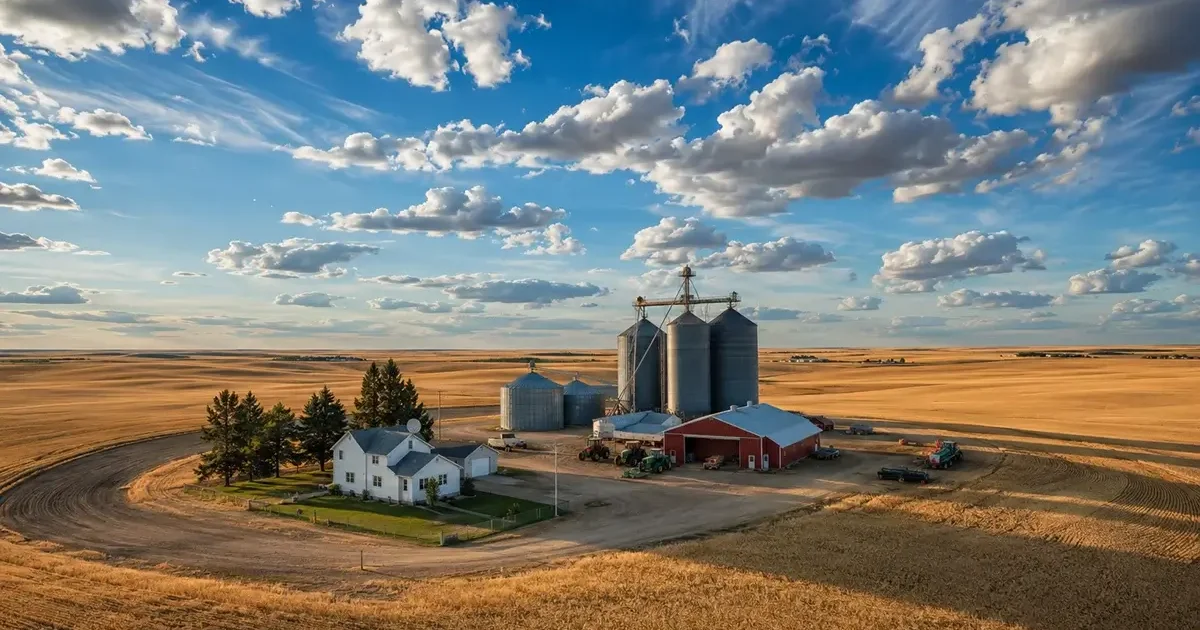
Washington State presents one of America’s most striking rural internet paradoxes. The greater Seattle metro is a global technology hub with some of the world’s most sophisticated digital infrastructure — Amazon, Microsoft, and Boeing call this region home. Yet drive three hours east across the Cascade Mountains and you’ll find rural communities in the Columbia Basin, the Channeled Scablands, and the Palouse wheat country where broadband access is as limited as anywhere in rural America. Drive north up the North Cascades corridor and you’ll find communities accessible only by gravel road where the nearest cell tower might be 30 miles away. Washington’s rural broadband challenge is real, urgent, and increasingly addressed by a combination of Starlink, aggressive electric cooperative broadband programs, and significant BEAD Program investment. This comprehensive guide covers every rural internet option across Washington State’s extraordinarily diverse geography.
In This Guide
- Washington State Rural Broadband Overview
- Best Internet by Washington Region
- Starlink in Washington State
- Cellular Coverage in Rural Washington
- Washington Public Utility Districts and Broadband
- Washington State Broadband Programs
- Connectivity on Washington Tribal Lands
- Agriculture and Connectivity in Eastern Washington
- Practical Tips for Rural Washington Residents
- Frequently Asked Questions
Washington State Rural Broadband Overview
Washington’s rural broadband situation is shaped by its exceptional geographic diversity — the Cascade Mountains divide the state into dramatically different western and eastern halves, each with distinct terrain, climate, economy, and telecommunications infrastructure. Western Washington’s rural communities, while geographically challenged by the Olympics and Cascades, benefit from proximity to the Seattle metro’s infrastructure investment influence. Eastern Washington’s agricultural and ranching communities are essentially separate from the western high-tech economy in infrastructure terms.
According to the FCC National Broadband Map, Washington has significant concentrations of unserved addresses in eastern Washington’s rural agricultural counties (Ferry, Pend Oreille, Lincoln, Adams, Garfield, Asotin), the North Cascades corridor communities, the Olympic Peninsula’s more remote reaches, and the rural portions of central Washington between the Cascade foothills and the Columbia River.
Washington State has a unique institutional asset for rural broadband: its 28 Public Utility Districts (PUDs) — publicly owned utilities serving both electricity and, in many cases, fiber broadband — are among the most advanced rural broadband deployers of any US state. Several Washington PUDs have built and operated fiber broadband networks since the early 2000s, giving Washington some genuine rural broadband success stories alongside its persistent connectivity gaps.
Best Internet by Washington Region
Olympic Peninsula (Clallam, Jefferson, Mason Counties)
The Olympic Peninsula’s rural communities — surrounded by the Olympic Mountains, the Hood Canal, and the Pacific Ocean — have limited infrastructure options driven by geographic isolation and relatively small population. Port Angeles and Bremerton have cable service; rural peninsula communities depend on telephone company DSL, some WISP coverage, and Starlink. Jefferson County PUD has been exploring broadband programs. The peninsula’s wet marine climate creates year-round overcast conditions but minimal impact on Starlink performance — LEO satellite signals penetrate cloud cover normally, with only the heaviest precipitation events affecting performance briefly.
North Cascades and Wenatchee Region (Chelan, Douglas, Okanogan Counties)
The North Cascades corridor and Wenatchee region have a mix of connectivity. Chelan County PUD has been one of Washington’s more active PUD broadband operators. The agricultural communities of Okanogan and Douglas counties — apple, cherry, and wine grape country — have telephone company DSL in communities and Starlink for rural farmsteads. Okanogan County’s northern communities near the Canadian border are among Washington’s most remote, with very limited telecommunications infrastructure. The Columbia River valley between Wenatchee and Chelan has moderate connectivity; the Methow Valley and upper Okanogan communities have minimal options beyond satellite.
Eastern Washington Palouse and Columbia Basin (Whitman, Lincoln, Adams, Grant, Columbia Counties)
Eastern Washington’s wheat farming Palouse and Columbia Basin dryland farming communities have connectivity profiles driven by the agricultural economy. Grant County PUD has a mature broadband program serving members in the Columbia Basin irrigation district. The Palouse counties (Whitman, Garfield, Columbia, Asotin) have telephone company DSL along main corridors and Starlink for the agricultural communities between towns. The flat-to-rolling Palouse terrain provides excellent Starlink sky views with minimal obstruction concerns. T-Mobile Home Internet availability is moderate along the US-195 corridor connecting Spokane to Lewiston.
Northeast Washington (Ferry, Stevens, Pend Oreille Counties)
Northeast Washington’s Colville National Forest country — bordering Canada and Idaho — is among the most isolated rural territory in the state. Ferry County in particular has severe broadband access deficits. Pend Oreille PUD has explored broadband for members. The densely forested terrain of the Selkirks creates more sky obstruction challenges for Starlink than eastern Washington’s open agricultural land — but most northeast Washington ridge and valley properties have adequate sky access for Starlink from appropriate mounting locations. Cellular coverage from any carrier is extremely limited in Ferry and northern Pend Oreille counties.
Washington Public Utility Districts and Broadband
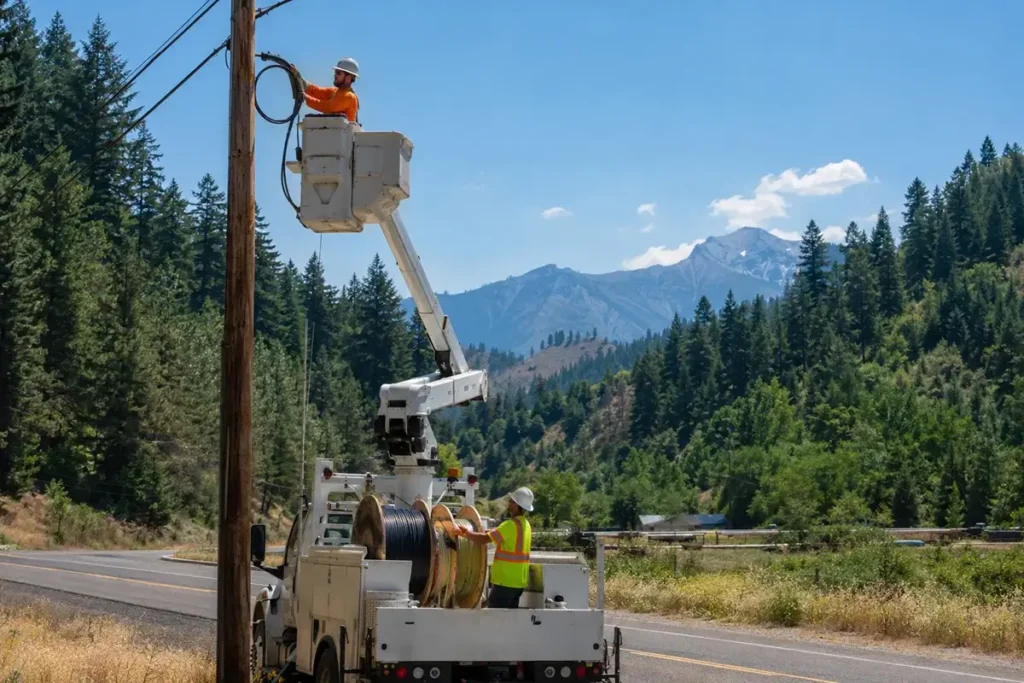
Washington’s 28 Public Utility Districts are publicly owned utilities governed by elected commissioners — essentially the Washington equivalent of rural electric cooperatives, with a key difference: many Washington PUDs have operated fiber networks since the early 2000s as part of their core utility mission, making Washington one of the few states where public utility broadband is a mature, established service category rather than a new initiative:
- Grant County PUD: One of the nation’s most advanced rural public utility broadband operators, serving Columbia Basin communities with fiber broadband at competitive prices. A model for rural utility broadband that has been studied nationally.
- Chelan County PUD: Operating fiber broadband through its WenatcheeNET subsidiary, serving communities in the Wenatchee Valley and surrounding area.
- Okanogan County PUD: Exploring broadband service expansion for rural members in one of Washington’s most underserved counties.
- Pacific County PUD: Active broadband program serving coastal rural communities in Pacific County.
- Other Washington PUDs: Multiple additional Washington PUDs are in various stages of broadband program development with BEAD funding becoming a catalyst for acceleration.
Washington PUD broadband programs are among the most competitive and reliable rural internet options in the state. If your address is within a PUD service area, checking PUD broadband availability should be your first step before considering satellite options.
Washington State Broadband Programs
Washington’s broadband programs are coordinated by the Washington State Broadband Office (WSBO) within the Department of Commerce. Washington received approximately $1.22 billion in BEAD Program federal funding. The WSBO has been notable for its detailed state broadband planning, including a specific focus on tribal broadband equity and the recognition of eastern Washington’s unique agricultural connectivity needs.
Washington’s BEAD implementation plan prioritizes the northeast Washington counties (Ferry, Pend Oreille), the Olympic Peninsula’s more remote communities, and eastern Washington’s unserved agricultural areas in its first-priority deployment cohort. The state has specifically highlighted the equity dimensions of rural broadband investment — ensuring that BEAD funding reaches communities that have historically been underinvested regardless of their commercial appeal to private ISPs.
Agriculture and Connectivity in Eastern Washington
Eastern Washington’s agricultural economy — wheat, apple, cherry, wine grape, potato, and hop production — is one of the most productive in the nation and increasingly technology-dependent. Precision agriculture adoption in the Palouse and Columbia Basin has been rapid, creating significant broadband demand for farm operations that are often far from any fixed infrastructure.
Grant County PUD’s fiber broadband program has been particularly transformative for Columbia Basin irrigation district farmers — providing gigabit service to farm operations that simultaneously need to manage pivot irrigation systems, transmit drone imagery, access commodity market platforms, and support on-farm worker housing connectivity. The contrast between Columbia Basin farms with Grant County PUD fiber and Palouse farms without PUD coverage illustrates how dramatically utility-driven broadband can transform agricultural connectivity when the public utility commits to serving its rural territory comprehensively.
Practical Tips for Rural Washington Residents
- Check your PUD for broadband first. Several Washington PUDs have operated broadband for 20+ years. If you’re in Grant County, Chelan County, or another PUD with active programs, fiber broadband may be available at competitive prices. Check your PUD’s website for current service maps.
- Eastern Washington agricultural residents: Your terrain is generally excellent for Starlink with minimal obstruction concerns on the Palouse and Columbia Basin. Check T-Mobile Home Internet eligibility along US-2, US-395, and I-90 corridors — availability is better near these routes than on more remote agricultural roads.
- Northeast Washington (Ferry, Pend Oreille) residents: Starlink is almost certainly your best option today. The forested terrain creates more sky obstruction variability than eastern Washington’s open land — use the app scanner before ordering. Most ridge and valley-edge properties have adequate sky access. Cellular coverage from any carrier is very limited in these counties; don’t rely on cellular as a backup without testing specific signal at your property first.
- Olympic Peninsula residents: Your wet, overcast climate has minimal impact on Starlink performance — LEO signals penetrate cloud cover normally. The peninsula’s relative isolation from the Seattle tech economy means your Starlink coverage cell may be less congested than you’d expect, often delivering excellent speeds.
Frequently Asked Questions
Is Grant County PUD broadband really that good?
Yes — Grant County PUD’s broadband program is genuinely one of the best rural broadband services in the United States. The PUD has operated fiber and wireless broadband for over 20 years, providing gigabit fiber to many Columbia Basin communities at prices competitive with urban ISPs. If you’re in Grant County and within the PUD’s broadband service area, it’s almost certainly your best internet option by a significant margin over any satellite or cellular alternative.
Does Starlink work well in the Methow Valley and Okanogan Highlands?
Yes. Starlink is available throughout the Methow Valley, Okanogan county, and the Okanogan Highlands. The mountainous terrain means sky obstruction assessment is important for some properties — particularly in narrow valley bottom locations. Most Methow Valley properties in Twisp, Winthrop, and surrounding areas have adequate sky access for Starlink from standard mounting heights. More remote Okanogan Highlands properties on ridges and slopes typically have excellent sky conditions.
When will fiber reach rural Ferry County, Washington?
Ferry County is specifically prioritized in Washington’s BEAD implementation as a first-priority unserved zone. Realistic timelines for BEAD-funded fiber or fixed wireless infrastructure reaching Republic and surrounding Ferry County communities range from 2027 to 2030, depending on ISP procurement and construction schedules. In the interim, Starlink provides the only reliable broadband-quality connectivity for most Ferry County rural properties. Okanogan County PUD’s broadband planning with BEAD funding may also provide future connectivity options for northern Okanogan and potentially some Ferry County border communities.
Washington’s Native Nations and Broadband
Washington State has 29 federally recognized tribal nations — one of the highest counts of any US state — with reservation lands and trust properties spread across both eastern and western Washington. Several Washington tribal nations have been actively pursuing broadband connectivity using tribal economic development resources and federal tribal broadband funding.
The Yakama Nation — with 1.4 million acres of reservation land in central Washington — has worked with the Washington State Broadband Office and the NTIA tribal broadband programs on connectivity planning. The Colville Confederated Tribes in northeastern Washington have pursued broadband for their communities in Ferry and Okanogan counties. The Coast Salish nations of western Washington — Lummi, Swinomish, Upper Skagit, and others — have varying levels of existing broadband from commercial providers serving the broader Puget Sound region.
Tribal members on Washington reservation lands should contact their tribal government’s economic development or utility office about tribal broadband programs before ordering individual residential internet service. Some tribal nations have negotiated group purchasing arrangements with Starlink or other providers that offer better pricing than individual subscriptions, and others have active tribal broadband infrastructure programs that may provide service to qualifying tribal members. The Washington State Broadband Office coordinates with tribal nations on BEAD planning and can provide guidance on tribal-specific broadband resources.
Washington’s Timber and Forest Community Connectivity
Washington’s extensive timber industry — a mainstay of the state’s rural economy for over a century — has specific broadband connectivity needs for logging operations, timber management planning, reforestation planning, and timber company administrative operations. Remote logging camps, ranger districts, and timber company operations in the Olympic Peninsula, the Cascades, and northeast Washington forests need connectivity that cell coverage maps show as essentially unavailable.
Starlink has been adopted rapidly by Washington’s forest industry for remote operations — camps, maintenance facilities, and administrative offices in locations previously accessible only via satellite phone. For rural Washington timber and forest workers who live in communities near working forest lands, Starlink provides residential broadband that makes year-round rural living viable for workers who previously faced long commutes from better-connected communities.
What is the best internet for the Olympic Peninsula in 2026?
Starlink is the most universally available and reliably performing broadband for Olympic Peninsula rural properties. The peninsula’s forested terrain creates sky obstruction challenges at some valley-bottom and heavily forested sites — use the Starlink app sky scanner before ordering for properties under heavy Douglas fir or cedar canopy. Communities along US-101 may have telephone cooperative DSL from Centurylink or smaller local providers; check availability at your specific address. Coos-Curry Electric does not serve Washington, but Jefferson County PUD is exploring broadband for its member community.
Does Washington State have good rural Starlink performance?
Yes. Eastern Washington in particular delivers some of the best rural Starlink performance in the Pacific Northwest — the flat Columbia Plateau landscape, sparse user density in rural coverage cells, and clear skies combine to deliver consistently 90–130 Mbps download speeds for many eastern Washington farm users. Western Washington mountain communities and the Olympic Peninsula perform well at properties with adequate sky clearance. The key challenge in western Washington is tree cover obstruction — properties under dense conifer canopy may need mast installation or careful site selection to achieve the sky clearance needed for reliable Starlink performance.
Is T-Mobile Home Internet available in rural eastern Washington?
T-Mobile Home Internet availability in eastern Washington varies significantly by location. Communities along major highway corridors (I-90, US-2, US-395) have better T-Mobile eligibility than remote agricultural and ranch communities. The flat Columbia Plateau’s terrain is favorable for T-Mobile tower coverage, and availability in the Tri-Cities (Kennewick-Pasco-Richland) agricultural orbit and the Spokane rural fringe is generally better than in the most remote wheat farming counties. Check T-Mobile’s eligibility checker at your specific address — at $50/month versus Starlink’s $120/month, T-Mobile Home Internet is worth checking first in eastern Washington areas where it may be available.
How does Washington State’s PUD broadband compare to Starlink?
Washington PUD fiber broadband, where available, is significantly better than Starlink — symmetric gigabit speeds (1,000 Mbps up and down) at $60–$80/month versus Starlink’s $120/month for 65–115 Mbps download with only 8–18 Mbps upload. The symmetric upload is the most meaningful performance advantage for rural Washington residents who upload significant content — farm operation data, video production, large file collaboration. If your address is within a Washington PUD fiber service area, fiber is the unambiguous choice. If your address is outside PUD fiber coverage (most rural addresses), Starlink is the recommended broadband solution while you track PUD expansion timelines for your area.

Cascade Mountain Communities and Connectivity
Washington’s Cascade Range communities — the ski resort towns, mountain recreation communities, and agricultural valleys of the east Cascades slopes — have seen dramatic population growth from Seattle and Eastside metro migrants seeking rural lifestyle while maintaining career connectivity. Communities like Leavenworth, Chelan, Winthrop, and Twisp have attracted remote workers whose needs for broadband have outpaced the existing infrastructure in these small mountain towns and their surrounding rural areas.
The Cascades’ terrain creates specific Starlink considerations. Most east-slope Cascade communities sit in relatively open valleys with adequate northern sky access for Starlink installation. The densely forested west slopes — communities on the Snoqualmie Pass, Stevens Pass, and White Pass corridors — have more sky obstruction challenges from the heavy conifer canopy. For communities in the North Cascades particularly, including the Methow Valley and the Okanogan Highlands, Starlink has been the primary path to broadband for residents and businesses that cannot wait for infrastructure development timelines.
Washington’s State Broadband Office has identified the east Cascades communities’ population growth and broadband demand as a priority in its BEAD implementation — recognizing that communities experiencing significant in-migration of remote workers need broadband infrastructure to sustain that population growth and the economic activity it brings. Several Okanogan County and Chelan County PUD broadband programs are actively developing to serve these growing mountain communities.
Washington’s Pacific Coast Connectivity
Washington’s Pacific coast — from the Long Beach Peninsula in the south to the Makah Reservation and Cape Flattery in the north — has connectivity challenges driven by the remote geography and the difficult infrastructure routing options for communities perched between the Pacific Ocean and the Coast Range. Ocean Shores and Westport on the North Beach Peninsula have some cable infrastructure from their tourism economy. Communities deeper in the coast’s more remote reaches depend on Starlink and cellular connectivity. The Quinault Indian Nation and other coastal tribal communities have been pursuing broadband through tribal programs. Starlink performs particularly well at coastal properties with the open Pacific providing unrestricted western sky access.


Leave a Reply