
Colorado’s rural broadband challenge reflects the state’s extraordinary terrain diversity — from the flat eastern plains rivaling Kansas for agricultural openness, to the San Luis Valley’s high-altitude agricultural plateau, to the Rocky Mountain front range communities, to the remote western slope river valley communities. Rural connectivity varies as dramatically as the landscape: front range exurban communities increasingly have competitive broadband from Denver’s infrastructure influence, while remote mountain communities and western slope agricultural areas face connectivity challenges comparable to rural Alaska. In 2026, Colorado’s active state broadband program, electric cooperative initiatives, and Starlink’s universal coverage are creating meaningful progress. This complete guide covers rural internet options across all of Colorado’s distinct regions.
In This Guide
- Colorado Rural Broadband Overview
- Best Internet by Colorado Region
- Starlink in Colorado
- Colorado Electric Cooperatives
- Colorado State Broadband Programs
- Mountain Communities: Terrain and Connectivity
- Western Slope Rural Connectivity
- Eastern Plains Agricultural Connectivity
- Practical Tips for Rural Colorado Residents
- Frequently Asked Questions
Colorado Rural Broadband Overview
Colorado is a state where the urban-rural connectivity divide is amplified by geography. The Denver-Boulder-Fort Collins Front Range corridor is one of the most technically sophisticated metro areas in the country. Two hours from Denver in almost any direction, the connectivity picture changes dramatically — mountain communities on either side of the Continental Divide, agricultural communities on the eastern plains, and remote western slope valleys all have connectivity situations that the Front Range tech sector experience would make nearly unrecognizable.
According to the FCC National Broadband Map, Colorado has significant concentrations of unserved addresses in mountain counties (Dolores, Mineral, Hinsdale, Jackson, Cheyenne), the San Luis Valley’s most remote communities, and agricultural counties on the eastern plains beyond the I-76 and US-36 corridors. Colorado’s two tribal nations — the Southern Ute and Ute Mountain Ute in the southwest — have specific broadband needs on their reservation lands being addressed through BEAD tribal set-asides and tribal broadband programs.
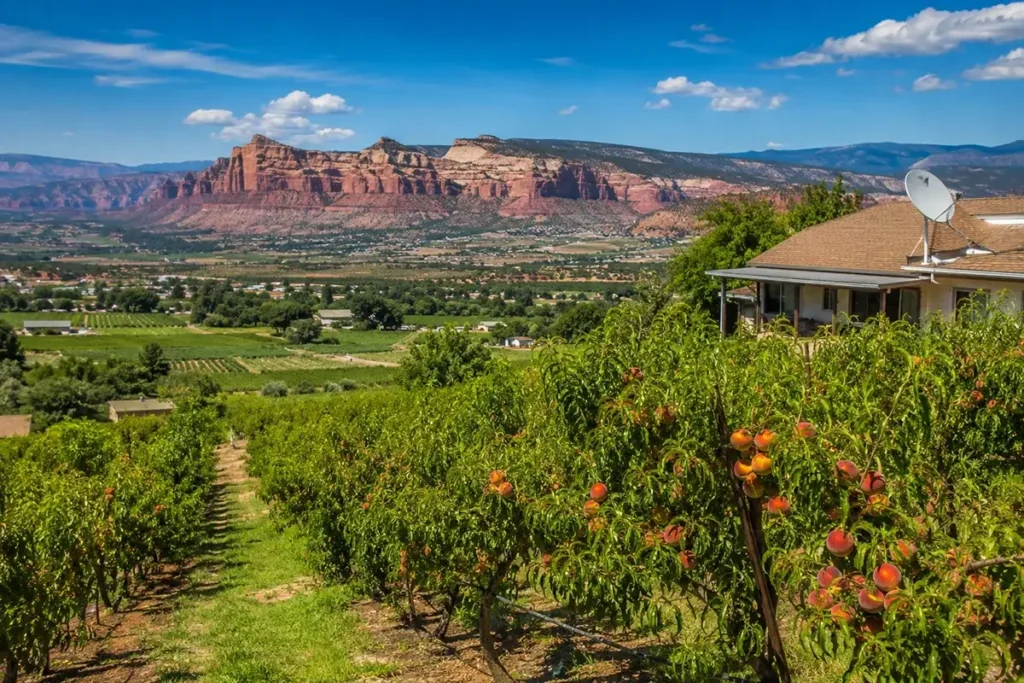
Best Internet by Colorado Region
Eastern Plains (Yuma, Washington, Lincoln, Kit Carson, Cheyenne Counties)
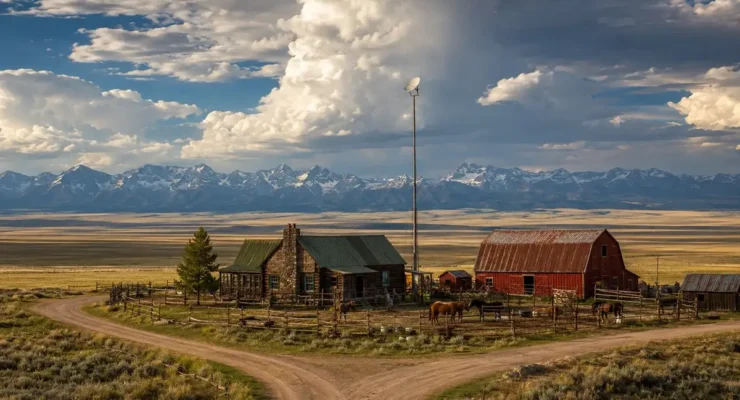
Colorado’s eastern plains agricultural communities share connectivity challenges with neighboring Kansas and Nebraska. Several eastern Colorado telephone cooperatives including Northeast Colorado Telephone and Eastern Slope Rural Telephone have been active in broadband deployment. The flat terrain makes Starlink installation completely effortless with no sky obstruction concerns. T-Mobile Home Internet eligibility is moderate along major highway corridors including I-70 and US-40 in this region.
San Luis Valley (Alamosa, Saguache, Conejos, Costilla Counties)
The San Luis Valley — a vast high-altitude (7,500+ feet) agricultural plateau ringed by the Sangre de Cristo and San Juan mountains — has significant rural broadband gaps in agricultural communities. Alamosa has cable broadband; surrounding rural communities depend on telephone cooperative DSL at varying quality levels and Starlink. The Valley’s open, flat terrain provides excellent Starlink installation conditions despite the surrounding mountain terrain. San Isabel Electric Association and San Luis Valley Electric Association have been exploring broadband programs for their member communities.
Mountain Communities (Summit, Eagle, Pitkin, Ouray, San Juan Counties)
Colorado’s mountain resort communities have better broadband than surrounding rural areas, but communities 20–30 minutes from resort centers may have very limited connectivity. Historic mining towns and agricultural communities between resort centers depend on Starlink and marginal DSL. The mountain terrain creates significant Starlink sky obstruction challenges in many valley-bottom locations. See the dedicated mountain communities section below for the specific assessment process that Colorado mountain properties require.
Western Slope (Mesa, Delta, Montrose, Gunnison Counties)
Colorado’s western slope agricultural and ranching communities in the Colorado, Gunnison, and Uncompahgre river valleys have moderate connectivity in the main valley towns with significant gaps away from valley floors. Grand Junction has cable and some fiber; Delta, Montrose, and Gunnison have partial cable coverage. Remote western slope communities in Gunnison County and beyond depend on Starlink and limited WISP coverage.
Colorado Electric Cooperatives
Colorado has approximately 22 rural electric cooperatives serving members across the state’s rural territory. Key broadband programs:
- Mountain Parks Electric: Serving members in Grand and Jackson counties — some of Colorado’s most remote mountain territory — with broadband development programs using BEAD funding.
- San Luis Valley Rural Electric Cooperative: Serving San Luis Valley members with broadband expansion plans for the high-altitude agricultural communities.
- Delta-Montrose Electric Association: Serving western slope members in Delta, Montrose, and Mesa counties with broadband programs for agricultural members.
- San Isabel Electric Association: Serving members in Pueblo and Custer counties with broadband development programs.
- Southeast Colorado Power Association: Serving members in southeastern Colorado with active broadband expansion using ReConnect and BEAD funding.
Colorado State Broadband Programs
Colorado’s broadband programs are coordinated through the Colorado Broadband Office (CBO). Colorado received approximately $879 million in BEAD Program federal funding. The CBO has been among the more active state broadband offices nationally, operating the Colorado Broadband Grant Program that has funded rural infrastructure across multiple rounds before BEAD funds became available. For current project maps and funded ISP information, visit the Colorado Broadband Office website.
Colorado’s BEAD implementation specifically prioritizes mountain communities, San Luis Valley isolated communities, tribal broadband needs on the Southern Ute and Ute Mountain Ute reservations, and rural eastern plains communities. The state has designed specific BEAD provisions to address the unique economics of mountain terrain deployment where per-household construction costs can be 3–5x higher than the state average due to difficult terrain access and winter construction limitations.
Mountain Communities: Terrain Assessment Is Essential
Colorado’s mountain communities face the most complex Starlink installation environment of any continental US state — deep river valleys between peaks rising 14,000 feet, narrow mining-era town sites against canyon walls, and communities where the northern sky is substantially blocked by the very peaks that define Colorado’s iconic landscape.
The Starlink app’s sky obstruction scanner is absolutely essential due diligence for any Colorado mountain property before ordering. In valley-bottom communities like Ouray, Creede, and Lake City — towns sitting in narrow river valleys between steep mountain walls — the northern sky obstruction from surrounding peaks can be severe enough that even a 30-foot mast cannot provide adequate satellite visibility from any ground-level position. For these properties, scanning from multiple locations (including elevated spots partway up the valley walls) may identify a viable installation location that ground-level scanning doesn’t reveal.
Ridge-top and south-facing slope Colorado properties typically have dramatically better Starlink conditions than valley-bottom properties. For mountain property buyers who need reliable broadband, checking Starlink viability from the intended building location before purchase is as important as checking well water quality and road access — and should be part of any rural Colorado mountain property due diligence process.
Practical Tips for Rural Colorado Residents
- Mountain valley residents: Run the Starlink app sky scan from multiple locations on your property before ordering. Valley-bottom properties between tall peaks may have severe northern horizon obstruction. Some narrow Colorado mountain valleys cannot support adequate Starlink sky access from any ground-level position — be honest with your assessment before purchasing hardware.
- Eastern plains residents: Your flat terrain is Starlink-ideal. Check Northeast Colorado Telephone and Eastern Slope Rural Telephone for fiber availability before ordering satellite — cooperative fiber at competitive prices delivers superior long-term performance where available.
- San Luis Valley residents: The valley floor’s open terrain provides excellent Starlink conditions. High altitude (7,500+ feet) doesn’t affect Starlink performance. Check San Isabel Electric and San Luis Valley Electric for cooperative broadband programs in your specific community.
- Colorado weather considerations: Colorado’s heavy mountain snowfall, spring hail season, and summer lightning present specific equipment risks. Mount with appropriate wind-rated hardware. Consider hail guard accessories for eastern plains installations where large hail is an annual weather feature.
Frequently Asked Questions
Does Starlink work in Colorado mountain communities?
It depends entirely on the specific property’s sky access. Ridge-top and south-facing slope Colorado mountain properties typically have excellent Starlink conditions and strong performance. Deep valley and canyon communities with steep mountain walls to the north may have insufficient northern sky clearance for reliable service. Use the Starlink app’s sky scanner from your specific property before ordering — this is non-negotiable for Colorado mountain properties where terrain obstruction is a real and common occurrence.
What is the best internet for rural western slope Colorado farm communities?
For rural western slope agricultural communities without Delta-Montrose Electric or cable coverage, Starlink is the most consistently available broadband option. The open agricultural valleys provide generally adequate sky access from most farm and ranch property locations. Check Delta-Montrose Electric Association, your telephone cooperative, and T-Mobile Home Internet eligibility before defaulting to satellite. The western slope’s Grand Valley communities near Grand Junction have better wired and cellular alternatives than the more remote Gunnison and upper Uncompahgre valley communities.
Ski Area and Mountain Resort Community Connectivity
Colorado’s ski resort communities — Aspen, Vail, Breckenridge, Telluride, Steamboat Springs, Crested Butte, and others — have commercial broadband infrastructure driven by the resort economy’s hospitality needs. But the worker housing communities, service employee residences, and second-ring communities around these resorts often have very different connectivity situations than the resort core areas. Year-round workers who live in mountain communities below the resort area frequently depend on marginal DSL or WISP coverage rather than the fiber or cable that serves the core resort area.
For Colorado ski resort community residents in worker housing and surrounding neighborhoods without adequate commercial broadband, Starlink provides the most consistently available option — but the mountain terrain assessment is essential. Many worker housing areas in Colorado resort towns are located in valley positions below the main ski mountain, creating northern sky obstruction from the resort slopes. The Starlink app scanner is non-negotiable before ordering for any mountain resort community property in Colorado.
Colorado also has significant remote mountain cabin communities — seasonal and year-round properties in mountain recreation areas — that depend on adequate internet for remote work, particularly during the post-pandemic era when many Colorado mountain cabin owners have transitioned from weekend use to full-time or extended-stay occupancy. For these mountain cabin remote workers, the sky obstruction assessment and potential mast installation requirements of Colorado mountain properties are important planning considerations before committing to the rural mountain life as a full-time remote work location.

Remote Work and Colorado’s Rural Communities
Colorado’s rural communities have seen significant remote worker in-migration driven by the state’s combination of outdoor recreation access, relatively lower cost of living compared to Denver’s metro area, and increasingly adequate broadband connectivity through Starlink and cooperative fiber programs. Communities like Steamboat Springs, Crested Butte, Salida, and Glenwood Springs have attracted remote workers who can maintain career connectivity while accessing world-class skiing, climbing, and mountain biking within minutes of their homes.
For eastern plains agricultural communities, the remote worker opportunity is different but equally real: rural properties within 2–3 hours of Denver with adequate internet (Starlink or cooperative fiber) at dramatically lower real estate prices than Front Range communities. A remote worker who can live in a rural Elbert County property on 20 acres for the price of a Denver studio apartment — with Starlink connecting them to clients and colleagues nationwide — represents an economic development opportunity for rural Colorado communities that has materialized in meaningful numbers since 2021.
The Colorado Broadband Office has specifically tracked remote worker in-migration as an economic impact of rural broadband investment, documenting that communities with adequate connectivity are attracting new residents and businesses that diversify local economies beyond the traditional agricultural and resource extraction base. For current information on broadband-enabled rural economic development programs in specific Colorado counties, contact the Colorado Broadband Office at broadband.colorado.gov or your county’s economic development office.
What is the best internet for a Colorado farm on the eastern plains?
For Colorado eastern plains farm operations in Yuma, Washington, Lincoln, or Kit Carson counties, the evaluation order is: (1) check Northeast Colorado Telephone or Eastern Slope Rural Telephone for fiber availability — gigabit fiber at competitive rates is the best long-term option where available; (2) check T-Mobile Home Internet eligibility at your specific address along highway corridors; (3) order Starlink if neither cooperative fiber nor T-Mobile is adequate at your address. The flat eastern Colorado terrain makes Starlink installation effortless and delivers consistently strong performance in the low-density coverage cells of eastern Colorado’s agricultural counties. Starlink Priority is recommended for large farm operations with multiple simultaneous users, regular drone imagery uploads, and high-volume precision agriculture platform data sync requirements.

Leave a Reply