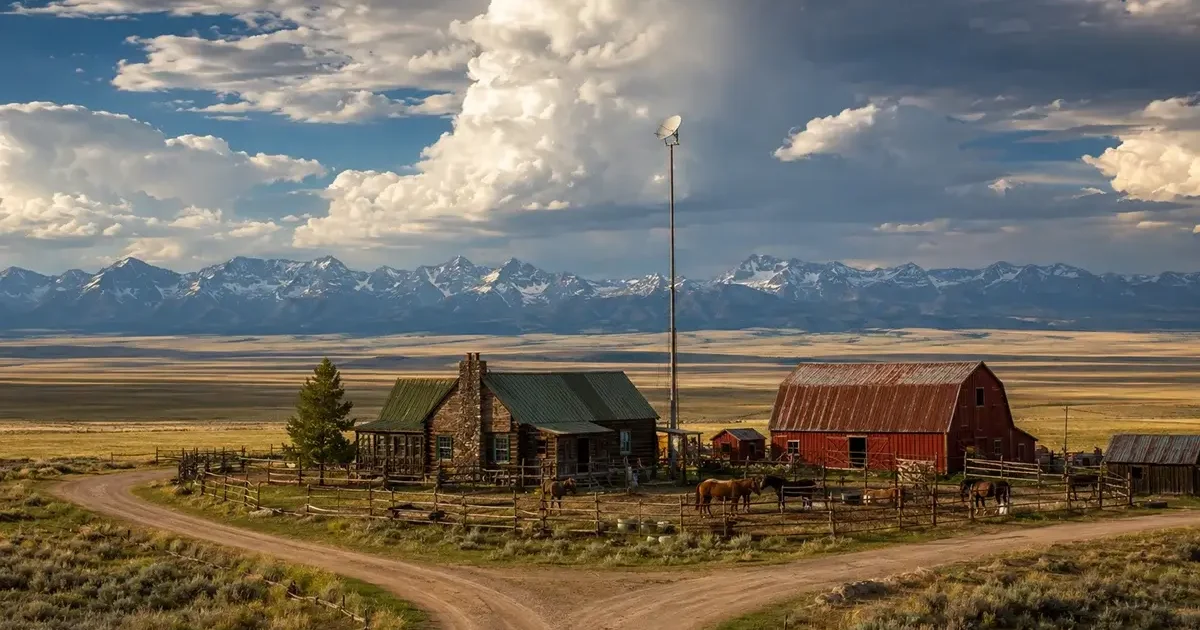
Wyoming is the least populated state in the United States — approximately 580,000 people spread across 97,813 square miles of mountains, plains, and high desert. The state’s iconic geography — the Wind River Range, Yellowstone and Grand Teton national parks, the Green River Basin, and the Red Desert — creates connectivity challenges that combine remote population distribution with the terrain variations of both the Rocky Mountain West and the Great Plains. Wyoming’s rural broadband in 2026 is characterized by excellent Starlink performance across most of the state’s open terrain, active telephone cooperative fiber programs in specific communities, and BEAD Program investment targeting the most severely underserved communities including Wind River Reservation tribal lands. This complete guide covers rural internet options across Wyoming’s distinct regions.
In This Guide
- Wyoming Rural Broadband Overview
- Best Internet by Wyoming Region
- Starlink in Wyoming
- Wyoming Telephone Cooperatives
- Wyoming State Broadband Programs
- Energy Industry and Wind Farm Connectivity
- Wind River Reservation Connectivity
- Tourism, Recreation, and Connectivity
- Practical Tips for Rural Wyoming Residents
- Frequently Asked Questions
Wyoming Rural Broadband Overview
Wyoming’s broadband challenge is fundamentally an economics problem: fewer than 6 people per square mile makes any fixed infrastructure investment face per-household costs that commercial ISPs cannot justify without substantial government subsidy. Wyoming’s two largest cities — Cheyenne (population 65,000) and Casper (population 58,000) — have reasonable commercial broadband. Beyond these urban centers, Wyoming’s communities range from small towns with telephone company DSL to remote ranch operations that have never had any internet service whatsoever.
According to the FCC National Broadband Map, Wyoming has among the highest percentages of unserved rural addresses of any Rocky Mountain state, with particular concentration in the Big Horn Basin’s remote ranch communities, the Red Desert and Great Divide Basin’s isolated properties, and the mountain communities of the Wind River Range and Big Horn Mountains. The state’s very low population density means that market-driven solutions alone are fundamentally insufficient to address the rural broadband gap — government subsidy through BEAD and cooperative investment are essential.
Best Internet by Wyoming Region
Cheyenne and Southeast Wyoming
Southeast Wyoming benefits from the state capital’s infrastructure influence and the I-25 corridor’s commercial development. Rural communities within 30 miles of Cheyenne have some cable and WISP coverage. Farther communities in Laramie, Platte, and Goshen counties depend on telephone cooperative DSL and Starlink. The flat high plains terrain makes Starlink installation completely straightforward with no sky obstruction concerns.
Big Horn Basin (Park, Big Horn, Washakie, Hot Springs Counties)
The Big Horn Basin — Wyoming’s agricultural interior between the Absaroka and Big Horn mountain ranges — has moderate connectivity in the basin floor communities (Cody, Worland, Thermopolis) with significant gaps in the surrounding ranch and farm country. Big Horn Telephone has been among Wyoming’s more active telephone cooperatives in rural broadband deployment. The basin’s open landscape provides good Starlink sky access from most property locations. Cody’s tourism economy has driven some WISP investment along the highway corridor toward Yellowstone’s east entrance.
Western Wyoming / Jackson Hole (Teton, Sublette, Lincoln Counties)
Jackson Hole’s resort economy has driven better broadband in the immediate resort community — Jackson has cable and some fiber coverage. The surrounding rural communities tell a different story. Star Valley farming communities of Lincoln County, the Sublette County ranch lands of the Upper Green River Basin, and the remote communities of the Snake River canyon approach have significant connectivity gaps. Sublette County covers 4,883 square miles with fewer than 10,000 residents — among the most challenging broadband deployment economics in the state.
Red Desert and Southwest Wyoming (Carbon, Sweetwater, Uinta Counties)
Southwest Wyoming’s energy-producing counties have some connectivity driven by energy sector infrastructure investment along the I-80 corridor. The vast Red Desert and open range country away from I-80 has essentially no fixed broadband infrastructure. Starlink is the only viable broadband option for the vast majority of southwest Wyoming’s ranch operations. Performance in these ultra-low-density coverage cells is frequently exceptional — 120–150 Mbps download speeds have been reported by users in Sweetwater and Carbon county rural locations.
Wyoming Telephone Cooperatives
- Big Horn Telephone: Serving members in Big Horn County’s agricultural communities with fiber broadband — one of Wyoming’s most progressive rural telephone cooperative fiber deployments.
- Sweetwater Telephone: Serving members in Sweetwater County with telephone and broadband services along the I-80 corridor and surrounding rural areas.
- Tri-County Telephone Association: Serving members in Converse, Niobrara, and Platte counties with DSL and expanding broadband programs.
- Sheridan Telephone: Serving Sheridan County communities in northeast Wyoming with telephone and broadband services.
Wyoming State Broadband Programs
Wyoming’s broadband programs are coordinated through the Wyoming Business Council under the Governor’s Office. Wyoming received approximately $263 million in BEAD Program federal funding — significant relative to the state’s small population and reflecting the scale of the rural broadband gap across Wyoming’s vast territory. BEAD implementation priorities include the Wind River Reservation tribal communities, remote ranch communities in Sublette and Big Horn counties, and the Red Desert area communities with no viable broadband option.
Energy Industry and Wind Farm Connectivity
Wyoming’s energy sector — the nation’s largest coal producer, a major natural gas producer, and a growing wind energy state — creates specific rural connectivity demand for SCADA monitoring systems, worker communications, and operational management in some of the most remote territory in the country. Coal mines in the Powder River Basin and natural gas operations in the Green River Basin have invested in connectivity infrastructure that sometimes benefits nearby rural communities.
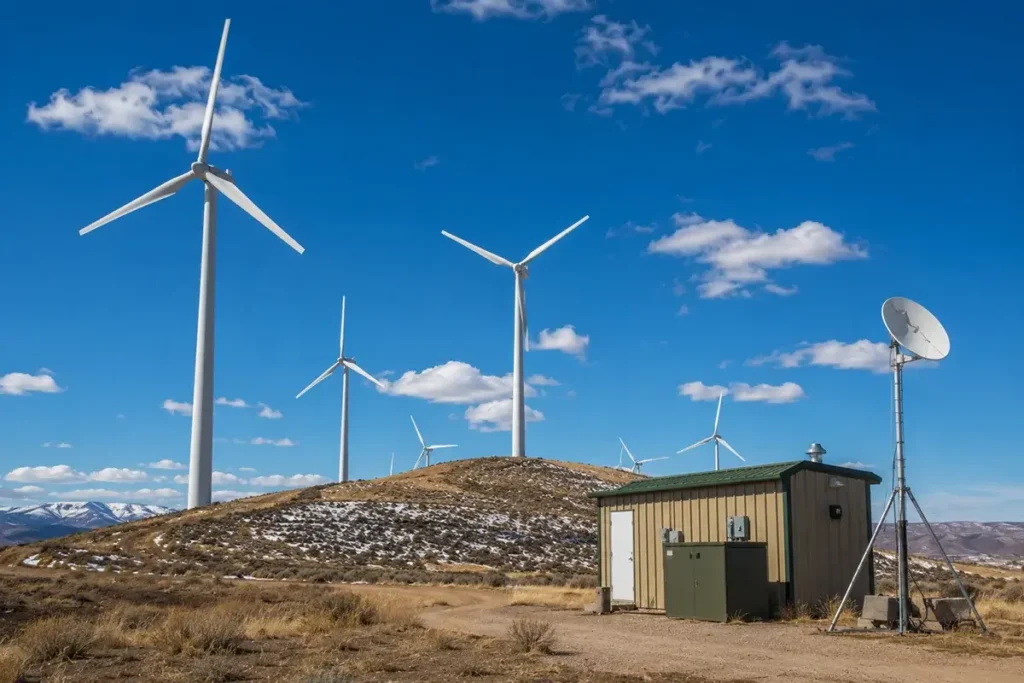
Wyoming’s wind energy sector — a leading wind power producer with thousands of turbines across the Laramie Range, Medicine Bow region, and southern Wyoming wind corridors — requires connectivity for turbine performance monitoring, maintenance operations, and energy management. Wind farm operator offices in remote Carbon and Albany county locations use Starlink as their standard broadband solution for facilities beyond cellular tower coverage. The wind energy sector’s commercial demand for rural connectivity helps justify tower and infrastructure investments that also benefit rural residential subscribers in these areas.
Wind River Reservation Connectivity
The Wind River Indian Reservation — home to the Eastern Shoshone and Northern Arapaho tribes — covers approximately 2.2 million acres in Fremont County, making it one of the largest reservations in the United States. The reservation’s rural communities have significant broadband access deficits reflecting both geographic isolation and historical infrastructure underinvestment on tribal lands.
Both tribal nations have pursued broadband development using tribal economic resources and federal tribal broadband funding programs. Wyoming’s BEAD implementation specifically addresses Wind River Reservation communities as the state’s highest broadband investment priority. The Native Partnership has been active in representing Wind River tribal broadband needs in state and federal policy processes. Tribal members on Wind River Reservation should contact their tribal government’s economic development or utility office about tribal broadband programs before ordering individual satellite service — group purchasing arrangements or tribal infrastructure programs may offer better pricing and more appropriate connectivity solutions for tribal member households.
Practical Tips for Rural Wyoming Residents
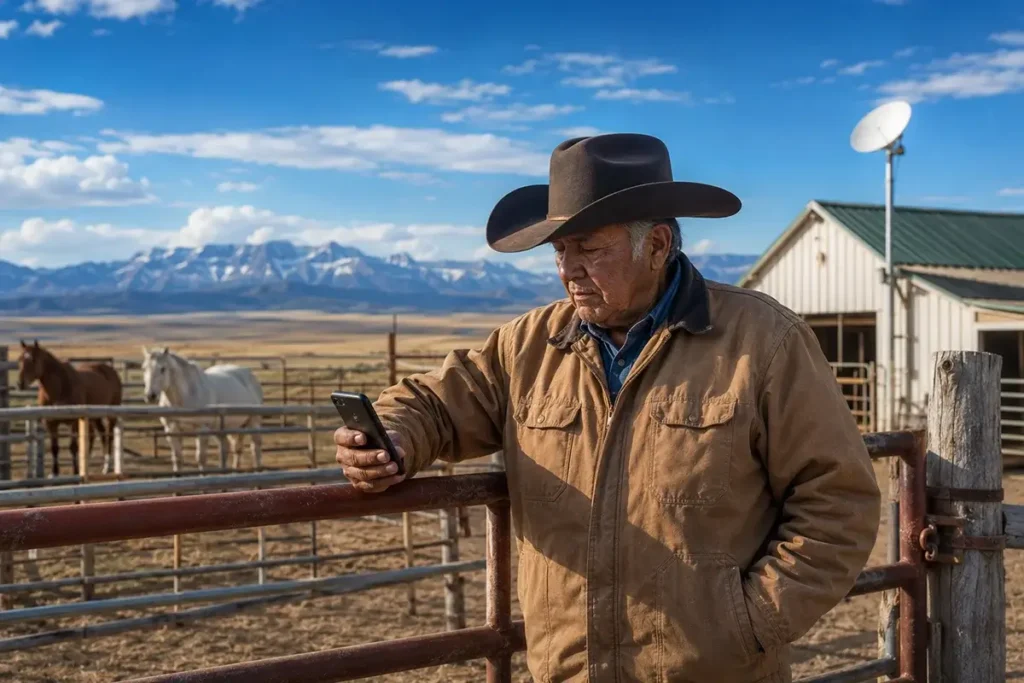
- Ranch and energy operations: Starlink Priority with Verizon cellular backup is the recommended configuration for Wyoming commercial operations. Verizon has the strongest rural Wyoming cellular network — meaningful for backup connectivity during the rare Starlink weather events that Wyoming’s severe winters create.
- Jackson Hole and mountain community residents: Check the Starlink sky scanner from your property before ordering. The Teton Range and Absaroka Range create significant northern horizon obstruction for some mountain valley communities. Valley-floor properties between high peaks may have insufficient sky access for reliable Starlink from ground-level installation positions.
- Big Horn Basin agricultural residents: Check Big Horn Telephone first — the cooperative has been active in rural fiber deployment and may serve your area at competitive prices. Gigabit fiber from the cooperative is the clearly superior long-term option where available versus Starlink’s satellite performance.
Frequently Asked Questions
What is the best internet for a remote Wyoming ranch?
Starlink Priority ($250/month) is the recommended broadband solution for remote Wyoming ranch operations beyond cellular and cooperative fiber coverage. Wyoming’s open terrain — even in the mountain ranges — provides generally adequate Starlink sky access from most ranch headquarters locations. Performance in Wyoming’s ultra-low-density rural coverage cells is frequently excellent, commonly 110–140 Mbps download speeds in the most remote areas. Add Verizon cellular backup for redundancy given Wyoming’s severe winter weather that can occasionally affect outdoor satellite equipment performance.
Is there internet available near Yellowstone in rural Wyoming?
Starlink covers the Yellowstone area statewide including the gateway communities of Cody, Dubois, and Moran Junction that serve as entry points to the park. Park County’s Cody area has some cable coverage from regional providers. Remote ranch and homestead properties surrounding the park have full Starlink availability without waitlist and typically experience good performance in the low-density coverage cells of northwest Wyoming. Properties within Yellowstone National Park boundaries would require NPS coordination for any permanent installation, but adjacent private lands access Starlink service normally without restriction.
Remote Work and Wyoming’s Rural Communities
Wyoming’s rural communities have seen meaningful remote worker in-migration — the Jackson Hole area particularly, but also rural communities in the Bighorn Mountains, around Thermopolis, and in the Laramie Range communities within driving distance of Cheyenne — as remote workers have discovered that Wyoming’s spectacular outdoor landscapes, low property taxes, and no state income tax combine attractively with the ability to maintain career connectivity via Starlink or cooperative fiber.
For Wyoming communities developing economic strategies around remote worker attraction, broadband connectivity is the foundational prerequisite that determines whether rural Wyoming living is viable for career-maintaining remote workers. Several Wyoming counties including Big Horn County have been developing broadband-enabled rural economic development strategies that position adequate internet connectivity as the essential infrastructure for attracting remote workers who can bring urban salaries and purchasing power to small Wyoming communities. Big Horn Telephone’s fiber deployment program is directly supporting this economic development strategy for the Big Horn Basin region.
The Wyoming Business Council, which coordinates state economic development and broadband programs, has identified remote worker attraction as a key rural economic development strategy for Wyoming counties with adequate broadband — and as an economic development goal that creates urgency for broadband investment in counties that currently lack adequate connectivity. Contact your county’s economic development office about any programs supporting rural broadband for remote work or rural business development purposes.
Wyoming Agricultural Operations and Connectivity
Wyoming’s agricultural economy — beef cattle (the dominant land use across most of the state), hay, grain, sheep, and specialty crops in irrigated areas — increasingly depends on broadband connectivity for precision agriculture technology, commodity market access, livestock monitoring, and the regulatory compliance and USDA program management that modern farm operations require. Wyoming’s vast ranch operations — where a single family might manage 20,000–50,000 acres of rangeland — particularly benefit from remote monitoring technology that only satellite connectivity can enable across the scale of these operations.
For Wyoming ranch operations, the most impactful agricultural connectivity applications are: remote water tank monitoring (tank sensors connected via LoRaWAN to Starlink at the ranch headquarters alert when water levels drop, eliminating the need to physically check every tank on a vast range several times weekly); livestock GPS tracking on vast open range (knowing where cattle are on a 30,000-acre range without physically searching); weather monitoring at specific ranch locations (micro-climate weather data for irrigation scheduling and grazing management); and commodity market access in real time (grain and cattle market prices accessible from the ranch without driving to town).
Starlink’s impact on Wyoming ranch operations has been documented by the Wyoming Farmers and Ranchers organization and Wyoming extension service researchers. The consensus finding is that Starlink connectivity has measurably improved ranch operational efficiency and reduced the time cost of information gathering — tasks that previously required 2–4 hours of driving to town for market information, veterinary consultation, or regulatory paperwork now take minutes from the ranch headquarters.
Is there broadband available in Yellowstone area rural communities outside the park?
Yes. Rural communities surrounding Yellowstone — Cody, Dubois, Jackson, Moran, and their surrounding rural areas — have Starlink available with no waitlist. Cody has some cable coverage from regional providers. The Park County communities near Cody’s tourism corridor have better commercial options than the more remote communities to the west. Big Horn Telephone’s fiber network reaches into the Big Horn Basin east of the Yellowstone area. For the most remote rural properties in the Absaroka and Beartooth mountain approaches to Yellowstone’s east and south entrances, Starlink is typically the only viable broadband option — and sky obstruction assessment is important for properties in the narrow mountain valley approaches to these remote gateway communities.


Leave a Reply