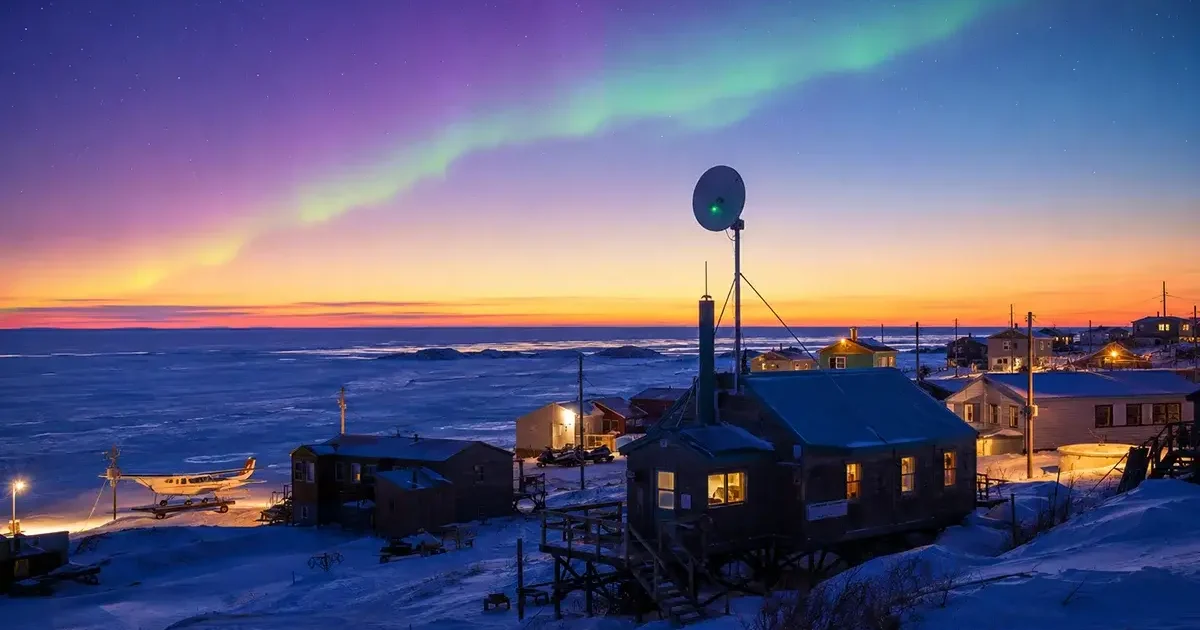
Alaska’s rural broadband challenge is in a category of its own — a state where the term “rural” encompasses everything from small towns accessible by gravel road to remote villages reachable only by small plane or boat. Communities of a few hundred people may be separated from the nearest city by hundreds of miles of wilderness, and where communities exist without any road connection to the rest of North America. Alaska is simultaneously the most extreme rural broadband challenge in the United States and the place where Starlink’s impact is most profound — replacing the complete connectivity absence that defined remote Alaska village life with broadband-quality internet that changes everything. This complete guide covers rural internet options across Alaska’s vast geography in 2026.
In This Guide
- Alaska Rural Broadband Overview
- Best Internet by Alaska Region
- Starlink in Alaska: Special Considerations
- Alaska Native Village Connectivity
- Alaska State Broadband Programs
- Bush Alaska: Life Without Roads or Internet
- Resource Industries and Connectivity
- Extreme Cold Starlink Operation
- Practical Tips for Rural Alaska Residents
- Frequently Asked Questions
Alaska Rural Broadband Overview
Alaska’s broadband situation defies any standard framework for rural connectivity analysis. The state is 2.5 times the size of Texas with a population of approximately 730,000 people. Anchorage alone contains approximately 40% of the state’s entire population, while the remaining 60% — roughly 440,000 people — are spread across an area five times the size of California, in communities ranging from Juneau (population 32,000, with no road connection to the rest of North America) to villages of 50–200 people accessible only by small aircraft or seasonal waterways.
The concept of “rural internet” in Alaska spans a spectrum from the Kenai Peninsula’s road-connected fishing communities with functional cellular coverage to the Yukon-Kuskokwim Delta’s dozens of Yup’ik villages where the only outside communication for generations was high-frequency radio and expensive satellite telephone. Starlink has been as significant a change in the lives of remote Alaska village residents as any technology since the introduction of electricity.
According to the FCC National Broadband Map, Alaska has by far the highest percentage of unserved addresses of any US state when measured against any meaningful broadband standard. Rural Alaska is not a connectivity challenge to be solved incrementally — it is a connectivity frontier where infrastructure deployment faces challenges that have no equivalent anywhere else in the country.
Best Internet by Alaska Region
Southcentral Alaska (Anchorage Metro, Mat-Su Valley, Kenai Peninsula)
Southcentral Alaska has the state’s best rural connectivity outside of Anchorage. The Mat-Su Valley’s rapidly growing communities (Wasilla, Palmer, Houston) have cable and some fiber coverage from GCI. Rural Mat-Su properties beyond the cable plant depend on WISP coverage, GCI cable extensions, and Starlink. The Kenai Peninsula’s fishing communities have GCI cable in main towns with satellite and cellular for rural properties. T-Mobile’s rural Alaska coverage is limited primarily to Southcentral corridors along Parks Highway and Sterling Highway.
Southeast Alaska / Inside Passage (Juneau, Sitka, Ketchikan, Petersburg)
Southeast Alaska’s communities are connected to each other by ferry and small aircraft, but not by road to the rest of North America. Each community has its own telecommunications infrastructure — typically GCI or Alaska Communications Systems (ACS) cable and fiber for in-town service, with rural properties outside the cable plant depending on satellite. Juneau’s suburban areas (Mendenhall Valley, Douglas) have reasonably good broadband. Remote Southeast properties — homesteads, fishing lodges, and recreational cabins — depend on Starlink for the first time having any broadband-quality internet option.
Interior Alaska (Fairbanks North Star Borough)
Interior Alaska’s road-connected communities — Fairbanks, Nenana, Delta Junction, Tok, Glennallen — have GCI cable or fiber in the towns with rural coverage diminishing rapidly beyond city limits. The vast Interior’s river drainages and remote communities off the road system have essentially no fixed broadband infrastructure. Starlink has been transformative for Interior Alaska’s off-road communities — subsistence fishing camps, remote homesteads, and small communities accessible only by floatplane or winter ice road.
Western Alaska / Bush Alaska (Bethel, Nome, Kotzebue, Dillingham Regions)
Western and Bush Alaska — the vast region west of the Alaska Range accessible primarily by small aircraft — represents the most extreme connectivity challenge in the United States. The Yukon-Kuskokwim Delta’s dozens of Yup’ik villages, the Seward Peninsula communities including Nome, and the Bristol Bay communities have historically had extremely limited connectivity options. See the dedicated Bush Alaska section below.
Starlink in Alaska: Special Considerations
| Factor | Alaska-Specific Detail | Practical Guidance |
|---|---|---|
| High latitude coverage | Alaska spans 54°–71° N; Starlink covers fully but satellite geometry differs | Performance excellent at all latitudes; sky obstruction may be more terrain-sensitive at higher latitudes |
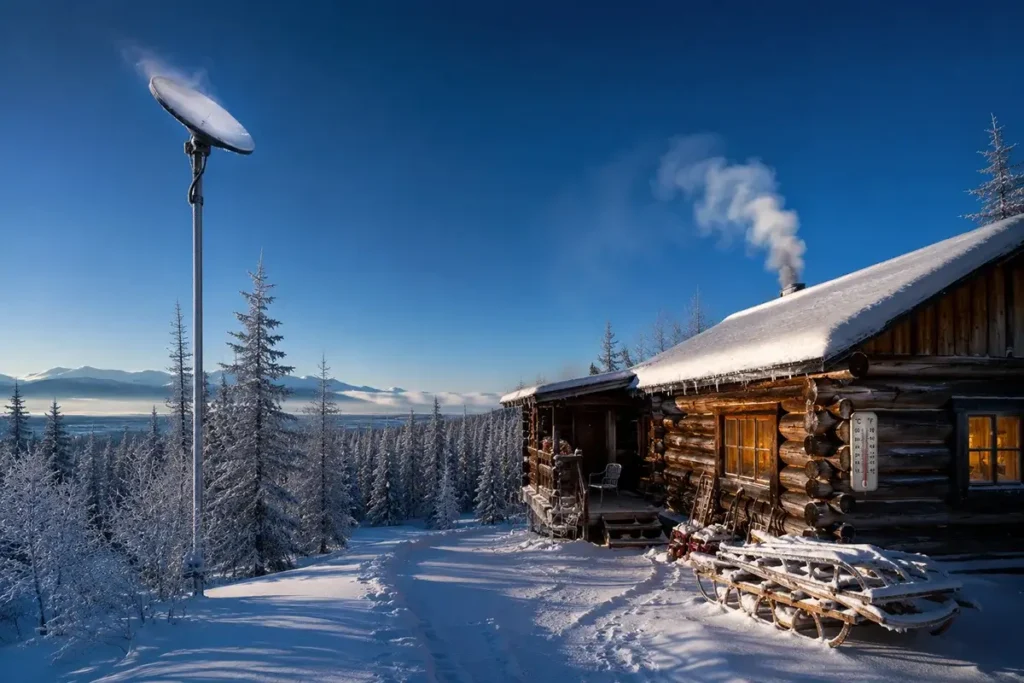
| Extreme cold (-40°F to -60°F) | Interior and northern AK regularly exceed dish operating limit of -30°C (-22°F) | Mount with southern solar exposure; router in heated space; monitor during extreme cold |
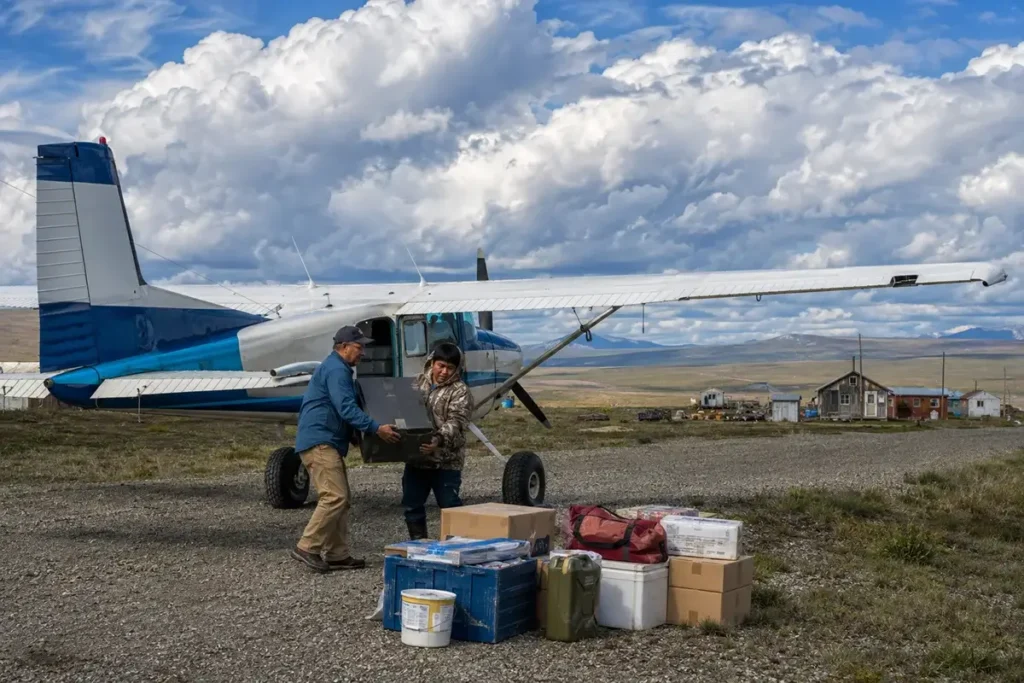
| Bush freight logistics | Starlink kit must be flown to off-road communities by small aircraft | Kit weighs ~10 lbs — within small aircraft limits; plan shipping to nearest air hub + bush freight |
| Off-grid power | Many villages use diesel generators or wind-solar hybrid systems | Solar + battery storage can power Starlink; size solar array for Alaska’s extreme seasonal daylight variation |
| Aurora interference | Northern lights occur frequently at Alaska latitudes | No documented impact on Starlink signal — aurora does not affect microwave satellite communication |
Alaska Native Village Connectivity
Alaska has 229 federally recognized tribes — more than any other US state — with tribal communities spread across the state’s vast geography. Most Alaska Native villages are in remote areas accessible only by small aircraft or seasonal river travel. These communities have faced the most profound connectivity deficits of any US communities, with many villages historically having no internet connectivity at all and relying on high-frequency radio for emergency communication.
The NTIA’s Tribal Broadband Connectivity Program has been specifically important for Alaska Native communities — providing funding for both infrastructure and digital literacy programs in remote village contexts. Several Alaska tribal organizations, including the Alaska Federation of Natives, have been active in coordinating tribal broadband planning across Alaska Native communities.
Starlink has been adopted across many Alaska Native villages as the first viable broadband solution — enabling telemedicine connecting remote village health aides to physicians, distance education allowing students to access coursework beyond what their tiny village schools can provide, and cultural preservation work through video documentation of elders that can be shared with diaspora community members. These are not marginal improvements — they represent transformative changes in village quality of life, health outcomes, and educational opportunity.
Alaska State Broadband Programs
Alaska’s broadband programs are coordinated through the Office of Broadband under the Alaska Department of Commerce, Community, and Economic Development. Alaska received approximately $1.0 billion in BEAD Program federal funding — one of the largest per-capita allocations in the nation, reflecting the extraordinary scale of Alaska’s broadband infrastructure challenge. Even $1 billion is insufficient to wire all of rural Alaska — the per-household construction cost in remote Bush Alaska communities can exceed $20,000–$50,000 per household, making traditional fiber deployment economically impossible at any achievable subsidy level.
Alaska’s BEAD implementation is confronting this economic reality by developing technology-neutral approaches including LEO satellite solutions, fixed wireless for communities within range of terrestrial infrastructure, and fiber for road-connected communities where construction costs are manageable. The state’s prioritization focuses first on communities with no viable broadband option at all — the most remote Bush Alaska villages — followed by rural road-connected communities with inadequate service.
Bush Alaska: Life Without Roads or Internet
Bush Alaska — communities not connected to the road system — represents the most profound rural connectivity challenge in the United States. Communities like Togiak, Toksook Bay, Chevak, Emmonak, and hundreds of others in the Yukon-Kuskokwim Delta have populations of 200–800 people and are accessible only by small aircraft and by boat on rivers in summer. Everything — fuel, food, building materials, and previously all telecommunications equipment — must be flown or barged in at significant expense.
Before Starlink, the most sophisticated internet in many YK Delta villages was a shared satellite system in the school building — providing very limited bandwidth to the school and library but nothing to residential homes. A village of 400 people might have had a single 25 Mbps satellite connection shared among the entire community, available only during school building hours.
Starlink has begun to change this picture fundamentally. Individual households in Bush Alaska villages can now order Starlink (shipping to the regional hub airport, then bush freight to the village). Setup requires power — which most Alaska villages have from diesel generators or, increasingly, wind-solar hybrid systems. The performance improvement from village-shared legacy satellite to individual household Starlink is as dramatic as any technology improvement documented in rural broadband research anywhere in the world.
Resource Industries and Alaska Connectivity
Alaska’s resource extraction industries — fishing (the largest US commercial fishing state), oil and gas on the North Slope and Cook Inlet, mining, and timber — create specific rural connectivity demands for remote site management, worker communications, and operational data systems in some of the most remote territory on Earth. North Slope oil operations, Bristol Bay salmon processing facilities, and remote mine sites all use satellite connectivity for operations that require real-time data transmission and communication.
Starlink Business has been adopted by Alaska resource industry operators as a significant improvement over the legacy VSAT systems previously used at remote facilities. The performance improvement from legacy geostationary satellite (600 ms latency, 10–25 Mbps) to Starlink (25–50 ms latency, 65–115 Mbps) enables real-time operational monitoring, video-based maintenance support, and remote worker welfare communications that were impractical or impossible on legacy systems.
Practical Tips for Rural Alaska Residents
- Bush Alaska residents: Work with your village tribal council or school about community Starlink resources. Individual household Starlink is achievable — factor in bush freight costs (typically $50–$200 to remote villages). The no-contract structure allows seasonal pausing if you leave the village during summer commercial fishing season.
- Interior Alaska extreme cold: At temperatures below -30°C, monitor dish performance. Mount with some southern solar exposure. Keep the router in a heated space — do not install the router in an unheated arctic entry or outbuilding.
- Southeast Alaska residents: GCI and ACS serve the main communities — check their current service offerings first. For rural properties beyond the cable plant, Starlink provides excellent service in Southeast Alaska’s generally open terrain, though areas in deep mountain valleys should use the sky scanner before ordering.
Frequently Asked Questions
Does Starlink work in remote Alaska villages?
Yes. Starlink works throughout Alaska including in the most remote Bush Alaska villages. The main constraints for Bush Alaska Starlink are getting the hardware to the village (bush freight logistics), having adequate power (diesel generator, solar, or wind), and the monthly service cost ($120/month) relative to village household incomes. Each constraint is solvable, and Starlink has been successfully installed in numerous remote Alaska villages, in some cases bringing broadband-quality internet to communities that had never previously had any internet access at all.
What is the best internet for remote Alaska communities without road access?
Starlink is the best and often only viable broadband-quality internet option for road-less Alaska communities. For communities with very limited household income, community-level Starlink installations at the school, health clinic, or tribal office provide shared broadband access while individual household adoption grows as awareness and affordability improve. NTIA tribal broadband funding can support both infrastructure and equipment costs for eligible Alaska Native communities — contact your tribal government’s economic development office about current program availability in your village.
Seasonal Alaska Residents and Connectivity
Alaska has a significant population of seasonal residents — people who live in Alaska during summer months for fishing, tourism, research, or subsistence activities and leave during winter. The Starlink Roam plan’s service pausing capability is specifically valuable for seasonal Alaska users: a summer fishing camp, seasonal tourism operation, or research station can maintain Starlink service during the May–September active season and pause during the October–April quiet period, reducing annual connectivity costs to the months of actual use.
Commercial fishing operations in Alaska represent a specific seasonal broadband use case — a Bristol Bay salmon tender or Southeast Alaska trolling vessel needs connectivity during the June–September fishing season for NOAA weather, market pricing, and communication with crew families ashore. For vessels in areas with cellular coverage (some Southeast inside passage and Cook Inlet areas), T-Mobile or Verizon maritime coverage may be available. For the most remote fishing grounds (Aleutians, Bering Sea, outer Kodiak), Starlink maritime is the only viable broadband option for vessel communication and safety.
For permanent year-round rural Alaska residents, particularly those in Interior communities facing extreme winter cold, the connectivity resilience that Starlink provides — satellite-based independence from terrestrial infrastructure that can be damaged by extreme weather events, avalanches, or flooding — is a meaningful safety and quality-of-life advantage beyond simple broadband access. In remote Interior communities where the GCI satellite dish previously provided marginal connectivity and nothing else existed, Starlink’s 65–115 Mbps performance represents a generational improvement in connectivity that enables services previously unimaginable in these locations.


Leave a Reply