
North Carolina presents a fascinating case study in rural broadband inequality. The state contains some of the most advanced technology ecosystems in the Southeast — the Research Triangle is a global innovation hub — alongside some of the most persistently underserved rural communities in the eastern United States. The western mountain counties of the Blue Ridge and Great Smoky Mountains suffer connectivity challenges similar to West Virginia’s Appalachian communities, while the rural coastal plain and Piedmont regions have their own distinct infrastructure gaps and emerging solutions. This comprehensive guide covers every rural internet option available across North Carolina’s diverse regions in 2026, with state-specific program details, regional provider landscapes, and realistic timelines for improvement.
In This Guide
- North Carolina Rural Broadband Overview
- Best Internet by NC Region
- Starlink in North Carolina
- Cellular Home Internet in NC
- Notable NC Rural Internet Providers
- North Carolina State Broadband Programs
- BEAD Program Investment in NC
- North Carolina Electric Cooperatives and Broadband
- Practical Tips for Rural NC Residents
- FAQs
North Carolina Rural Broadband Overview
North Carolina is a large and geographically diverse state with approximately 10.7 million residents, of whom a substantial portion live in rural communities across the 80 counties outside the state’s major metro areas. The FCC National Broadband Map identifies North Carolina as having one of the highest absolute numbers of unserved rural addresses in the Southeast — a function of both its large rural population and historically limited infrastructure investment in non-metro areas.
The state’s geography creates three distinct connectivity challenges. The western mountain counties (Blue Ridge, Great Smoky Mountains) face the same terrain-related infrastructure barriers as Appalachian communities in Virginia, West Virginia, and Kentucky. The rural Piedmont (the transitional zone between the mountains and coastal plain) has moderate coverage but many gaps in smaller communities and agricultural areas. The coastal plain and Tidewater region — home to the state’s tobacco, pork, and sweet potato agricultural belt — has substantial stretches of rural agricultural land with limited fixed broadband penetration.
North Carolina has been one of the more active states in pursuing broadband expansion, with Governor Cooper establishing the Growing Rural Economies with Access to Technology (GREAT) program in 2018 — one of the first dedicated state rural broadband grant programs in the South. The GREAT program has funded dozens of rural broadband infrastructure projects across the state and laid groundwork for the larger BEAD-funded expansion underway in 2025–2026.
Best Internet by NC Region
Western NC Mountains (Buncombe, Henderson, Haywood, Jackson, Swain Counties)
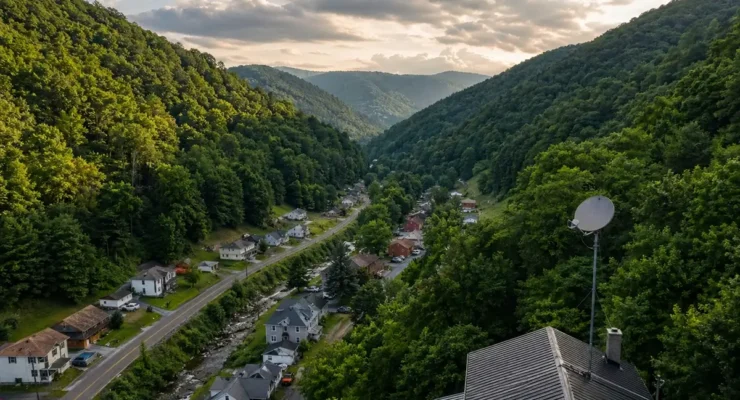
Asheville and its surrounding mountain communities have relatively better broadband access than the rest of western NC due to the tourism-driven infrastructure investment that benefits the broader Asheville metro. Rural communities in the higher elevations of Haywood, Jackson, Swain, and Graham counties — including communities in the Great Smoky Mountains and surrounding national forest areas — face severe connectivity challenges. Cherokee, the Eastern Band of Cherokee Indians’ tribal seat in Jackson County, has benefited from tribal broadband investments. Starlink is the most universally available option across all mountain elevations, with performance that is excellent for most ridge and hillside properties but occasionally challenging for deep valley communities with limited northern sky view.
Piedmont Region (Chatham, Lee, Montgomery, Randolph, Anson Counties)
The rural Piedmont counties west and south of the Triangle have a patchwork of connectivity. Some areas close to the I-85 and US-421 corridor have reasonably adequate DSL or cable from legacy providers. Interior rural Piedmont communities in Chatham, Chatham, Montgomery, and Anson counties have significant broadband gaps. Electric cooperative broadband initiatives are active in this region — Randolph Electric Membership Corporation and several others have been building fiber to rural members. T-Mobile Home Internet availability is moderate in the Piedmont where tower density is higher than in the mountains.
Coastal Plain / Eastern NC (Pitt, Edgecombe, Halifax, Bertie, Tyrrell Counties)
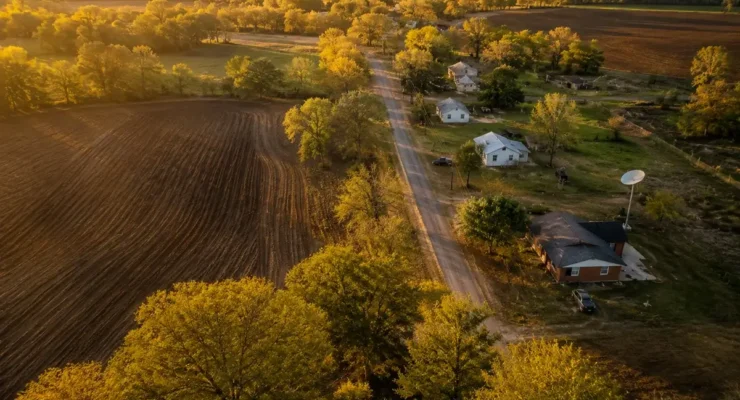
Eastern North Carolina’s rural agricultural counties — the tobacco, hog, and cotton belt stretching from the Roanoke River to the coast — are home to some of the state’s most persistently underserved rural communities. The predominantly flat terrain is actually favorable for fixed wireless coverage, but the region’s limited economic infrastructure has resulted in slow private ISP investment. Historically Black rural communities in counties like Bertie, Hertford, and Northampton have faced compounding barriers of poverty, racial infrastructure inequity, and geographic isolation. The NCDIT GREAT program and BEAD funding have specifically prioritized these communities. Starlink covers this entire region effectively — the flat terrain provides excellent sky views — and T-Mobile’s rural 5G expansion has made Home Internet available in more eastern NC addresses than in the mountains.
Sandhills Region (Moore, Richmond, Scotland, Hoke Counties)
The Sandhills — best known for the golf communities around Pinehurst — have a bifurcated connectivity landscape. The golf resort communities have commercial-grade broadband. Surrounding rural agricultural and timber communities have significant gaps. Fort Bragg (now Fort Liberty) and its surroundings have decent connectivity in the military corridor, but rural Scotland, Richmond, and Hoke counties lag significantly. Electric cooperative broadband and Starlink serve most needs in areas outside fixed broadband reach.

Starlink in North Carolina
Starlink is available across all of North Carolina with no waitlist as of 2026. Performance across the state’s diverse geography is generally strong, with a few regional considerations:
- Eastern NC Coastal Plain: Excellent Starlink conditions — flat terrain, open agricultural land, minimal obstruction. Users routinely report 90–130 Mbps download speeds in these low-density coverage cells.
- Piedmont: Good performance, slightly more populated cells create modest peak-hour congestion compared to eastern NC. 70–110 Mbps typical.
- Western Mountains: Strong performance for ridge and slope properties with clear sky views. Valley and hollow properties may need mast installations to clear terrain obstruction. Performance in mountain coverage cells is often excellent due to sparse user density. 80–120 Mbps typical for well-sited installations.
- High humidity and summer thunderstorms: North Carolina’s humid subtropical climate means regular summer convective thunderstorms. Brief Starlink signal degradation during severe storm cells passing directly overhead is the most common weather-related performance event — typically measured in minutes rather than hours.
North Carolina Electric Cooperatives and Broadband
North Carolina has 26 electric membership cooperatives (EMCs) serving rural members statewide — one of the most extensive rural electric cooperative networks in the Southeast. These cooperatives have been among the most active in the country in pursuing broadband deployment for their members, leveraging existing right-of-way infrastructure and trusted member relationships.
Notable NC electric cooperative broadband initiatives include Randolph Electric Membership Corporation’s fiber deployment in rural Randolph County, Lumbee River EMC’s broadband program serving the Lumbee Tribe’s rural communities in Robeson County, and Four County Electric Membership Corporation’s expanding fixed wireless and fiber service across rural Duplin, Sampson, Wayne, and Johnston counties. If you are a rural NC EMC member and haven’t asked your cooperative about broadband service recently, contact your cooperative directly — programs and availability change rapidly as BEAD funding accelerates deployments.
North Carolina State Broadband Programs
The NC Department of Information Technology (NCDIT) administers North Carolina’s broadband programs through its Broadband Infrastructure Office (BIO). Key programs include:
- GREAT Program: Grant funding for rural broadband infrastructure, specifically targeting unserved rural NC areas. The GREAT program has completed multiple funding rounds and has funded dozens of projects across the state. Information at the NCDIT broadband website.
- NC BEAD Implementation: North Carolina received approximately $1.5 billion in BEAD Program federal funding — one of the largest allocations in the Southeast given the state’s large rural unserved population. NCDIT is coordinating BEAD implementation with a specific priority on the state’s most underserved rural communities including eastern NC counties and western mountain communities.
- NC Digital Equity Plan: As a component of BEAD implementation, North Carolina developed a Digital Equity Plan addressing barriers to internet adoption for low-income, minority, rural, and elderly populations — directly relevant to many rural NC communities.
Practical Tips for Rural NC Residents
- Contact your electric cooperative about broadband. With 26 rural EMCs actively pursuing broadband, your cooperative may have a program already or be planning one. Expressing interest as a member directly influences cooperative leadership’s prioritization of broadband investment.
- Check T-Mobile eligibility quarterly. T-Mobile’s rural NC coverage is expanding as it deploys additional towers using RDOF and other funding commitments. Addresses that weren’t eligible 6–12 months ago may qualify now.
- Challenge your FCC broadband map coverage if inaccurate. ISP overclaiming is a documented problem in North Carolina — providers have claimed coverage of rural NC addresses they do not actually serve. Filing a challenge at broadbandmap.fcc.gov for your address improves NC’s BEAD eligibility and helps ensure funding flows to areas that genuinely need it.
- For western mountain properties, use the Starlink app’s obstruction scanner from the exact installation height before ordering. NC mountain valleys can have significant northern sky obstruction that a 15–20 foot mast resolves. Most mountain ridge and slope properties have clear sky access.
Frequently Asked Questions
What is the best internet option for rural eastern North Carolina in 2026?
For the vast majority of rural eastern NC properties, Starlink is the best available broadband option in 2026. The flat terrain makes Starlink installation straightforward, performance is generally excellent in the lower-density eastern NC coverage cells, and T-Mobile Home Internet availability is better here than in mountain areas. Check T-Mobile first (best value at $50/month), then Starlink if T-Mobile is unavailable or inadequate. Electric cooperative fiber is arriving in specific corridors through BEAD funding — check with your local EMC for deployment timelines.
Is Starlink available in the Great Smoky Mountains area of NC?
Yes. Starlink is available throughout western North Carolina including the Smoky Mountains and Blue Ridge areas. Properties in valleys and hollows may need a taller mast installation to achieve adequate sky clearance, but ridge and hillside properties typically have excellent Starlink conditions. The Great Smoky Mountains National Park area and surrounding rural communities are all within Starlink’s coverage footprint.
When will BEAD-funded fiber reach my rural NC county?
North Carolina’s BEAD implementation timeline varies by county and ISP deployment schedule. NCDIT has targeted early deployment in the most severely underserved counties. Rural eastern NC counties identified as priority unserved areas may see first BEAD-funded service by late 2026 or 2027; mountain counties and other regions by 2027–2029. Monitor the NCDIT Broadband Infrastructure Office’s website for current deployment maps and county-level status updates.


Leave a Reply