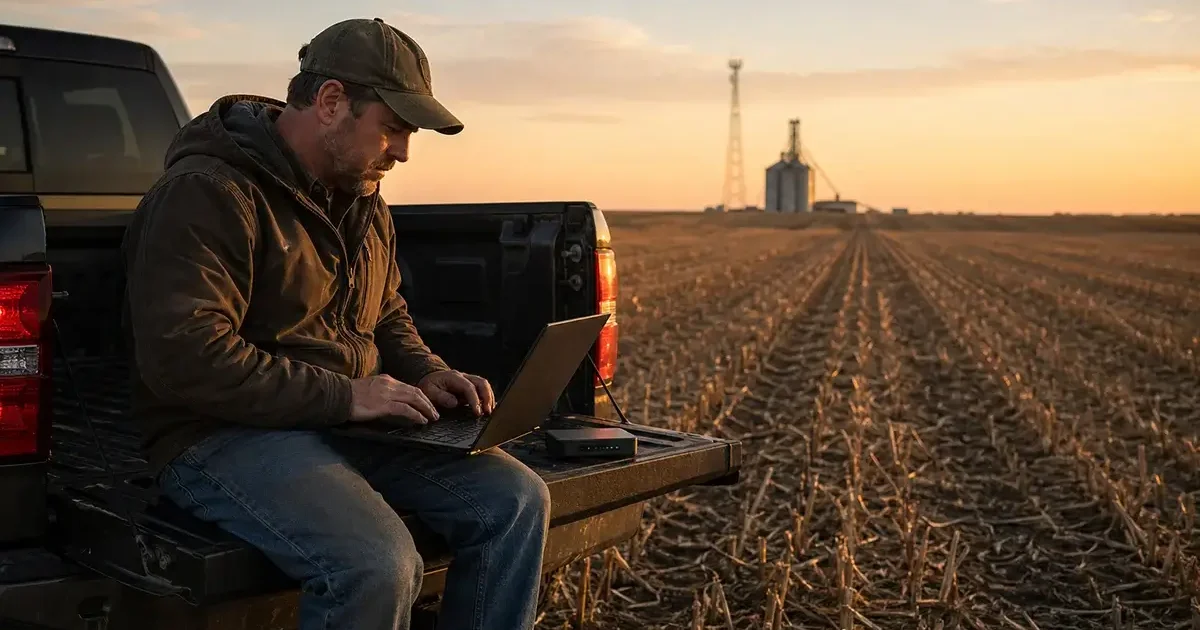
For millions of rural Americans, a cellular mobile hotspot is either their only internet option or a critical backup to satellite and fixed wireless service. In 2026, the mobile hotspot market has evolved dramatically — unlimited data plans that were once prohibitively expensive are now available from every major carrier, and the hardware options range from basic pocket-sized devices to powerful 5G routers capable of supporting an entire rural household. This comprehensive guide covers the best mobile hotspot plans for rural use in 2026, including which carriers have the strongest rural network coverage, which hardware delivers the best performance, and exactly how to build a hotspot setup that reliably serves rural households, farms, and remote workers.
In This Guide
- Why Rural Users Rely on Mobile Hotspots
- Rural Carrier Coverage Compared
- Verizon Hotspot Plans 2026
- AT&T Hotspot Plans 2026
- T-Mobile Hotspot Plans 2026
- Prepaid Hotspot Options for Rural Users
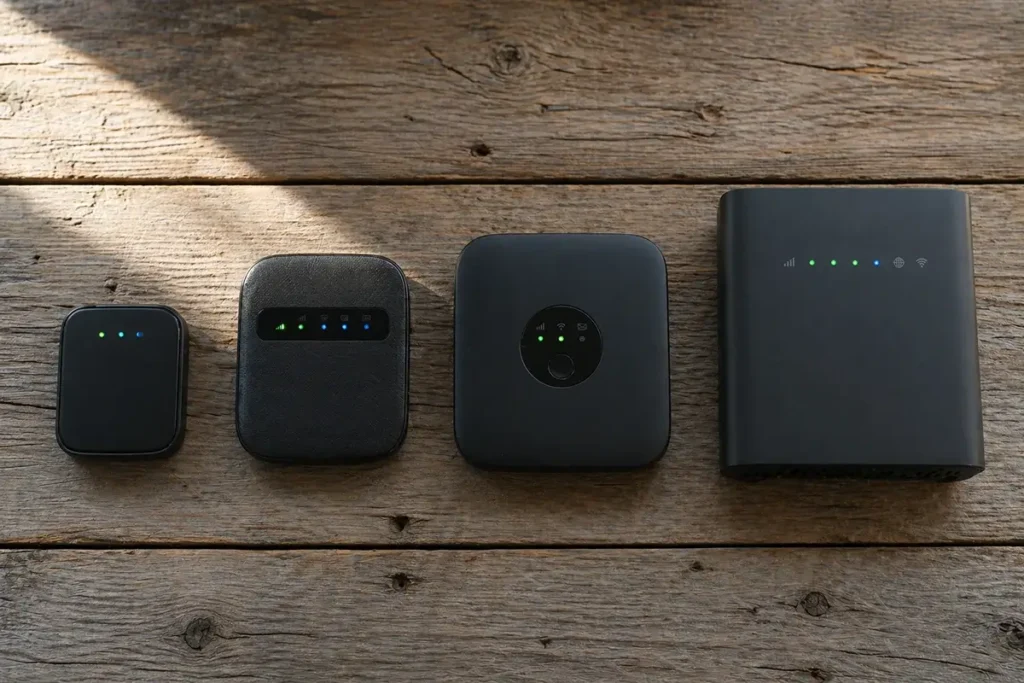
- Best Hotspot Devices for Rural Use
- Combining a Hotspot with a Signal Booster
- Managing Data on a Rural Hotspot Plan
- Hotspot vs Starlink: Which Makes More Sense?
- Frequently Asked Questions
Why Rural Users Rely on Mobile Hotspots
Mobile hotspot internet serves rural Americans in three distinct roles, each with different plan and hardware requirements. Understanding which role applies to your situation is the starting point for choosing the right setup.
Primary internet connection: For rural households where Starlink sky access is blocked by trees or terrain, where fixed wireless towers don’t reach, and where DSL speeds are inadequate, a boosted cellular hotspot may be the best available primary internet option. This use case demands an unlimited data plan with the highest possible priority data allocation, the best-performing hotspot device available, and a signal booster to maximize the cellular signal reaching the device.
Backup connection: For households with Starlink or fixed wireless as primary internet, a cellular hotspot provides automatic failover coverage when the primary connection drops due to weather, equipment issues, or power outages. This use case can be served by a more affordable limited-data plan — most Starlink outages are brief and total monthly failover data consumption is typically under 5–10 GB.
Supplemental mobile data: For rural residents who work from vehicles, travel between properties, or need internet access in locations away from their fixed home connection, a hotspot plan provides mobile data for laptops, tablets, and work devices while on the road. This use case benefits from a plan with strong nationwide coverage even in locations outside your home county.
Rural Carrier Coverage Compared
The most important factor in choosing a rural hotspot plan is not price — it is which carrier’s network actually provides usable signal at your specific location. Carrier coverage maps are notoriously optimistic; the only definitive test is to borrow or trial a SIM from each carrier and check actual signal quality at your property.
As a general framework for 2026 rural coverage:
| Carrier | Rural Coverage Depth | Primary Rural Bands | Best Rural Regions | Weakest Rural Regions |
|---|---|---|---|---|
| Verizon | Best overall rural reach | Band 13 (700 MHz), Band 5 (850 MHz), C-Band 5G | Great Plains, Southeast, Northeast | Rural Northwest, parts of Appalachia |
| AT&T / FirstNet | Strong in south, moderate elsewhere | Band 12/17 (700 MHz), Band 14 (FirstNet), Mid-band 5G | Southern US, Midwest corridors | Rural West, isolated mountain areas |
| T-Mobile | Improving rapidly, still weaker deeply rural | Band 71 (600 MHz), Band 41 (2.5 GHz 5G) | Highway corridors, suburban-rural fringe | Deep rural plains, Appalachia, mountain West |
| US Cellular | Strong in specific Midwest regions | LTE 700 MHz, 5G mid-band | Iowa, Wisconsin, Oregon, Maine | Outside its regional footprint |
Verizon Hotspot Plans for Rural Users 2026
Verizon remains the carrier of choice for most rural hotspot users because its network reaches more deeply rural areas than any competitor. Verizon’s primary rural hotspot plans:
Verizon Unlimited Plus (Hotspot): $30–$45/month when added to an Unlimited Plus phone plan. Includes 100 GB of premium hotspot data per month. After 100 GB, hotspot speeds are reduced during network congestion. For rural users with moderate data needs, 100 GB per month is a comfortable threshold that covers routine work-from-home use, streaming, and family internet consumption.
Verizon Unlimited Ultimate (Hotspot): Premium plan that includes 60 GB of premium mobile hotspot data specifically allocated for hotspot use, with higher overall plan priority. Best suited for heavy users who regularly exceed 30–40 GB of hotspot data per month.
Verizon Inseego 5G MiFi M2000 or Netgear Nighthawk M6 Pro: Verizon’s recommended dedicated hotspot devices for rural use. Both support external antenna connections — critical for rural users who need to use directional antennas to improve signal from distant towers.
Verizon also offers the Verizon Jetpack series of dedicated hotspot devices, which include external antenna ports (TS9 connectors) that allow connection to aftermarket MIMO directional antennas for improved rural signal. This hardware feature — absent from most consumer smartphone hotspot tethering — is one of the most important differentiators for dedicated hotspot devices in rural use cases.
AT&T Hotspot Plans for Rural Users 2026
AT&T’s rural coverage has been significantly improved through the FirstNet network — a dedicated public safety broadband network built on AT&T’s infrastructure that covers rural areas previously underserved by commercial LTE. FirstNet coverage extends into rural corridors specifically to support emergency responders, but general consumers benefit from the improved rural AT&T signal in areas where FirstNet towers have been built.
AT&T Unlimited Premium PL: Includes 100 GB of premium hotspot data per month. After 100 GB, hotspot data continues at reduced speeds during network congestion. AT&T’s rural 700 MHz Band 12/17 provides long-range coverage in flat terrain states particularly well.
AT&T DataConnect 50 GB Plan: A standalone hotspot-only plan (no phone line required) at approximately $55/month for 50 GB of LTE data. Useful for rural users who want a dedicated data-only SIM for a hotspot device without linking it to a phone plan. After 50 GB, speeds are throttled to 128 Kbps — essentially unusable for anything beyond text messaging. Plan your data budget carefully to avoid hitting this threshold.
AT&T Nighthawk M6 Pro / Netgear devices: AT&T supports the same Netgear Nighthawk hotspot hardware as Verizon, with external antenna ports for rural signal optimization.
T-Mobile Hotspot Plans for Rural Users 2026
T-Mobile’s hotspot plans are the most data-generous in the industry — but rural users need to carefully verify T-Mobile network strength at their specific location before relying on T-Mobile for primary rural internet. T-Mobile’s hotspot plans:
T-Mobile Go5G Plus: Includes 50 GB of premium hotspot data. After 50 GB, hotspot data is deprioritized but not hard-capped. In areas with strong T-Mobile 5G coverage, this plan delivers excellent value. In rural areas with only weak LTE, the same plan delivers inadequate throughput regardless of data allocation.
T-Mobile Go5G Next / Business plans: Higher priority data allocations up to 200 GB for business-tier plans. Best suited for rural users within strong T-Mobile coverage who have high monthly data needs.
T-Mobile 5G Mobile Hotspot (device): T-Mobile’s dedicated hotspot device is smaller and more consumer-oriented than Verizon or AT&T’s professional devices. Notably, T-Mobile’s standard hotspot device does not have external antenna ports — a significant limitation for rural users who need antenna optimization. For T-Mobile hotspot users wanting to add an external antenna, use the T-Mobile USB Internet device or third-party modems compatible with T-Mobile’s network bands.
Prepaid Hotspot Options for Rural Users
Prepaid hotspot plans offer flexibility without long-term contracts — valuable for rural users who are testing options or need seasonal connectivity:
Visible (Verizon network, $25/month): Visible runs on Verizon’s network but at a lower priority level. In rural areas with light network load (which describes most rural Verizon cells outside of peak periods), Visible delivers near-identical performance to Verizon postpaid at a fraction of the cost. Unlimited data but hotspot speeds are limited to 5 Mbps — adequate for basic use but insufficient for multiple simultaneous users or 4K streaming. Excellent value as a rural backup connection.
Straight Talk (AT&T or Verizon network, $45–$55/month): Straight Talk offers prepaid plans using AT&T or Verizon’s networks. Select “AT&T” or “Verizon” compatible SIMs when purchasing to ensure your device connects to the rural-strongest network at your location. 10–15 GB of hotspot data included in most plans before throttling.
US Mobile (customizable plans, multi-carrier): US Mobile is a flexible MVNO that allows subscribers to choose between Verizon and T-Mobile network access on the same account. For rural users who want to test both networks, US Mobile offers a practical single-account solution with flexible data options.
Best Hotspot Devices for Rural Use in 2026
| Device | Carrier | External Antenna Port | 5G Support | Wi-Fi Standard | Best For |
|---|---|---|---|---|---|
| Netgear Nighthawk M6 Pro | AT&T / Verizon | Yes (2x TS9) | Yes (Sub-6 + mmWave) | Wi-Fi 6E | Rural primary internet, heavy users |
| Inseego 5G MiFi M2000 | Verizon | Yes (2x TS9) | Yes (Sub-6) | Wi-Fi 6 | Verizon rural, farm operations |
| T-Mobile 5G Hotspot (Sievert) | T-Mobile | No | Yes | Wi-Fi 6 | Urban-rural fringe T-Mobile coverage |
| Cradlepoint R920 (Business) | Multi-carrier | Yes (4x SMA) | Yes | Wi-Fi 6 | Business, farm, dual-SIM redundancy |
| Pepwave MAX BR1 Pro 5G | Multi-carrier | Yes (4x SMA) | Yes | Wi-Fi 6 | Advanced users, dual-WAN, vehicle mount |
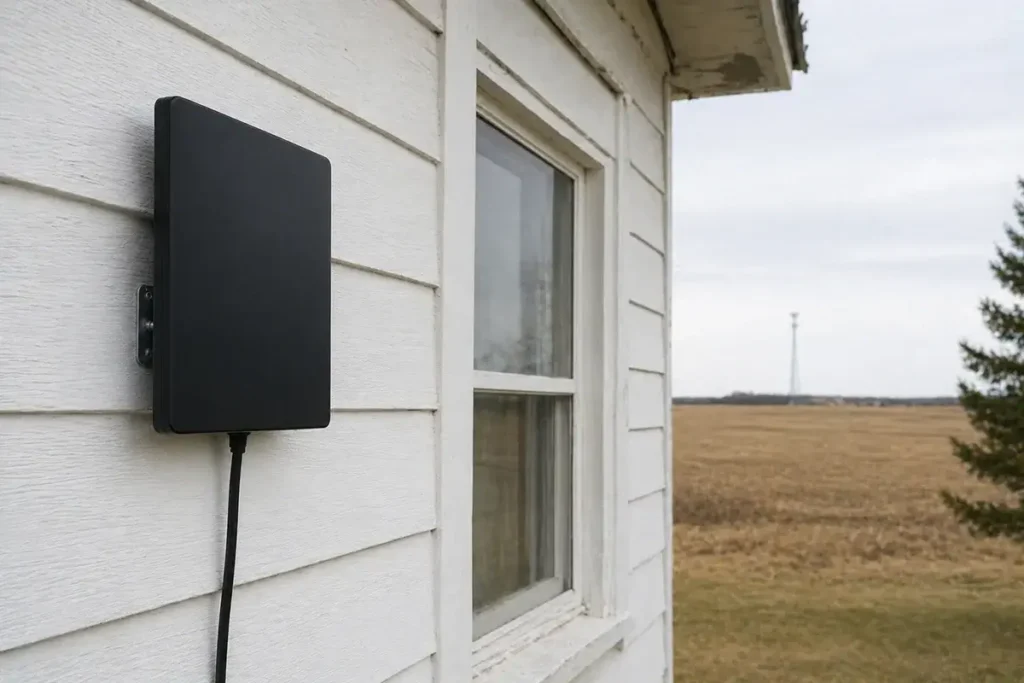
The most important hardware feature for rural hotspot users is the external antenna port. Directional MIMO antenna panels connected to a hotspot device’s TS9 or SMA ports can improve signal strength by 10–20 dB — which translates to dramatically faster speeds in weak-signal rural environments. Antennas from Proxicast, Poynting, and MobileMarks are specifically designed for rural cellular hotspot optimization.
Combining a Hotspot with a Cell Signal Booster
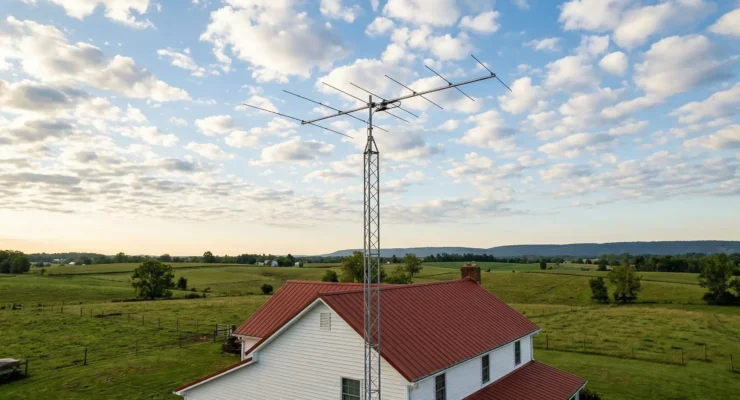
For rural users with weak cellular signal, combining a cellular signal booster with a hotspot device creates the most capable rural cellular internet setup available. The booster amplifies the incoming signal from the nearest tower before it reaches the hotspot device, improving both download speed and connection reliability. Key considerations:
- Place the hotspot device near the booster’s indoor antenna for maximum gain benefit
- Use a directional (Yagi) outdoor antenna on the booster aimed precisely at the nearest tower of your carrier
- The weBoost Home Complete (72 dB gain) is the recommended booster for combined rural hotspot use — see our full cell signal booster guide for complete reviews
- For devices with external antenna ports (Nighthawk M6 Pro, Inseego M2000), you can connect a directional panel antenna directly to the hotspot device, bypassing the need for a separate booster amplifier entirely — this is the most signal-efficient approach
Hotspot vs Starlink: Which Makes More Sense?
| Factor | Best Cellular Hotspot Setup | Starlink Standard |
|---|---|---|
| Monthly Cost | $30–$80 (plan) + $0–$50 (booster amortized) | $120 |
| Hardware Cost | $100–$400 (device) + $400–$650 (optional booster) | $349 |
| Download Speed | 5–80 Mbps (signal dependent) | 65–115 Mbps |
| Latency | 30–80 ms | 20–60 ms |
| Works While Moving | Yes (native) | No (standard dish) |
| Weather Impact | Minimal | Brief heavy-rain events |
| Coverage Gaps | Significant in remote rural areas | Universal (clear sky required) |
For rural properties where strong Verizon or AT&T signal is available, a premium hotspot setup at $40–$60/month is significantly cheaper than Starlink and delivers comparable performance for most household uses. For properties beyond reliable cellular coverage, Starlink is the only viable broadband option. See the FCC’s broadband guidance for help evaluating what options are available in your area.
Frequently Asked Questions
Which carrier is best for rural hotspot internet?
Verizon has the strongest rural cellular network and is the best starting point for most rural hotspot users. Test Verizon signal at your property first — if adequate (at least -105 dBm or better), a Verizon hotspot plan with the Inseego M2000 or Netgear M6 Pro is the recommended setup. In areas where Verizon is weak, test AT&T/FirstNet next, then T-Mobile.
Can a mobile hotspot replace home internet in a rural area?
Yes, in areas with adequate cellular signal (typically within 10–15 miles of a tower). A properly boosted Verizon or AT&T hotspot setup can deliver 20–60 Mbps adequate for video calls, streaming, and remote work. In very weak signal areas (below -110 dBm outdoor), a hotspot typically cannot deliver reliable broadband performance regardless of plan or device quality.
How much data does a rural household use per month?
Average US household internet consumption is approximately 400–600 GB per month according to OpenVault’s Broadband Insights report. Rural households with children doing online schooling or adults working from home may consume 300–800 GB monthly. Most hotspot plans with 50–100 GB of priority data will require careful management for full-household rural internet use.
Does a signal booster increase hotspot data speed?
Yes, directly. A stronger signal enables the hotspot device to connect on faster modulation schemes and use more bandwidth from the tower. In real-world testing, users with -110 dBm outdoor signal who install a 72 dB booster and raise to -90 dBm indoor signal typically see download speed improvements of 200–500% — for example, from 5 Mbps to 15–25 Mbps on the same plan.

Leave a Reply