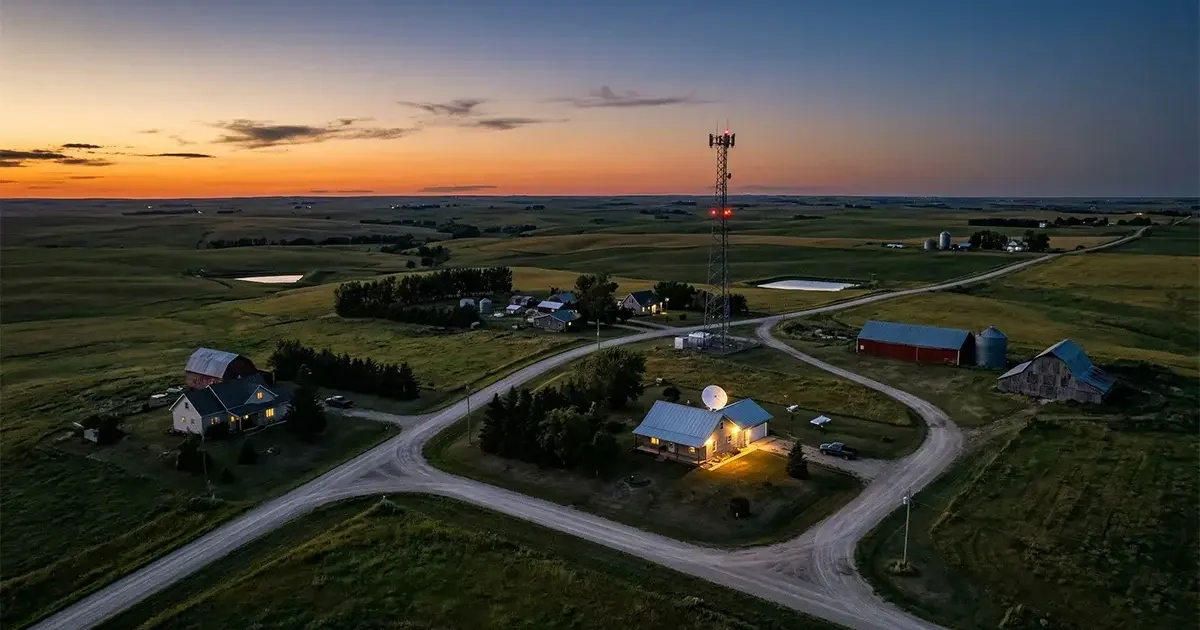
Finding reliable internet in a rural area is one of the most frustrating challenges facing tens of millions of Americans. According to the Federal Communications Commission, approximately 21 million Americans still lack access to broadband-speed internet — and the real number, critics argue, is likely far higher due to flawed reporting methodologies. The good news: 2026 offers rural residents more genuine options than at any point in history. In this comprehensive guide, we break down every major rural internet technology, rank the top providers, and give you a clear framework for choosing the best option based on where you live.
In This Guide
- Types of Rural Internet Technology
- 1. Starlink — Best Overall
- 2. T-Mobile Home Internet — Best Value
- 3. Viasat — Best Legacy Satellite
- 4. HughesNet — Budget Satellite Option
- 5. Local Fixed Wireless ISPs — Best When Available
- Full Comparison Table
- How to Choose the Right Provider
- Government Assistance Programs
- FAQs
Types of Rural Internet Technology
Before comparing providers, it helps to understand the four primary technologies used to deliver internet to rural areas. Each has fundamentally different characteristics in terms of speed, latency, reliability, and coverage:
Low-Earth Orbit (LEO) Satellite: The newest technology, represented by Starlink. Satellites orbit at 340–570 km altitude, delivering low latency (20–60 ms) and high speeds (50–220 Mbps). Coverage is essentially universal — anywhere with a clear sky view can get Starlink. This is the biggest technological breakthrough in rural connectivity history.
Geostationary Satellite: The older technology used by HughesNet and Viasat. Satellites orbit at 35,786 km, resulting in high latency (600–800 ms) that makes real-time applications difficult. Speeds top out at 25–150 Mbps depending on plan. Still useful for light browsing and streaming where no better option exists.
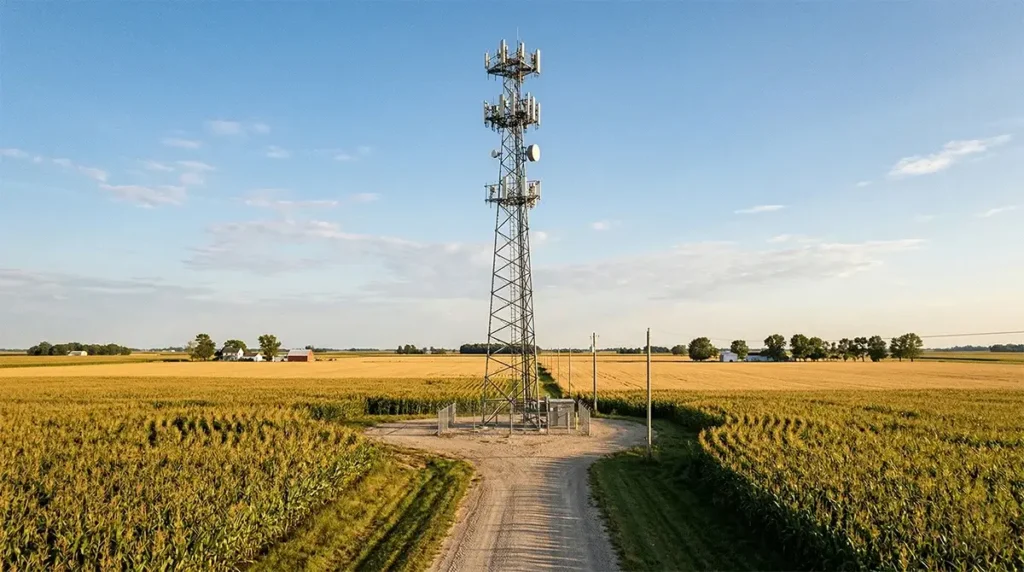
Fixed Wireless Internet (FWI): Ground-based towers transmit radio signals to a receiver on your home or business. When available, fixed wireless is often the best value for rural users — typically $40–$80/month for 25–100 Mbps with lower latency than satellite. The critical limitation: towers must be within line-of-sight range (typically 10–25 miles) of your property.
5G/4G LTE Home Internet: Cellular carriers like T-Mobile and Verizon now offer home internet products using their mobile networks. Where coverage exists, this delivers competitive speeds at low cost. Coverage gaps are significant in deeply rural areas.
1. Starlink — Best Overall Rural Internet in 2026
Starlink has earned its position as the best overall rural internet provider through a combination of near-universal availability, dramatically lower latency than competing satellite options, and consistently improving performance as SpaceX deploys additional satellites.
Why it leads: No other provider offers the combination of wide rural availability and modern broadband-class performance. In areas where T-Mobile or local fixed wireless isn’t an option — which covers the majority of truly rural America — Starlink is the clear top choice for anyone who needs reliable internet for work, school, or business.
Best for: Remote workers, farms, rural families with students, anyone transitioning from HughesNet or Viasat.
Key specs:
- Monthly cost: $120 (Standard) / $250 (Priority)
- Hardware cost: $349 one-time
- Download speeds: 25–220 Mbps
- Upload speeds: 5–40 Mbps
- Latency: 20–60 ms
- Data cap: 1 TB priority (Standard), unlimited priority (Priority)
- Contract: None — cancel anytime
Main drawback: The $120/month starting price and $349 hardware cost make it one of the more expensive options. Properties with significant tree cover may struggle to find an unobstructed installation site.
2. T-Mobile Home Internet — Best Value Where Available
T-Mobile Home Internet is, for many rural households, the best-kept secret in broadband. At just $50/month with no hardware cost, no annual contract, and no data caps, it dramatically undercuts the competition on price — and in areas with strong T-Mobile 5G or LTE coverage, it delivers performance that rivals or beats Starlink.
T-Mobile ships you a cellular gateway device (a plug-in router about the size of a large lamp) and you simply plug it in. No dish installation, no cable runs, no professional installer required. Setup takes about 15 minutes.
Real-world speeds in rural T-Mobile coverage areas: 40–200 Mbps download / 10–40 Mbps upload on 5G; 15–75 Mbps on 4G LTE. Latency of 30–60 ms, similar to Starlink.
The catch: T-Mobile coverage maps are optimistic. Actual home internet performance depends heavily on your proximity to a tower, obstructions (hills, dense forest), and how many other users are sharing the cell. Some rural areas show coverage on the map but deliver only 5–15 Mbps in practice. Always check T-Mobile’s coverage verification tool and ask neighbors before committing.
Best for: Rural households within solid T-Mobile coverage who want the lowest monthly cost. An excellent first choice to try before investing in Starlink hardware.
3. Viasat — Best Legacy Satellite Provider
Viasat (formerly WildBlue) is the second-largest satellite internet provider in the US and operates its own fleet of high-capacity geostationary satellites. Viasat 3, the company’s newest and most powerful satellite, dramatically expanded capacity and now supports plans up to 150 Mbps in some regions — a significant jump from the previous generation’s 25–50 Mbps ceiling.
Viasat’s biggest advantage over HughesNet is plan variety and generally higher speed ceilings. However, high latency (600–700 ms) remains an inherent limitation of geostationary satellite technology regardless of which provider you choose. Video calls work but feel laggy. Gaming is essentially unplayable.
Key specs:
- Monthly cost: $70–$200+ depending on plan tier and region
- Hardware: Typically included or leased (check current offers)
- Download speeds: 25–150 Mbps
- Latency: 600–700 ms
- Data caps: Vary by plan; soft caps with speed reduction after threshold
Best for: Rural users who need a lower upfront cost than Starlink, primarily use the internet for basic browsing and streaming (not video calls or gaming), and are in Viasat 3 coverage areas.
4. HughesNet — Budget Satellite Option
HughesNet is the original mass-market rural satellite internet provider, and it remains the most widely recognized name in the category — though not because it leads on performance. HughesNet uses older geostationary satellite technology and remains capped at 25 Mbps download speeds on most plans, with the same 600+ ms latency that plagues all geostationary satellite services.
Where HughesNet carves out a niche is in entry-level pricing. Plans start around $50–$75/month, though equipment rental fees and data overage charges can push the real monthly cost higher. HughesNet does offer a “Bonus Zone” with additional data during off-peak hours (2–8 AM), which is useful for scheduling large downloads overnight.
Key specs:
- Monthly cost: $50–$175/month
- Download speeds: 15–25 Mbps
- Latency: 600–800 ms
- Data caps: 15 GB–100 GB per plan tier
- Contract: 24-month required
Best for: Rural users with very low monthly budgets who primarily need internet for basic email, light browsing, and standard-definition video streaming. For anyone who needs to work from home, video call, or use cloud services regularly, HughesNet is likely to be inadequate.
5. Local Fixed Wireless ISPs — Best When Available
Local fixed wireless internet providers — sometimes called WISPs (Wireless Internet Service Providers) — are one of the most underrated rural internet options. These are typically small, regional companies that build towers in rural areas and deliver internet via point-to-point or point-to-multipoint radio transmission to homes and businesses within range.
When a good WISP is available in your area, it can outperform both satellite options on price and often on reliability. Speeds range from 25 Mbps to 1 Gbps depending on the provider’s infrastructure, and latency is typically 10–50 ms — genuinely low latency that makes video calls and gaming work well.
The challenge: fixed wireless requires line-of-sight to a tower, typically within 10–25 miles. Hills, dense forest, and geography can block the signal. Coverage is highly localized — your neighbor two miles down the road may have a great WISP option that doesn’t reach your property. Check with your county extension office, neighbors, and the FCC National Broadband Map to identify local WISP providers in your area.
Full Comparison Table: Best Rural Internet Providers 2026
| Provider | Technology | Monthly Cost | Speeds | Latency | Contract | Rating |
|---|---|---|---|---|---|---|
| Starlink | LEO Satellite | $120–$250 | 25–220 Mbps | 20–60 ms | None | ⭐⭐⭐⭐⭐ |
| T-Mobile Home | 5G/4G LTE | $50 | 40–200 Mbps | 30–60 ms | None | ⭐⭐⭐⭐⭐ (where available) |
| Local WISP | Fixed Wireless | $40–$100 | 25–500 Mbps | 10–40 ms | Varies | ⭐⭐⭐⭐ (where available) |
| Viasat | GEO Satellite | $70–$200 | 25–150 Mbps | 600–700 ms | 24 months | ⭐⭐⭐ |
| HughesNet | GEO Satellite | $50–$175 | 15–25 Mbps | 600–800 ms | 24 months | ⭐⭐ |

How to Choose the Right Rural Internet Provider
The best rural internet provider for you depends on four factors: what’s available at your address, your monthly budget, your usage needs, and your tolerance for upfront hardware costs.
Step 1: Check the FCC National Broadband Map for your address. This shows every ISP that has reported serving your location. Note: coverage maps are often optimistic — use them as a starting point, not gospel.
Step 2: Ask neighbors what they’re using and how it performs. Local Facebook groups, Nextdoor, and your county extension office are excellent resources for real-world feedback in your specific geography.
Step 3: Match your primary use case to the right technology. If you work from home with video calls, Starlink or a local WISP is essential — geostationary satellite will disappoint. If you primarily stream video and browse casually, HughesNet or Viasat may suffice at lower cost.
Step 4: Check T-Mobile’s rural home internet availability first. At $50/month with no hardware cost or contract, it is the best value option when it delivers adequate performance.
Government Assistance Programs for Rural Internet
If cost is a barrier, several federal and state programs can help. The USDA ReConnect Program funds rural broadband infrastructure expansion through grants and low-interest loans to ISPs serving underserved rural communities. The NTIA’s BEAD (Broadband Equity, Access, and Deployment) Program has allocated $42.45 billion to states for broadband expansion — the largest federal broadband investment in US history. Individual households may also qualify for state-level subsidized internet programs; check with your state’s broadband office for current offerings.
Frequently Asked Questions
What is the fastest rural internet available?
Starlink Priority delivers the fastest speeds currently available to rural Americans without fiber or cable access, with peak download speeds up to 220 Mbps. Local fixed wireless providers can match or exceed this in areas where they have deployed high-capacity infrastructure, sometimes offering speeds up to 1 Gbps.
Is satellite internet good enough to work from home?
Starlink is good enough to work from home for the vast majority of remote work tasks including video conferencing, cloud applications, VPN access, and large file transfers. Legacy geostationary satellite (HughesNet, Viasat) is generally inadequate for consistent remote work due to high latency making video calls unreliable.
Can I get rural internet without a dish?
Yes. T-Mobile Home Internet and Verizon Home Internet use cellular technology and require only a plug-in gateway device — no outdoor dish installation. Local fixed wireless providers typically require a small receiver on your roof or exterior wall, but installation is simpler than full satellite dish mounting.



Leave a Reply