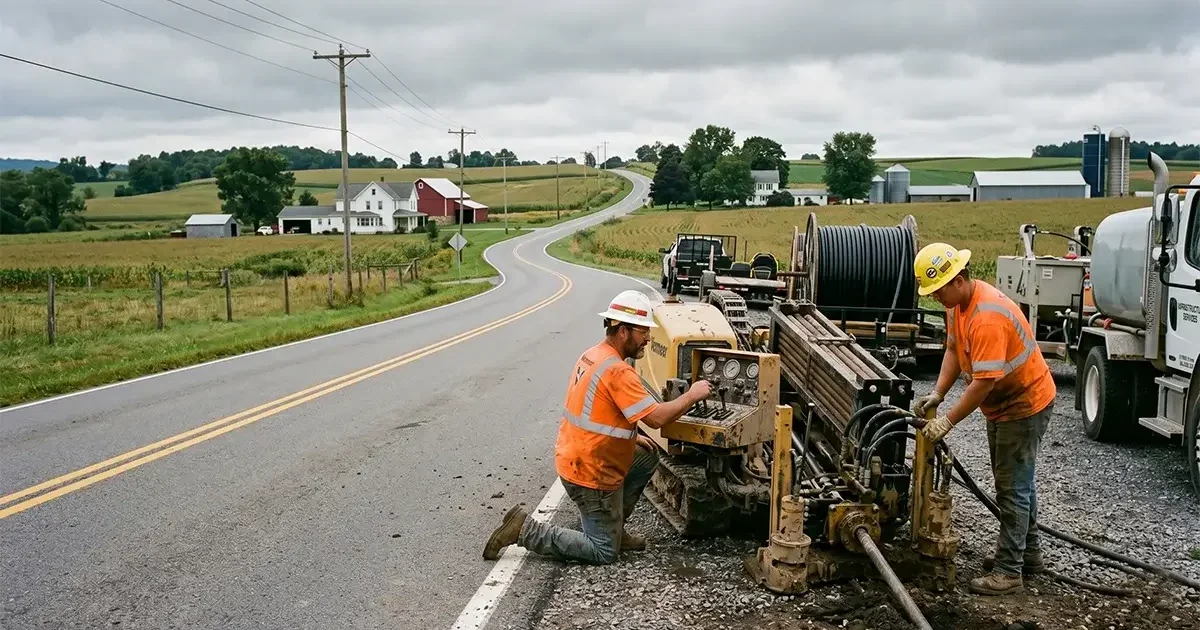
If you live in a rural area without broadband internet, the government has committed more money than ever before to solve your connectivity problem. The USDA ReConnect Program is the single largest federal rural broadband grant and loan program in American history, and it has already funded hundreds of infrastructure projects connecting rural communities across the country to high-speed internet for the first time. In this comprehensive guide, we explain what the ReConnect Program is, what it has funded so far, who is eligible, how to find out if your area is included in a funded project, and what you can do to accelerate broadband deployment in your community.
In This Guide
- What Is the USDA ReConnect Program?
- Funding Rounds and Awards to Date
- Who Is Eligible for ReConnect Funding?
- How to Find Out If Your Area Is Covered
- The BEAD Program: The Even Bigger Picture
- Other Federal and State Programs
- How to Advocate for Broadband in Your Area
- Realistic Timeline for Broadband Expansion
- FAQs
What Is the USDA ReConnect Program?
The USDA ReConnect Program (formally the “ReConnect Loan and Grant Program”) is administered by the USDA Rural Development office and provides funding — through grants, loans, and grant/loan combinations — to eligible entities that build, improve, or expand broadband service in rural areas that lack sufficient internet access.
Unlike programs that subsidize internet costs for individual households, ReConnect funds the construction of actual physical infrastructure: fiber-optic cable buried underground, wireless towers erected on hilltops, equipment installed in rural utility buildings. This is capital-intensive infrastructure that private ISPs would not build on their own because the return on investment doesn’t justify the cost of serving sparse rural populations. Government funding bridges that gap.
Eligible applicants for ReConnect funding are not individual households — they are organizations capable of building and operating broadband infrastructure: internet service providers, electric cooperatives, municipalities, rural telephone cooperatives, and tribal organizations. Individual rural residents benefit indirectly when a funded entity builds infrastructure in their area.
ReConnect Funding Rounds and Awards to Date
Since launching in 2019, the ReConnect Program has conducted multiple funding rounds with escalating investment as the federal government has increasingly recognized rural broadband as critical infrastructure:
| Round | Year | Total Available | Projects Funded | Notes |
|---|---|---|---|---|
| Round 1 | 2019 | $600 million | 72 projects | Inaugural round; pilot program |
| Round 2 | 2020 | $550 million | 66 projects | Expanded geographic coverage |
| Round 3 | 2022 | $1.15 billion | 271 projects | Largest round at time; includes American Rescue Plan funding |
| Round 4 | 2023–24 | $3.1 billion | Ongoing | Historic investment including Infrastructure Law funding |
Round 4 represents the most significant single investment in rural broadband infrastructure in US history, funded through the Infrastructure Investment and Jobs Act (also called the Bipartisan Infrastructure Law) signed in 2021. Combined with BEAD Program funding (discussed below), the total federal commitment to rural broadband infrastructure between 2021 and 2030 exceeds $65 billion — a scale of investment that dwarfs all previous rural connectivity programs combined.
Projects funded through ReConnect must provide service meeting the FCC’s current broadband definition of at least 100 Mbps download / 20 Mbps upload, must serve rural areas with populations under 20,000 per square mile, and must ensure that a minimum percentage of service units in the funded area were previously unserved (no existing broadband access) or underserved (below 25 Mbps / 3 Mbps).
Who Is Eligible for ReConnect Funding?
To be clear about who the program serves at each level:
Eligible applicants (organizations that can apply for funding):
- Internet service providers (ISPs) of any type — commercial, nonprofit, cooperative
- Rural electric cooperatives and utilities
- States, territories, and their political subdivisions
- Tribal governments and tribally controlled entities
- Municipalities and local government entities
- Nonprofits
- For-profit corporations
Eligible service areas (where the funded infrastructure must be built):
- Rural areas (outside Census-defined urbanized areas)
- Population density under 20,000 persons per square mile
- Minimum percentage of the funded area must be “unserved” (no broadband) or “underserved” (below 25/3 Mbps) — specific percentage requirements vary by grant type (100% grant vs 50% grant/50% loan vs 100% loan)
Who ultimately receives service: Rural households, farms, businesses, schools, libraries, and other institutions located in funded project areas. Individual residents cannot apply for ReConnect funding directly, but they are the ultimate beneficiaries of funded projects.
How to Find Out If Your Area Is Covered
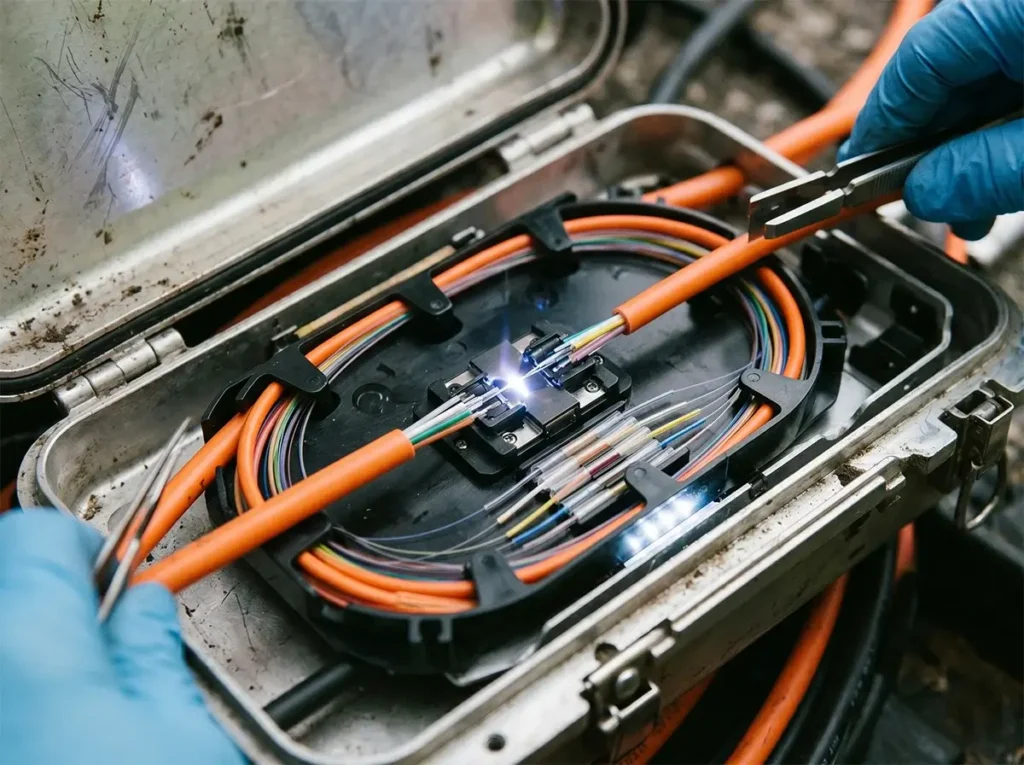
The USDA maintains an interactive map of all ReConnect-funded projects, updated regularly as new awards are made. To check whether your address falls within a funded project area:
- Go to the USDA ReConnect Program page at usda.gov/reconnect
- Navigate to the “Award Map” or “Funded Projects” section
- Search by your state or enter your county name to see funded projects in your area
- Click on any project to see its service area boundaries, the funded company, the technology type, and the expected service completion date
If your area is within a funded project boundary, contact the funded organization directly for a deployment timeline and how to request service. Organizations funded through ReConnect are contractually obligated to build and offer service within the funded area within defined timelines.
If your area is not covered by any funded project, read on — there are additional steps you can take.
The BEAD Program: The Even Bigger Investment
The Broadband Equity, Access, and Deployment (BEAD) Program, administered by the National Telecommunications and Information Administration (NTIA), is the largest single federal broadband investment ever made at $42.45 billion. Unlike ReConnect, which operates as a competitive grant program, BEAD allocates funds to every state, territory, and Washington DC through a formula, requiring each state to develop its own broadband expansion plan and deploy funds through a state-administered process.
The BEAD Program’s stated priority order is:
- Unserved locations first — locations with no broadband service at all (below 25/3 Mbps) must be served before any other deployment
- Underserved locations second — locations with service below 100/20 Mbps
- Community anchor institutions (schools, libraries, healthcare, public safety)
- Other eligible entities
This priority order means that the most rural and isolated Americans — those with absolutely no broadband access — are legally required to be addressed first under BEAD. States are currently in various stages of implementation, with some already in active construction and others still in the planning phase. Timelines vary significantly by state.
Other Federal and State Programs
Beyond ReConnect and BEAD, several other programs contribute to rural broadband expansion:
- FCC Rural Digital Opportunity Fund (RDOF): $20.4 billion allocated through FCC’s Universal Service Fund for rural broadband deployment. Some winners have faced challenges delivering on their build-out commitments, and ongoing enforcement actions are reshaping which areas get served.
- E-Rate Program: Subsidized internet access for schools and libraries, with rural schools receiving higher subsidy rates than urban institutions.
- FCC Lifeline Program: Subsidized phone and internet for qualifying low-income households. While the former Affordable Connectivity Program (ACP) was discontinued in 2024, replacement or successor programs are under legislative discussion.
- State Broadband Programs: Most states have independent broadband funding programs layered on top of federal programs. State programs vary enormously — some are well-funded and actively deploying, others are minimal. Your state’s broadband office website is the best source for current state-level programs.
How to Advocate for Broadband in Your Area
Government programs prioritize areas based on data — specifically, which locations are shown as unserved in federal databases. If your area is incorrectly mapped as “served” (a pervasive problem with the FCC’s coverage data), you may be deprioritized for funding despite having no adequate broadband access. Here is how to fight back:
- File a challenge on the FCC National Broadband Map. At broadbandmap.fcc.gov, you can challenge the accuracy of coverage data reported for your address. If your address is shown as “served” by a provider that doesn’t actually serve you, file a formal challenge. Your challenge goes into the official record used by BEAD planners.
- Organize neighbors to all file challenges. Isolated challenges are noted; concentrated challenges from an entire road or community carry much more weight and can trigger formal investigation.
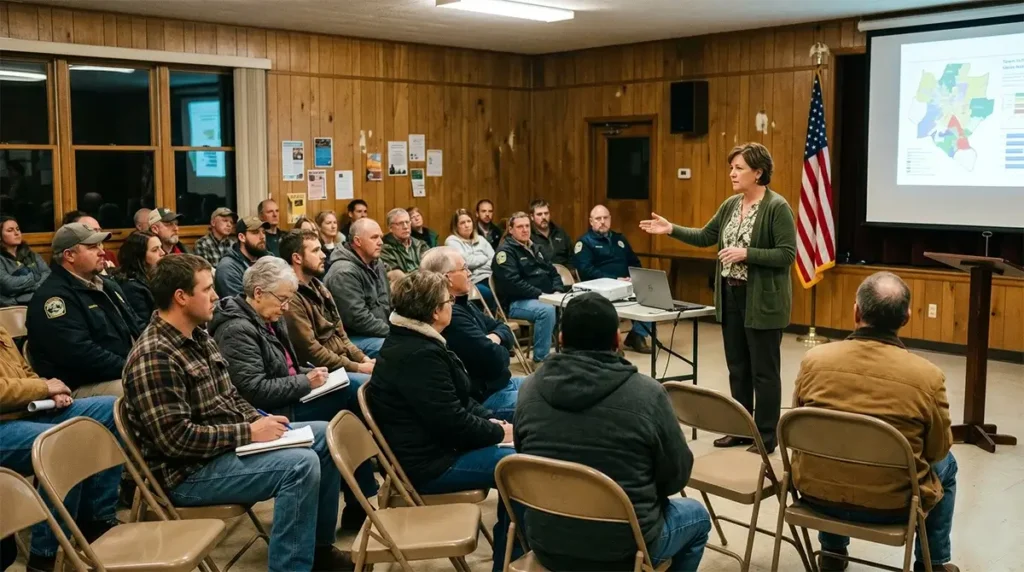
- Contact your state broadband office. State broadband directors are actively compiling lists of underserved communities for BEAD deployment. Make sure your community is on their radar.
- Engage your elected representatives. Congressional representatives and state legislators have influence over broadband program implementation. A constituent letter from multiple rural households describing their connectivity situation and requesting intervention is a legitimate and often effective advocacy tool.
- Contact local ISPs about expanding to your area. Electric cooperatives and local WISPs often expand service if there is sufficient demonstrated demand. A written petition from 20–30 households requesting service can prompt a feasibility study.
Realistic Timeline for Rural Broadband Expansion
One of the most common frustrations among rural residents is the gap between government program announcements and actual service availability. Here is an honest timeline assessment:
- ReConnect-funded projects: Funded organizations typically have 2–4 years from funding award to complete construction and begin offering service. Projects announced in 2023–2024 are likely to complete service in 2025–2027.
- BEAD-funded projects: BEAD implementation timelines vary dramatically by state. Early-mover states may see initial service in 2026–2027; slower states may not have widespread BEAD-funded service until 2028–2030.
- The practical implication: If you are waiting for government-funded broadband to arrive at your address, the wait may be 2–5 years or more. For rural residents who need internet today, Starlink satellite remains the most immediately actionable solution while government-funded infrastructure is built out.
Frequently Asked Questions
Can I apply for USDA ReConnect funding as an individual?
No. Individual households cannot apply for ReConnect grants or loans. Only organizations (ISPs, cooperatives, municipalities, etc.) are eligible applicants. Your role as a rural resident is as the intended beneficiary once a funded organization builds infrastructure in your area.
How do I know if a ReConnect project will serve my property specifically?
Check the USDA’s funded project map and then contact the funded organization directly with your address to confirm that your property falls within their planned service area. Some projects have precise service area maps; others have broader geographic targets that may or may not include your specific road or parcel.
What technology do ReConnect-funded projects typically use?
The majority of ReConnect Round 3 and Round 4 funded projects use fiber-optic cable, which provides the highest capacity and longest-lasting infrastructure. Some projects use fixed wireless or hybrid fiber-wireless solutions in areas where the terrain or cost makes all-fiber deployment prohibitive. All funded projects must deliver at least 100/20 Mbps broadband speeds.


Leave a Reply