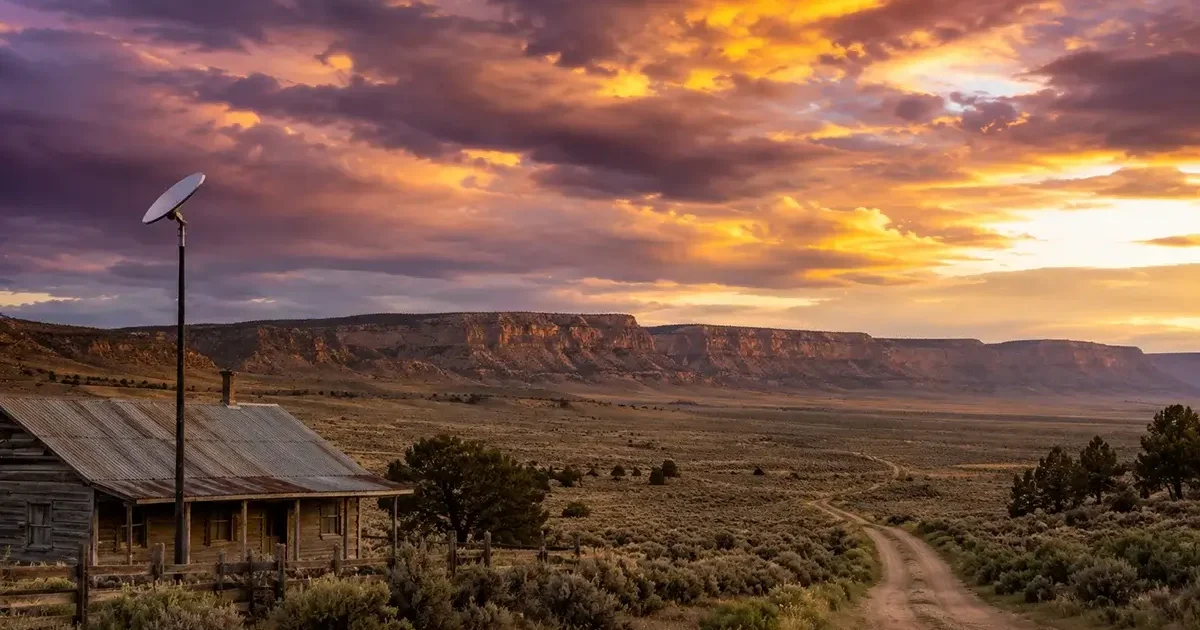
Oregon’s rural broadband landscape spans some of the most dramatic geographic extremes of any US state — from the dense, wet forests of the Coast Range and Cascades where terrain creates formidable wireless obstacles, to the vast high desert of eastern Oregon where distances between communities can exceed 100 miles and population densities rival the most remote areas of Montana and Wyoming. The state is a study in connectivity contrasts: the Portland metro has world-class fiber infrastructure; rural Harney County — the largest county by area in Oregon — has infrastructure more comparable to rural Wyoming or Montana than to anything in western Oregon. In 2026, Starlink’s universal coverage, an active electric cooperative sector, and Oregon’s BEAD Program investment are improving rural connectivity across this extraordinarily diverse state. This complete guide covers every rural internet option across Oregon’s distinct geographic regions.
In This Guide
- Oregon Rural Broadband Overview
- Best Internet by Oregon Region
- Starlink in Oregon
- Cellular Coverage in Rural Oregon
- Oregon Electric Cooperatives and Broadband
- Oregon State Broadband Programs
- Connectivity on Oregon Tribal Lands
- Eastern Oregon Ranching and Connectivity
- Practical Tips for Rural Oregon Residents
- Frequently Asked Questions
Oregon Rural Broadband Overview
Oregon’s rural broadband gap is shaped as much by geography as by economics. The state’s Cascade Mountain range creates a fundamental divide between the wet, forested western Oregon and the dry, sparsely populated eastern Oregon — and this geographic divide maps closely onto a connectivity divide. Western Oregon’s rural communities benefit from relative proximity to the Portland-Salem-Eugene metro corridor and somewhat better commercial ISP investment incentives than eastern Oregon’s vast ranching and agricultural communities far from any urban anchor.
According to the FCC National Broadband Map, Oregon has significant concentrations of unserved addresses in eastern Oregon’s largest counties (Harney, Lake, Malheur, Wheeler, Gilliam, Grant), the southern Oregon Coast, the Klamath Basin, and the rural portions of the Willamette Valley outside the main urban corridor. Eastern Oregon’s scale makes it particularly challenging — Harney County alone is larger than several eastern US states, with a population of fewer than 8,000 people and communities separated by enormous distances.
Oregon has been an active broadband investment state — the Oregon Broadband Office (OBO) has been one of the more effective state broadband offices in the West, having built Oregon’s broadband infrastructure map from scratch and developed one of the more methodologically rigorous state broadband programs in the country. This institutional investment has positioned Oregon to deploy BEAD funding effectively.
Best Internet by Oregon Region
Oregon Coast (Lincoln, Tillamook, Curry, Coos, Clatsop Counties)
Oregon’s coastal communities present a fascinating connectivity paradox — they are geographically close to Portland but functionally remote in terms of infrastructure due to the Coast Range creating natural barriers to cable and fiber deployment. Communities along US-101 have telephone company DSL and in some areas limited cable coverage. Rural properties off the highway corridor — particularly in the southern Oregon coast’s more remote communities of Curry County — have limited options beyond satellite. The Oregon Coast’s marine climate creates Starlink weather considerations: the region’s frequent dense fog and rain are generally not problematic for Starlink performance (LEO satellite is more resilient to weather than legacy GEO satellite), but heavy coast storms with very high winds create occasional brief outages. Starlink is available statewide and serves most coastal properties adequately.
Willamette Valley Rural (Polk, Yamhill, Linn, Benton, Lane Counties)
The rural portions of Oregon’s Willamette Valley — the agricultural and timber communities between the major cities — have moderate connectivity options. Oregon Telephone, CenturyLink legacy infrastructure, and several smaller telephone companies provide DSL in rural corridors. Charter/Spectrum cable extends into some rural valley communities. T-Mobile Home Internet availability is moderate in the Willamette Valley’s rural fringe communities near Eugene and Salem. Starlink performs well across the valley’s relatively open agricultural landscape. Electric cooperatives including Central Electric Cooperative serve portions of the valley’s rural areas with broadband programs.
Southern Oregon (Jackson, Josephine, Douglas Counties)
Southern Oregon’s Rogue River and Umpqua valleys have better connectivity than eastern Oregon but significant rural gaps in the mountainous terrain between valley communities. Medford and Grants Pass have cable and fiber. Rural communities along the North Umpqua, the Illinois Valley, and the more remote portions of Jackson County depend on telephone cooperative DSL and Starlink. The region’s scenic mountains and timber country attract significant vacation home and rural residential demand that has driven some commercial broadband investment in specific corridors. Starlink sky access varies significantly — open valley properties have excellent conditions while forested mountain communities may need mast installation to clear tree canopy.
Eastern Oregon High Desert (Harney, Lake, Malheur, Wheeler, Gilliam Counties)
Eastern Oregon’s high desert is among the most sparsely populated and least-connected territory in the continental United States. Harney County’s county seat of Burns is an extraordinary 130 miles from the nearest significant city (Bend). Lake County’s Lakeview is similarly isolated. The vast distances, extremely sparse population, and limited economic activity have resulted in minimal commercial ISP investment beyond the county seat towns. Starlink has been genuinely transformative for eastern Oregon ranching communities — providing the first-ever broadband-quality connectivity to properties that have existed in telecommunications isolation for generations. The high desert’s open terrain provides excellent Starlink sky views from virtually any location.
Northeast Oregon (Union, Wallowa, Baker, Grant Counties)
Northeast Oregon’s Eagle Cap Wilderness area, Hells Canyon, and the Wallowa Mountains define some of Oregon’s most dramatic and remote terrain. Enterprise and Joseph in Wallowa County are functionally remote despite not being extreme in absolute distance from any city. The mountainous terrain creates significant wireless coverage challenges for cellular and fixed wireless. Starlink covers this region with generally good performance given the relatively low coverage cell density. Oregon Telephone Association member companies serve some communities in this region with varying quality telephone and broadband services.
Oregon Electric Cooperatives and Broadband
Oregon’s electric cooperatives serve rural members in both western and eastern Oregon, with some having become significant broadband deployers:
- Central Electric Cooperative: Serving rural communities in Crook, Deschutes, and Jefferson counties — the central Oregon high desert east of the Cascades — with expanding fiber broadband.
- Harney Electric Cooperative: Serving Harney County members with broadband development plans using BEAD funding — one of the most critical rural broadband programs in the West given Harney County’s extreme isolation and connectivity deficit.
- Wasco Electric Cooperative: Serving rural communities in Wasco, Hood River, and Sherman counties with broadband programs.
- Pacific Power (PacifiCorp): Oregon’s investor-owned utility serving significant portions of rural Oregon, increasingly partnering with broadband providers to leverage utility infrastructure for rural deployment.
Oregon State Broadband Programs
Oregon’s broadband programs are led by the Oregon Broadband Office (OBO), part of the Oregon Business Development Department. Oregon received approximately $669 million in BEAD Program federal funding. The OBO has been notable for developing one of the nation’s more rigorous state broadband maps — independently verified address-level coverage data that has been used to challenge ISP overclaiming more effectively than many states, resulting in a larger-than-expected BEAD-eligible address count.
Oregon’s BEAD implementation specifically targets eastern Oregon as a first-priority deployment zone, reflecting the extreme isolation of communities in Harney, Lake, and Wheeler counties. The state has committed to ensuring that Harney County — the most underserved major county in the western US — receives meaningful BEAD investment in the first deployment round rather than being treated as too expensive to serve promptly. More information at the Oregon Broadband Office website and through the USDA Rural Development Oregon state office.
Eastern Oregon Ranching and Connectivity
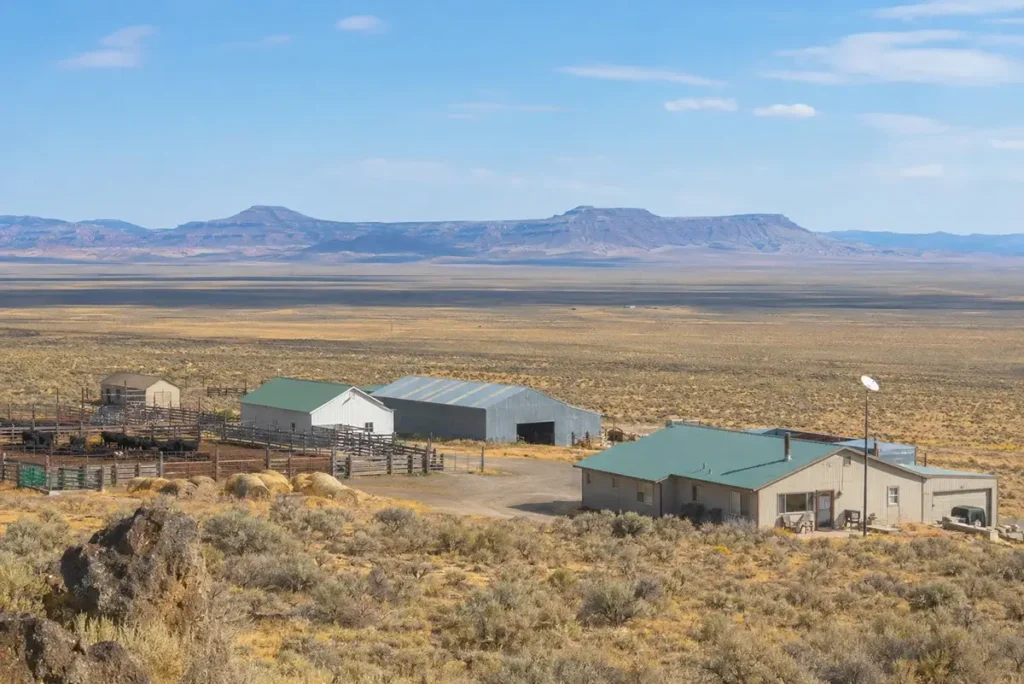
Eastern Oregon’s cattle ranching operations are among the most geographically extensive in the United States — ranch properties of 50,000–200,000 acres are not unusual in Harney, Lake, and Malheur counties. These operations have connectivity needs that span both the ranch headquarters and vastly distributed field operations across hundreds of square miles of range.
Starlink has been adopted by eastern Oregon ranching operations at a rapid pace since its rural deployment — often replacing decades-old HughesNet service that provided inadequate connectivity for modern agricultural management. The ability to access USDA reporting systems, livestock market platforms, grazing management software, and family communication from ranch headquarters has been transformative. For remote range locations where livestock monitoring and equipment tracking are needed, LoRaWAN IoT networks connected via Starlink at the ranch headquarters provide cost-effective sensor coverage across vast acreages — see our guide to LoRaWAN for rural properties for detailed setup guidance applicable to large Oregon ranch operations.
Practical Tips for Rural Oregon Residents
- Eastern Oregon residents: Starlink is almost certainly your only viable broadband option today. The high desert terrain is ideal for Starlink installation with no obstruction concerns. Performance in eastern Oregon’s very sparse coverage cells is consistently among the strongest in the state — many eastern Oregon users report 100–150 Mbps speeds even during peak hours due to low coverage cell congestion.
- Oregon Coast residents: Check your sky clearance carefully — the Coast Range creates northern sky obstruction challenges for some valley properties west of the divide. Most coastal ridge and beachfront properties have excellent Starlink conditions, but use the app scanner before ordering for any property with significant forest cover or terrain to the north.
- Central Electric members (Crook, Deschutes, Jefferson counties): Central Electric Cooperative has been one of Oregon’s most active cooperative broadband deployers. Contact Central Electric directly about fiber service availability at your address — the program has expanded rapidly and may now cover areas not previously served.
- Harney and Lake County residents: The specific focus on your region in Oregon’s BEAD implementation is worth monitoring. Harney Electric Cooperative’s broadband planning could deliver significantly lower-cost fiber alternatives to Starlink within the next 3–5 years. In the interim, Starlink is your best immediate option — no contract means you can switch to cooperative fiber when it becomes available without penalty.
Frequently Asked Questions
What is the best internet for rural eastern Oregon ranches?
Starlink is the definitive solution for eastern Oregon ranching operations today. The high desert terrain provides excellent sky views, performance in the sparsely populated eastern Oregon coverage cells is consistently strong, and the Standard plan at $120/month handles all ranch headquarters operations. For operations requiring connectivity across vast range areas for livestock tracking or remote monitoring, supplement Starlink at headquarters with LoRaWAN IoT infrastructure for field sensors and Garmin inReach/SPOT communicators for individual worker safety communication in remote locations.
Does Starlink work in the Wallowa Mountains and Hells Canyon area?
Yes. Starlink is available throughout the Wallowa County area including the mountains and Hells Canyon corridor. Sky access from within the canyon itself is limited by the canyon walls, but properties on the rim and in the surrounding valley have excellent Starlink conditions. The town of Enterprise and surrounding agricultural communities use Starlink widely for their primary internet connectivity.
When will rural Oregon’s most remote communities get broadband alternatives to Starlink?
Oregon’s BEAD implementation targets eastern Oregon as a first-priority zone, but realistic timelines for infrastructure deployment in Harney County’s most remote communities range from 2027 to 2030+. Harney Electric Cooperative’s broadband planning with BEAD funding is the most promising path to wired broadband for Burns and surrounding communities. For truly remote range communities and ranch properties far from any town, the economics of fiber deployment make satellite the long-term practical solution even after BEAD-funded community deployments — with Starlink being the best available satellite option.

Oregon’s Recreation Economy and Broadband
Oregon’s outdoor recreation economy — fishing, hunting, whitewater rafting, hiking, skiing, and agritourism — increasingly depends on broadband connectivity for online booking platforms, social media presence, guest services, and operational management. Rural Oregon recreation businesses — float trip outfitters on the Deschutes, Rogue, and McKenzie rivers; hunting guides in eastern Oregon; ski area support businesses in the Cascades; vacation rental operators on the coast — need connectivity that supports the digital commerce their businesses require in the modern market.
Starlink has been adopted rapidly by Oregon’s recreation economy, particularly in eastern Oregon’s remote recreation destinations where no other broadband option exists. A guest ranch in Lake County that previously had only satellite phone communication can now maintain an active booking website, respond to inquiries within minutes, process credit card payments securely, and provide guest Wi-Fi — transforming both the operational capability and the marketable guest experience of the property. Several Oregon hunting guides operating in the Blue Mountains, Wallowas, and Steens Mountain country report that Starlink connectivity has allowed them to extend their guiding season by maintaining client communication from remote camp locations that previously required returning to town to check email and respond to inquiries.
For Oregon recreation and agritourism businesses, the internet setup recommendations mirror those for vacation rental properties generally — Starlink Business as primary with cellular backup for continuous uptime, remote management capability for monitoring connection status when away from the property, and appropriate guest network separation for properties that provide guest Wi-Fi. The investment in reliable connectivity infrastructure is justified by improved booking conversion rates, operational efficiency, and the ability to market the property effectively through online channels that require consistent internet access for content management and inquiry response. Oregon’s tourism industry economic development organizations — including Travel Oregon and regional tourism commissions — recognize rural broadband as a business infrastructure need and have advocated for its prioritization in state broadband investment planning.
Eastern Oregon’s recreationist influx — the region has seen meaningful population growth from outdoor recreation enthusiasts and remote workers seeking affordable rural Oregon living — has increased rural internet demand specifically in communities near major recreation destinations. Communities like Sisters, Bend’s rural orbit, the Wallowa Valley around Enterprise and Joseph, and the Steens Mountain country around Burns have seen new residents arrive with remote work and recreation needs that existing internet infrastructure cannot adequately serve. This demand signal is influencing both BEAD Program deployment prioritization and the commercial viability of WISP investment in previously underserved eastern Oregon communities.


Leave a Reply