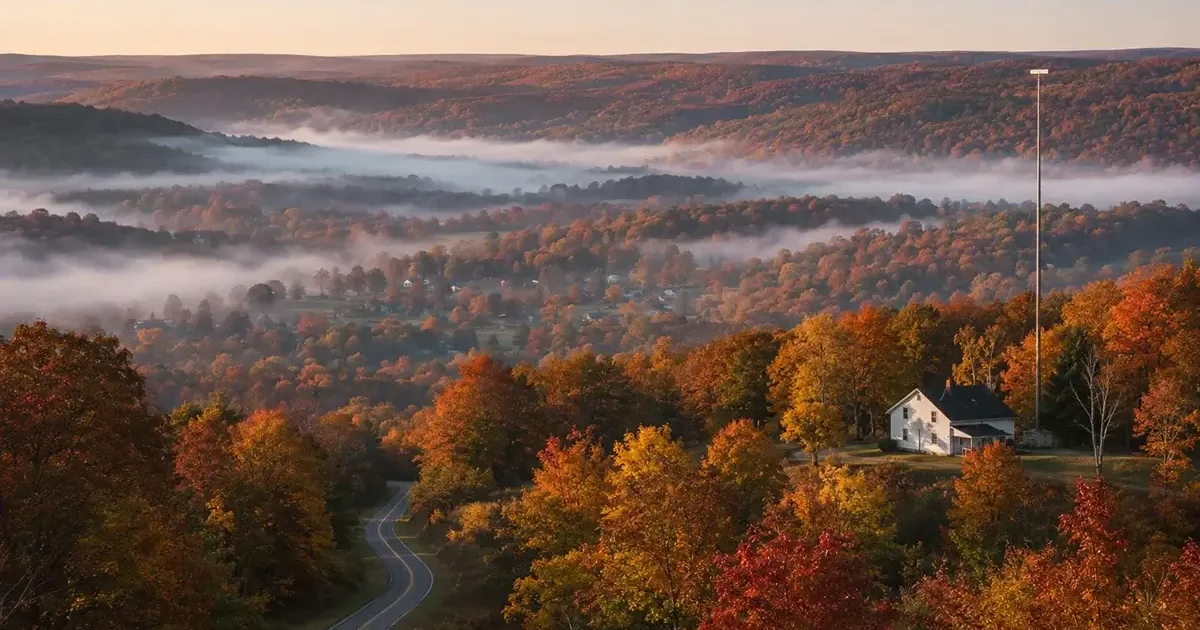
Pennsylvania’s rural broadband gap is perhaps the most politically visible in the northeastern United States — a state that contains both Philadelphia and Pittsburgh, two of America’s great cities, alongside rural communities in the Appalachian ridges and valleys of the north-central counties, the agricultural landscapes of Lancaster and Lebanon counties, and the remote forest country of the Pocono and Allegheny Plateau regions that have connectivity situations more reminiscent of rural Appalachian states than of a northeastern state with two major metro areas. With approximately 3.4 million rural residents across its 67 counties, Pennsylvania has a rural broadband challenge that is substantial in scale and varied in character. This complete guide covers rural internet options across Pennsylvania’s diverse regions in 2026.
In This Guide
- Pennsylvania Rural Broadband Overview
- Best Internet by Pennsylvania Region
- Starlink in Pennsylvania
- Cellular Coverage in Rural Pennsylvania
- Pennsylvania Electric Cooperatives
- Pennsylvania State Broadband Programs
- North-Central PA: The Black Forest Country
- Pennsylvania Agriculture and Connectivity
- Practical Tips for Rural Pennsylvania Residents
- Frequently Asked Questions
Pennsylvania Rural Broadband Overview
Pennsylvania’s broadband landscape reflects the state’s distinctive geographic character — a state where major metropolitan corridors (I-76, I-78, I-80, I-79 corridors) have decent commercial broadband while the vast stretches between them, particularly in the Appalachian ridge-and-valley country of the center and north, have connectivity situations as challenging as rural West Virginia or Kentucky.
According to the FCC National Broadband Map, Pennsylvania has significant concentrations of unserved addresses in its north-central counties (Clinton, Potter, Tioga, Sullivan, Lycoming, Cameron), the northern anthracite coal region, several western Pennsylvania counties adjacent to the Ohio border, and rural southwestern Pennsylvania communities in the Appalachian ridges. Pennsylvania’s population density (the 5th most populous US state with 12.8 million residents) somewhat obscures the severity of rural broadband gaps that are dispersed across a large and geographically varied state.
Best Internet by Pennsylvania Region
Southeast PA Rural / Lancaster County (Lancaster, Chester, York, Adams Counties)
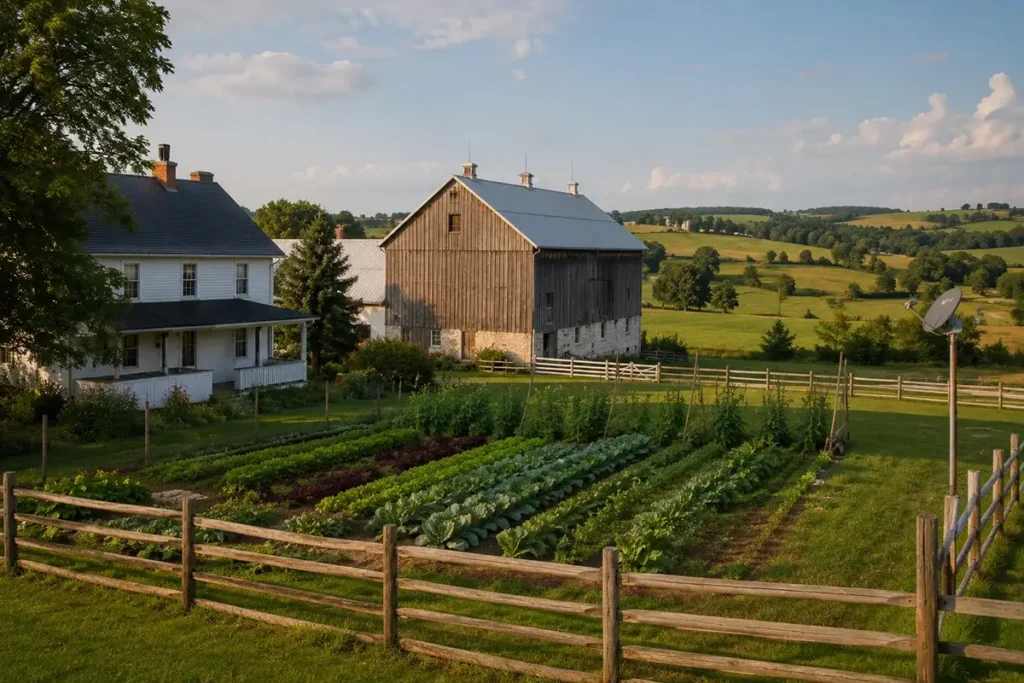
Southeast Pennsylvania’s agricultural communities — Lancaster County’s Amish and Mennonite farming country, York County’s mixed agricultural landscape, Adams County’s fruit orchards — have relatively better connectivity than the state’s northern tier, driven by proximity to the Philadelphia metro’s infrastructure influence. Some cable and fiber coverage extends into rural Lancaster and York county communities. Pennsylvania telephone companies including Windstream and Consolidated Communications provide DSL in rural corridors. T-Mobile Home Internet eligibility is better in southeast Pennsylvania’s more densely populated rural landscape. Starlink serves the entire region with good performance.
Central PA / Cumberland Valley (Cumberland, Perry, Juniata, Mifflin Counties)
The Cumberland Valley and mid-state agricultural communities between Harrisburg and the Appalachian ridges have moderate connectivity. Communities along US-11/15 and US-22/322 corridors have telephone company DSL and some cable coverage. Rural communities farther from these corridors and into the ridge-and-valley Appalachian terrain depend on Starlink and WISP coverage. Several Pennsylvania electric cooperatives serve portions of this region with expanding broadband programs.
North-Central PA / Black Forest Country (Clinton, Potter, Tioga, Sullivan, Cameron Counties)
North-central Pennsylvania — the “Pennsylvania Wilds” of the Allegheny Plateau and the “Black Forest Country” of Potter and Clinton counties — contains some of Pennsylvania’s most severe rural broadband gaps. Potter County is one of the least populated counties east of the Mississippi. Cameron County and Sullivan County have similar connectivity challenges. See the dedicated section below for complete coverage of this region.
Western PA / Pittsburgh Rural Orbit (Lawrence, Mercer, Venango, Clarion, Forest Counties)
Western Pennsylvania’s rural communities beyond the Pittsburgh metro’s immediate suburban fringe have variable connectivity. Lawrence and Mercer counties benefit from proximity to the I-80 corridor and some Ohio influence. Venango, Clarion, and Forest counties — the heart of Pennsylvania’s former oil region — have significant broadband gaps in their rural communities. Forest County, the least populated Pennsylvania county, has connectivity challenges comparable to north-central Pennsylvania’s most remote areas. Several rural telephone cooperatives and WISPs serve specific communities in western Pennsylvania.
Pennsylvania Electric Cooperatives
Pennsylvania has four rural electric cooperatives that serve members in specific geographic areas:
- Adams Electric Cooperative: Serving members in Adams County (Gettysburg area) with broadband development programs.
- Bedford Rural Electric Cooperative: Serving members in Bedford and surrounding counties in south-central Pennsylvania with broadband expansion.
- New Enterprise Rural Electric Cooperative: Serving members in Blair, Bedford, Huntingdon, and Centre counties with broadband programs.
- Sullivan County Rural Electric Cooperative: Serving members in Sullivan County — one of Pennsylvania’s most rural and isolated counties — with broadband deployment as a critical member service need.
Pennsylvania State Broadband Programs
Pennsylvania’s broadband programs are coordinated through the Pennsylvania Broadband Development Authority (PBDA), established by state legislation in 2022 specifically to manage Pennsylvania’s substantial BEAD Program allocation and coordinate state broadband investment. Pennsylvania received approximately $1.16 billion in BEAD Program federal funding — reflecting the scale of the state’s rural broadband gap across its large rural population.
Pennsylvania has also administered the Broadband That Works (BTW) grant program, a state-funded initiative that provided early-stage rural broadband infrastructure grants before BEAD Program funds became available. For current program information and funded project maps, contact the Pennsylvania Broadband Development Authority at dced.pa.gov/broadband.
North-Central PA: The Black Forest Country Connectivity Challenge
Pennsylvania’s north-central “wilds” region — Potter, Clinton, Cameron, Sullivan, and Lycoming counties — is one of the most sparsely populated and heavily forested regions east of the Mississippi. Hamlin Forest, Susquehannock State Forest, Tiadaghton State Forest, and dozens of state game lands dominate the landscape, with small rural communities scattered through the narrow stream valleys between the forested ridges and plateaus.
This terrain creates a specific Starlink challenge — the heavily forested ridges and narrow valleys of the Appalachian Plateau create sky obstruction challenges similar to (though generally not as severe as) the narrow coal hollows of West Virginia and eastern Kentucky. Ridge-top and slope properties typically have adequate sky access. Narrow valley-bottom communities tucked between forested ridges may need mast installation of 20–30 feet to clear the surrounding canopy.
For north-central Pennsylvania’s small towns and rural communities, Starlink is typically the best and often the only viable broadband option in 2026. The region’s deep forested isolation — which makes it one of America’s premier hunting and outdoor recreation destinations — also means minimal infrastructure investment from commercial ISPs. BEAD Program funding is specifically prioritizing this region in Pennsylvania’s deployment planning, but realistic timelines for wired broadband in the most remote Potter and Cameron county communities extend to 2028–2031.
Pennsylvania Agriculture and Connectivity
Pennsylvania’s diverse agricultural economy — dairy, mushrooms (the country’s leading producer), poultry, apples, corn, soybeans, and the nation’s largest population of Plain Sect (Amish and Mennonite) farmers — has a nuanced relationship with internet connectivity. The Plain Sect farming communities in Lancaster, Lebanon, and adjacent counties have theological constraints on some technology uses, but increasing numbers of Plain Sect-affiliated businesses use internet connectivity for commercial operations while maintaining personal technology restrictions. For mainstream Pennsylvania farm operations, broadband connectivity is as important as in any other agricultural state.
Pennsylvania’s dairy sector — one of the most economically significant agricultural industries in the state — has adopted remote monitoring systems for herd health, milk production tracking, and automated milking equipment that require reliable broadband connectivity. Farms that previously managed these systems through telephone-connected modems now benefit from Starlink’s broadband speeds for faster data sync, remote veterinary consultation via video, and real-time herd management dashboard access.
Practical Tips for Rural Pennsylvania Residents
- North-central PA residents: Use the Starlink sky obstruction scanner before ordering for any valley or hollow property. Most ridge-top properties in Potter, Clinton, and Cameron counties have excellent sky access. Valley-bottom properties may need a 15–25 foot mast to clear surrounding ridge and tree obstruction.
- Western PA rural residents: Check Adams Electric, Bedford Rural Electric, and New Enterprise Rural Electric for broadband availability. Several western Pennsylvania WISPs have expanded coverage significantly in the past 18 months — check current availability before defaulting to satellite.
- Lancaster County agricultural residents: T-Mobile Home Internet eligibility in Lancaster County’s more densely populated agricultural landscape is better than in north-central or western Pennsylvania. Check T-Mobile first at $50/month before committing to Starlink’s $120/month.
- Hunters and outdoor recreation communities: For north-central Pennsylvania’s hunting camp and recreational cabin owners, Starlink Roam with service pausing during off-season is the most cost-effective seasonal connectivity solution. The region’s heavy deer, turkey, and bear hunting economy means many properties are occupied primarily during fall hunting seasons — pausing Starlink from May through September dramatically reduces annual connectivity costs.
Frequently Asked Questions
What is the best internet for rural north-central Pennsylvania?
Starlink is the best and often the only viable broadband option for most north-central Pennsylvania rural properties in 2026. The forested plateau terrain requires sky obstruction assessment before ordering — use the Starlink app scanner from your property. Most ridge-top and open properties have adequate sky access; heavily forested hollow properties may need mast installation. BEAD Program investments will eventually bring wired broadband to some of these communities, but realistic timelines for the most remote Potter and Cameron county addresses extend to 2028–2032.
Is Starlink available in Pennsylvania’s state forests and game lands?
Starlink service is available throughout Pennsylvania statewide — including in and adjacent to state forests and game lands — with no waitlist. The service is provided at your property’s address regardless of adjacent land ownership. Starlink dish installation on structures within state forests or game lands themselves would require coordination with Pennsylvania DCNR or the Game Commission, but residential and cabin properties adjacent to public lands can access Starlink service normally. The heavily forested terrain in state forest counties requires sky obstruction assessment for each property.
Does Pennsylvania have any programs to help rural residents afford internet?
The FCC Lifeline Program ($9.25/month discount) applies to qualifying low-income Pennsylvania households. Pennsylvania’s Broadband Development Authority is implementing digital equity components in its BEAD Program that will require funded ISPs to offer affordable plans for qualifying low-income households. Contact the Pennsylvania Broadband Development Authority or your county’s Community Action Program agency for current local assistance program availability.
Remote Work and Rural Pennsylvania
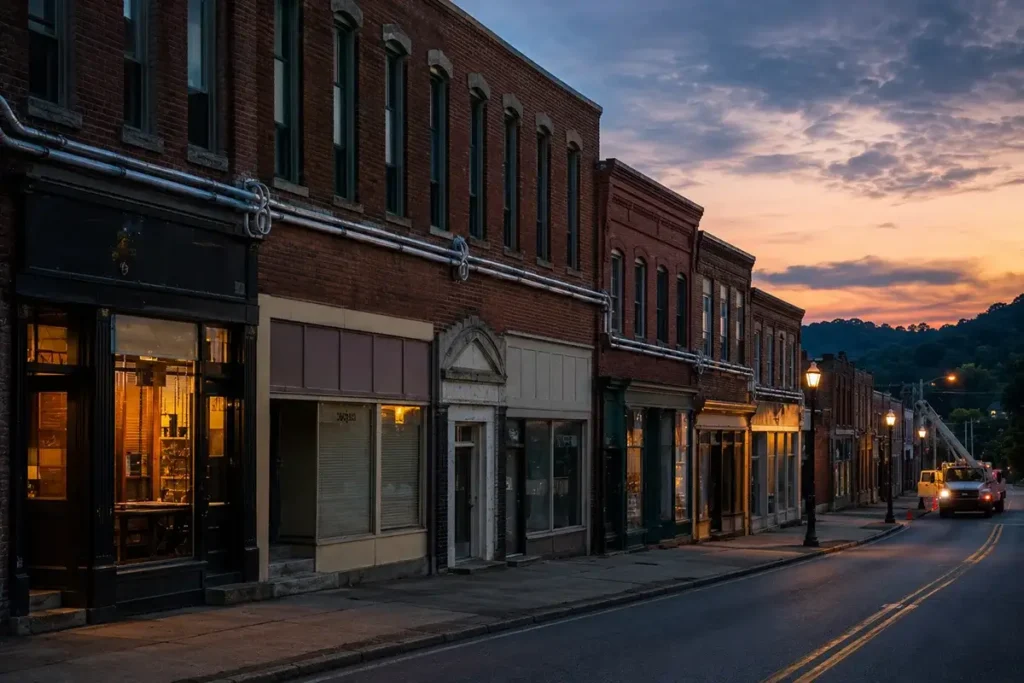
Pennsylvania’s rural communities — from the agricultural landscapes of Lancaster County to the forested highlands of the north-central “Pennsylvania Wilds” to the historic small towns of western Pennsylvania’s coal and steel country — have emerged as increasingly attractive destinations for remote workers. The state’s accessibility from both Philadelphia and Pittsburgh, its diverse natural landscapes, the affordability of rural real estate compared to metro areas, and Pennsylvania’s rich cultural heritage have attracted a wave of remote worker in-migration that has fundamentally changed the internet demand picture in many rural communities.
Communities like Jim Thorpe, Wellsboro, Milford, and numerous small towns in the Appalachian and Pocono Mountain regions have seen influxes of remote workers from the Philadelphia metro who discovered that Pennsylvania rural living is accessible from an urban employer’s perspective — provided the internet connectivity is adequate. This demand has driven increased WISP investment and accelerated telephone cooperative broadband deployments in several Pennsylvania rural corridors that previously would not have attracted commercial investment.
For rural Pennsylvania remote workers in areas not yet reached by WISP or cooperative fiber, Starlink Priority ($250/month) is the recommended configuration — the unlimited priority data and higher upload speeds (15–35 Mbps) provide the headroom needed for all-day professional video call use alongside household internet consumption. For lighter-use remote workers in areas with adequate Starlink Standard performance (no priority data concerns), the Standard plan at $120/month is fully functional for most remote work use cases. Pennsylvania’s BEAD Program investment is expected to bring wired broadband alternatives to many currently satellite-dependent rural communities within the 2027–2031 timeframe — making Starlink a bridge technology for many rural PA remote workers rather than a permanent infrastructure solution.
Western Pennsylvania Coal Country Connectivity
Western Pennsylvania’s former coal and steel communities — Fayette, Greene, Washington, and Westmoreland counties’ rural reaches, the Mon Valley communities, and the small towns of the Laurel Highlands — have connectivity challenges that mirror the economic transitions of communities where the industries that justified infrastructure investment have declined. These communities’ broadband situation resembles eastern Kentucky and West Virginia’s coal country more than it resembles the better-connected communities of suburban western Pennsylvania.
For rural western Pennsylvania coal country residents, Starlink is typically the most immediately accessible broadband option for properties without cable or cooperative fiber coverage. The Appalachian Ridge and Valley terrain creates sky obstruction challenges similar to those in eastern Pennsylvania’s north-central highlands — ridge-top and slope properties generally have adequate sky access while narrow valley communities may need mast installation. Several western Pennsylvania rural electric cooperatives are in early stages of broadband program development using BEAD Program funding — contact your electric cooperative directly about current status and deployment plans for your specific area.



Leave a Reply