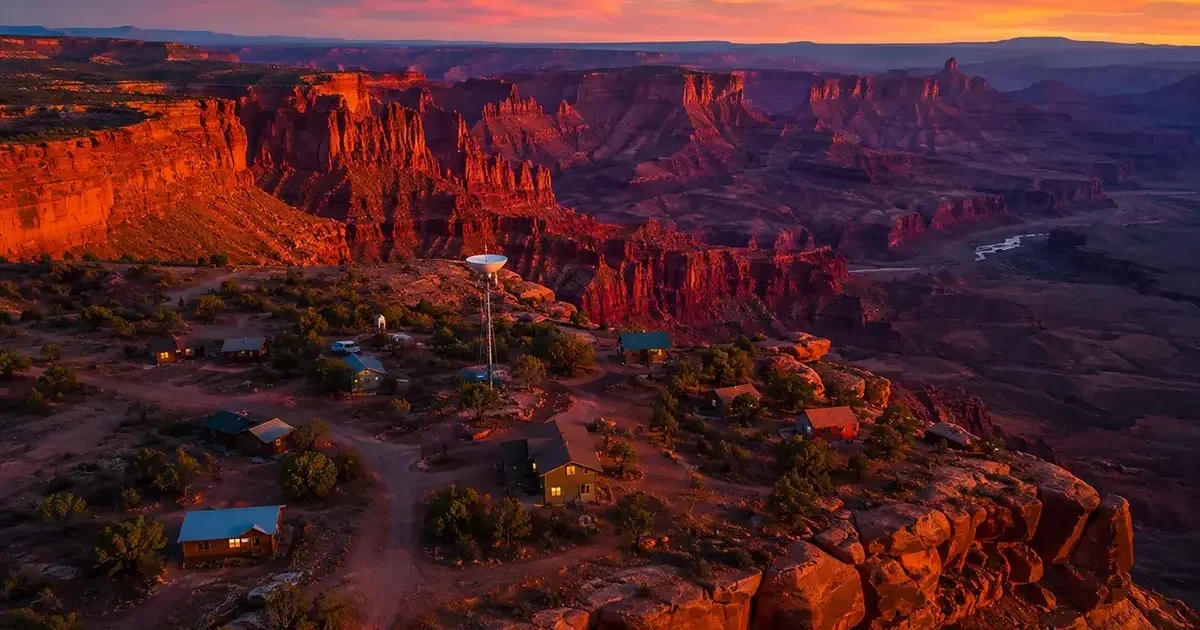
Utah’s rural broadband landscape reflects the state’s extraordinary geographic diversity — from the densely populated Wasatch Front corridor between Ogden and Provo to the remote canyon country of the Colorado Plateau, from the Great Basin’s salt flats to the red rock canyons of the Colorado River system. Rural communities span equally diverse connectivity situations: Wasatch Front exurban communities may have competitive broadband, while communities in San Juan, Garfield, and Kane counties have connectivity situations more comparable to rural Alaska than to neighboring Salt Lake City. Utah’s growing tech sector and state government have made rural broadband a priority, and in 2026, Starlink’s coverage, electric cooperative programs, and BEAD Program investment are creating meaningful improvement across Utah’s rural landscape. This complete guide covers rural internet across Utah’s distinct regions.
In This Guide
- Utah Rural Broadband Overview
- Best Internet by Utah Region
- Starlink in Utah
- Utah Electric Cooperatives and Broadband
- Utah State Broadband Programs
- Canyon Country: America’s Most Scenic Connectivity Gap
- Utah Tribal Nations and Connectivity
- Uinta Basin: Energy and Agriculture
- Practical Tips for Rural Utah Residents
- Frequently Asked Questions
Utah Rural Broadband Overview
Utah’s broadband situation is shaped by one of the most dramatic population distributions of any western state. The Wasatch Front — the narrow strip of land between the Wasatch Mountains and Great Salt Lake from Ogden to Provo — contains approximately 80% of Utah’s 3.4 million residents in an area representing only about 5% of the state’s land. The remaining 95% of Utah’s land area, home to approximately 20% of the population, ranges from adequate connectivity in agricultural communities to essentially no connectivity in the most remote canyon country.
According to the FCC National Broadband Map, Utah has significant concentrations of unserved addresses in its canyon country counties (Garfield, Kane, San Juan, Wayne), the rural portions of large rural counties (Millard, Beaver, Iron), and tribal lands on the Navajo Nation and other Utah tribal reservations. Utah’s geology — the most diverse in the continental United States — creates connectivity challenges that are as beautiful as they are difficult to solve through conventional infrastructure approaches.
Best Internet by Utah Region
Northern Utah / Cache Valley (Cache, Box Elder Counties)
Northern Utah’s agricultural communities in Cache Valley (dairy, wheat, hay) and Box Elder County have moderate to good connectivity driven by proximity to Logan and Utah State University’s technology corridor. Several telephone cooperatives and electric cooperatives serve rural northern Utah members. T-Mobile Home Internet availability is better in Cache Valley than in most of rural Utah. The flat terrain makes Starlink installation straightforward with no sky obstruction concerns.
Central Utah / Sanpete and Sevier Valleys
Central Utah’s agricultural valleys — Sanpete County’s turkeys and hay farming, Sevier County’s ranching communities — have moderate connectivity in valley floor towns with significant gaps away from main valley highways. Garkane Energy and Carbon Power and Light serve portions of this region with active broadband programs. Valley landscapes provide good Starlink conditions; surrounding mountain terrain creates more obstruction challenges for mountain-slope properties in this region.
Southeastern Utah / Canyon Country (San Juan, Garfield, Kane Counties)
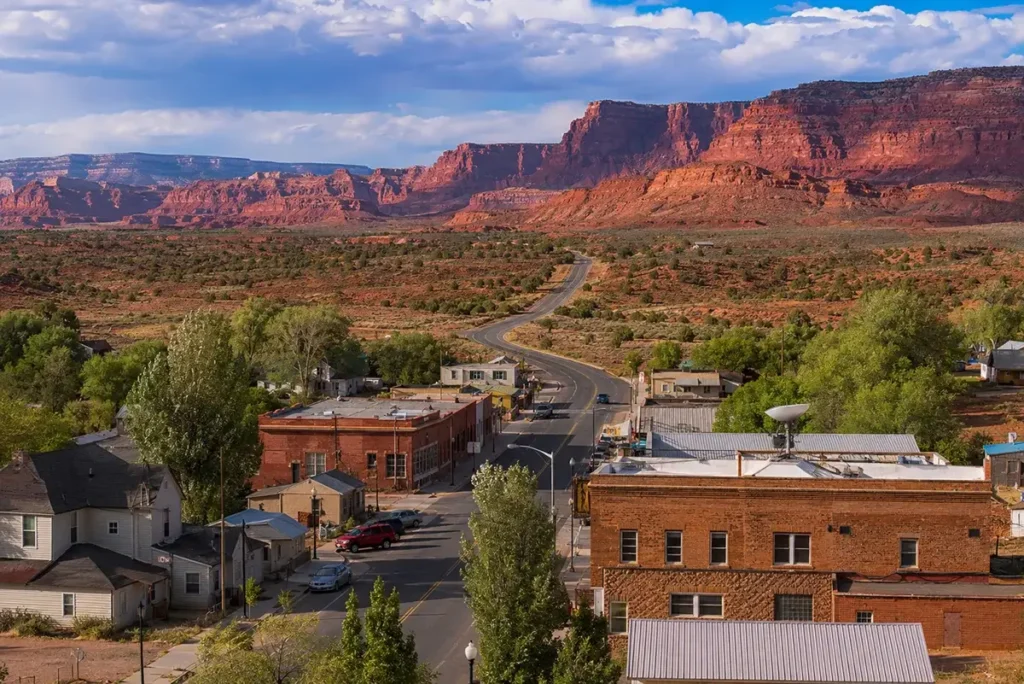
Southeastern Utah’s canyon country — Monument Valley, Canyonlands, Arches, Bryce Canyon, and the Grand Staircase-Escalante — is among the most geographically spectacular and connectivity-deficient territory in the United States. Communities like Blanding, Monticello, Kanab, Escalante, and Boulder have limited fixed broadband options. The Navajo Nation’s Utah portion has specific tribal broadband challenges. See the dedicated canyon country section below for the detailed assessment and current 2026 options.
Southwest Utah / Dixie (Washington, Iron Counties)
Southwest Utah’s rapidly growing St. George metro area has competitive commercial broadband driven by significant retiree and remote worker in-migration. Rural communities in Washington and Iron counties away from the St. George orbit depend on electric cooperative broadband programs and Starlink. The open desert terrain of southwest Utah provides excellent Starlink installation conditions with unrestricted sky access from most properties in this rapidly growing region.
Utah Electric Cooperatives and Broadband
- Garkane Energy: Serving members in Garfield and Kane counties — the heart of Utah’s canyon country — with broadband programs that are critical given the region’s extreme connectivity deficit. Among Utah’s most important cooperative broadband programs given the area’s historical lack of any viable internet option.
- Moon Lake Electric Association: Serving members in the Uinta Basin (Uintah and Duchesne counties) with broadband development programs for the energy-producing basin communities.
- Carbon Power and Light: Serving members in Carbon County’s mining and agricultural communities with expanding broadband programs.
- Dixie Power: Serving members in southwest Utah with broadband programs as the Washington County region grows rapidly.
- Bridgerland Electric: Serving members in Cache and Rich counties with expanding broadband programs for northern Utah agricultural communities.
Utah State Broadband Programs
Utah’s broadband programs are coordinated through the Utah Governor’s Office of Planning and Budget and the Utah Broadband Center. Utah received approximately $308 million in BEAD Program federal funding — focused specifically on the canyon country counties and tribal lands as the state’s highest-priority unserved communities. Utah’s BEAD implementation has specifically addressed the challenge of providing internet to communities separated by canyon terrain where any infrastructure routing is extremely expensive and logistically complex due to permitting in national park and monument lands.
Canyon Country: America’s Most Scenic Connectivity Gap
Utah’s canyon country — the Colorado Plateau’s red rock landscape of mesas, canyons, buttes, and arches — is also one of the most challenging rural broadband environments on Earth. The same canyons that create stunning scenery create terrain that wireless signals cannot traverse and that fiber cable must navigate through at extraordinary cost per route-mile through protected lands with complex permitting requirements.
Communities like Escalante, Boulder, and Tropic in Garfield County are among the most isolated inhabited places in the continental United States by any connectivity metric. Boulder, Utah — accessible by a single paved road (Scenic Byway 12) — is arguably the most remote incorporated community in the lower 48 states in terms of infrastructure access distance. Starlink has been transformative for these canyon country communities, providing the first broadband-quality internet residents have ever had access to in many cases.
Garkane Energy’s broadband program — serving members in Garfield and Kane counties using USDA ReConnect and BEAD funding — represents the most significant infrastructure investment in some of these canyon communities in decades. For Garkane members within the cooperative’s deployment areas, fiber or fixed wireless connectivity at competitive prices is becoming available in communities that have waited a generation for adequate internet. Contact Garkane Energy directly for current deployment maps and service availability at your specific Garfield or Kane County address.
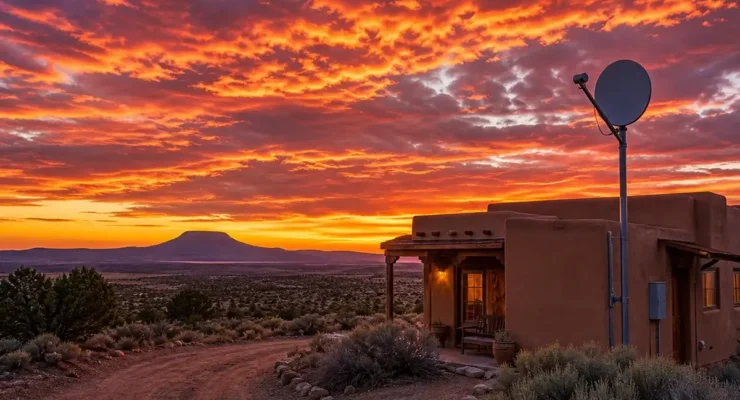
The canyon country’s open mesa and canyon rim terrain — ironically — provides excellent Starlink installation conditions for properties on elevated positions. The same open sky that makes the red rock landscape visually stunning provides the unrestricted satellite access that makes Starlink highly effective for most canyon country rural properties. Properties deep in narrow canyon bottoms with high walls to the north require sky obstruction assessment, but the majority of inhabited canyon country properties on mesa tops, canyon rims, and valley floors have excellent Starlink conditions.
Utah Tribal Nations and Connectivity
Utah has seven federally recognized tribal nations, including the Navajo Nation (whose Utah portion lies primarily in San Juan County), the Ute Indian Tribe (Uintah and Ouray Reservation in the Uinta Basin), the Ute Mountain Ute Tribe, and four smaller Paiute and Goshute tribal nations. These communities have significant broadband access deficits reflecting historical infrastructure underinvestment on tribal lands nationally.
The Navajo Nation’s Utah portion — including the spectacular Monument Valley and White Mesa communities — shares the connectivity challenges of the larger Navajo Nation across Arizona and New Mexico. The Navajo Tribal Utility Authority (NTUA) has been deploying broadband across Navajo Nation territory using tribal resources and federal funding programs. The Ute Indian Tribe on the Uintah and Ouray Reservation has pursued broadband connectivity using tribal economic development resources including oil and gas royalty revenue. Tribal members should contact their tribal government about tribal broadband programs before ordering individual satellite service — group purchasing arrangements may offer better pricing and more appropriate community-level solutions.
Uinta Basin: Energy and Agriculture
Utah’s Uinta Basin — a high-altitude basin in northeast Utah containing significant oil, natural gas, and agricultural resources — has connectivity needs driven by both the energy sector and the agricultural communities of Duchesne and Uintah counties. Moon Lake Electric Association has been pursuing broadband for its Uinta Basin members using BEAD funding. The energy sector’s SCADA monitoring, worker communications, and operational management needs create commercial demand for connectivity in the basin that residential demand alone would not justify at the scale needed for investment.
Starlink Business is used by multiple Uinta Basin oil and gas operations for remote facility connectivity. The basin’s generally open terrain provides good Starlink conditions from most locations. The Uinta Mountains to the north create some northern horizon considerations for basin-floor properties particularly close to the mountain range — check the Starlink app scanner before ordering for properties near the mountain boundary in the northern Uinta Basin.
Practical Tips for Rural Utah Residents
- Canyon country residents: Starlink is your best and often only viable broadband option. The open mesa and canyon rim terrain of most rural southern Utah provides excellent sky access for properties on mesa tops and canyon rims. Properties at the bottom of deep narrow canyons may have northern sky obstruction from canyon walls — check the Starlink app scanner before ordering. Contact Garkane Energy about cooperative broadband programs as an alternative where the cooperative’s deployment has reached your specific area.
- Uinta Basin residents: Check Moon Lake Electric Association for current broadband availability. The basin’s energy industry infrastructure has supported some cellular tower investment — T-Mobile Home Internet eligibility at your specific Uintah or Duchesne County address is worth checking before committing to satellite service.
- Southwest Utah retiree and remote worker communities: The rapidly growing Washington County has more commercial broadband options than most of rural Utah — check current availability from Spectrum and local providers before defaulting to satellite in the St. George metro orbit’s rural fringe communities.
Frequently Asked Questions
Does Starlink work in Utah’s canyon country?
Yes, at most locations. Utah’s canyon country’s open sky — the famous red rock landscapes with wide mesa-top horizons — provides excellent Starlink conditions for properties on mesa tops, canyon rims, and open valley floors. Properties at the bottom of deep narrow canyons with high walls to the north may have significant sky obstruction requiring mast installation or making some sites unviable from ground-level positions. The Starlink app sky scanner is essential for any canyon country property evaluation before ordering hardware.
What is the best internet for Moab-area rural properties?
For rural properties around Moab in Grand County, Starlink is the most universally available broadband option. The open canyon country terrain provides generally good sky access from most rural Moab-area properties. Grand County has some cable coverage in the Moab town area; rural properties outside of Moab’s immediate orbit depend on Starlink. T-Mobile has improved coverage along US-191 driven by the area’s significant tourism traffic — Home Internet may be worth checking for properties near the main highway corridor before committing to Starlink’s higher monthly cost.
Remote Work in Utah’s Canyon Country and Rural Communities
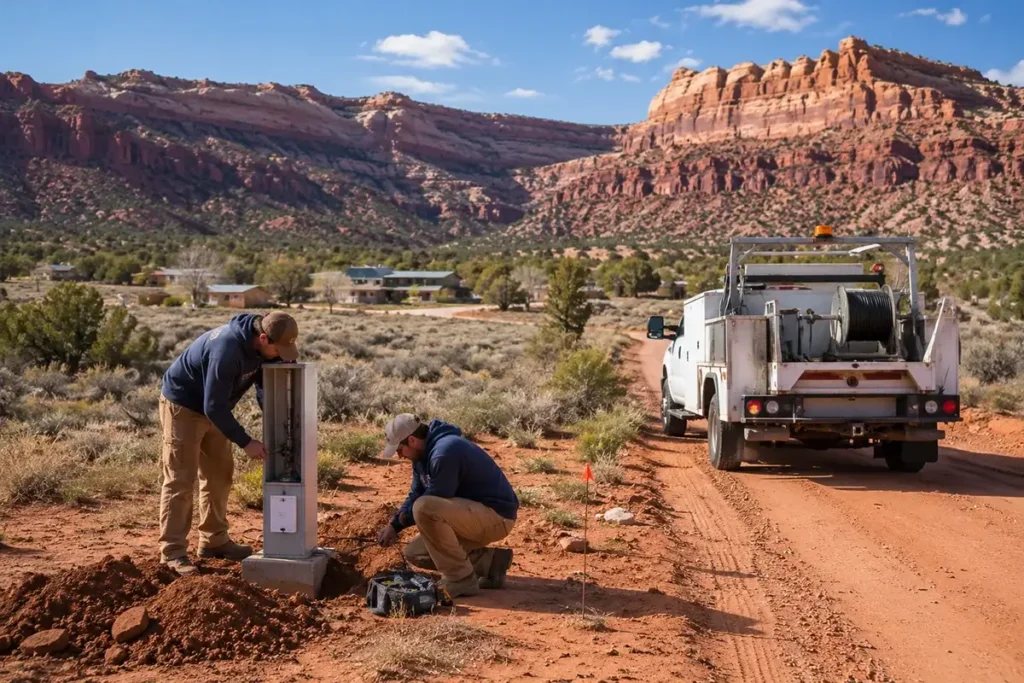
Utah has been one of the most successful states in attracting remote workers to its rural communities — a function of the state’s extraordinary natural landscapes, growing technology sector (the “Silicon Slopes” corridor), relatively affordable rural real estate by western standards, and the state’s aggressive rural broadband investment that has expanded connectivity options in previously unserved areas. Communities like Moab (Grand County), Escalante area (Garfield County), Kanab (Kane County), and the rural Wasatch Back communities have all seen remote worker in-migration enabled by Starlink connectivity that made previously impractical rural living viable for career-maintaining professionals.
For Utah’s canyon country communities specifically, the combination of world-class outdoor recreation (hiking, mountain biking, canyoneering, river running), spectacular natural scenery, and now Starlink broadband creates a compelling rural lifestyle proposition that has been attracting remote workers from Salt Lake City, Denver, and other western metros. Moab in particular has seen significant demographic change driven by remote workers who can access the area’s recreation while maintaining career connectivity through Starlink and the improving commercial broadband in the town core.
The Utah Broadband Center has recognized remote worker attraction as a key economic development benefit of rural broadband investment — quantifying the economic impact of remote workers who bring urban-level salaries to rural communities as a multiplier of the direct broadband infrastructure investment. For rural Utah communities seeking to attract remote workers, Starlink provides the immediate connectivity foundation while BEAD Program investments build the longer-term wired infrastructure that makes rural living permanently viable for the next generation of rural Utah residents and businesses.


Leave a Reply