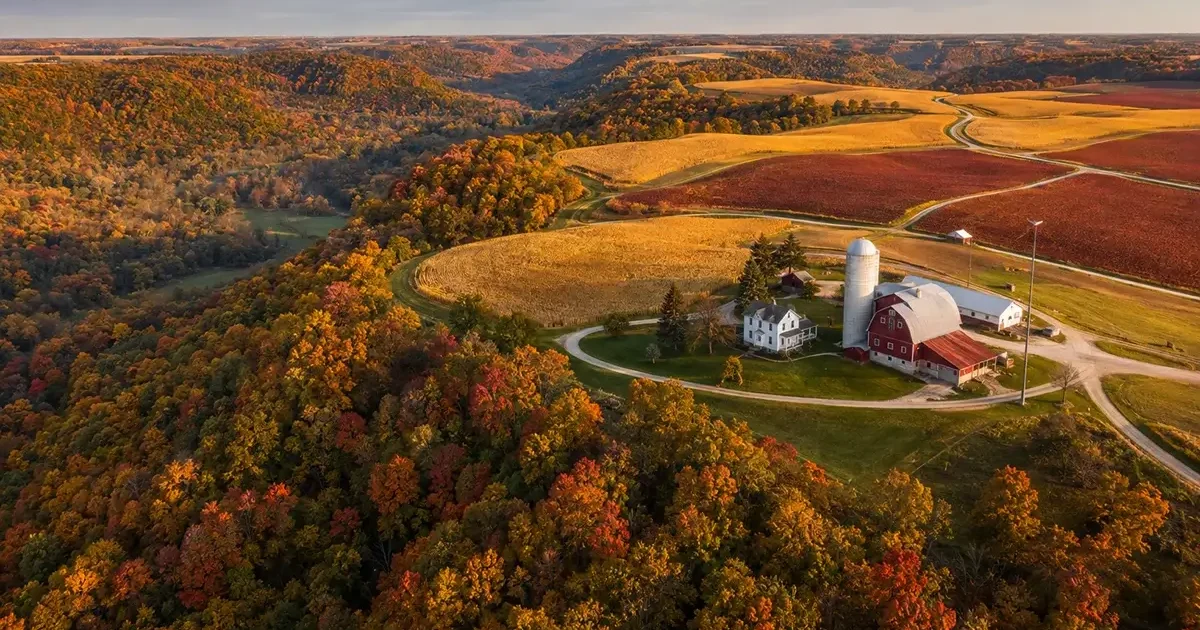
Wisconsin’s rural broadband landscape reflects a state that has made rural connectivity a genuine political and economic priority — while still facing significant gaps that leave hundreds of thousands of rural residents without adequate service. As the nation’s dairy capital and a major agricultural state, Wisconsin’s rural internet needs are driven not just by residential quality of life but by the operational demands of high-technology dairy and crop farming that is increasingly dependent on connectivity. The state’s diverse geography — the Northwoods lake country, the Driftless Area’s ridges and coulees, the Door Peninsula’s scenic communities, and the broad agricultural plains of the west and south — creates connectivity challenges as varied as the landscape itself. In 2026, Wisconsin is experiencing meaningful broadband progress through active electric cooperative programs, telephone cooperative fiber upgrades, and federal BEAD investment. This complete guide covers rural internet across all of Wisconsin’s distinct regions.
In This Guide
- Wisconsin Rural Broadband Overview
- Best Internet by Wisconsin Region
- Starlink in Wisconsin
- Wisconsin Telephone Cooperatives
- Wisconsin Electric Cooperatives and Broadband
- Wisconsin State Broadband Programs
- Wisconsin Dairy Farming and Connectivity
- The Driftless Area: Connectivity in the Coulee Country
- Practical Tips for Rural Wisconsin Residents
- Frequently Asked Questions
Wisconsin Rural Broadband Overview
Wisconsin has approximately 1.7 million rural residents spread across 72 counties. The state has been one of the more active Midwestern states in rural broadband investment — the Wisconsin Public Service Commission has administered state broadband grant programs since 2014, and Wisconsin’s legislature has appropriated state funds for rural broadband multiple times. Despite this investment, significant gaps remain, particularly in the Northwoods counties (Vilas, Forest, Florence, Langlade), the Driftless Area’s rural coulee communities, and agricultural counties in the central sands region where sandy soil conditions make buried fiber construction more expensive.
According to the FCC National Broadband Map, Wisconsin has concentrations of unserved addresses in its northern forest counties, portions of the Driftless Area, and rural agricultural counties in the central and western parts of the state. Wisconsin’s 27 rural electric cooperatives and numerous rural telephone cooperatives have been important broadband deployment partners for the state’s rural communities, with several operating among the most advanced rural fiber networks in the Midwest.
Best Internet by Wisconsin Region
Northwoods / Lake Country (Vilas, Forest, Oneida, Lincoln, Langlade Counties)
Wisconsin’s Northwoods — home to the famous chain of lakes and resort communities in Vilas County, the remote forest lands of Forest and Florence counties, and the recreational communities surrounding Rhinelander — has significant rural broadband gaps particularly in the most remote forest counties. Vilas County’s resort and second-home economy has driven more connectivity investment than the neighboring forest counties, but rural lake properties away from the resort corridors remain dependent on Starlink and WISP coverage. Several Northwoods telephone cooperatives serve specific communities. Northwoods winter — with heavy lake-effect snowfall and temperatures regularly reaching -30°F — creates the same Starlink cold-climate considerations as northern Minnesota and the Michigan Upper Peninsula.
Driftless Area (Crawford, Vernon, Richland, Grant, Iowa Counties)
Wisconsin’s Driftless Area — the geologically unique region of steep ridges, narrow coulees, and clear-water trout streams that was not glaciated during the last ice age — has connectivity challenges driven by its distinctive topography. Communities at the bottoms of narrow coulees may have limited northern sky access for Starlink, while ridge-top properties typically have excellent sky clearance. The region’s strong agricultural character — dairy farming, organic vegetables, pasture-raised beef — creates demand for farm connectivity that exceeds what legacy telephone DSL provides. Several Driftless Area telephone cooperatives serve portions of this region. T-Mobile Home Internet availability varies significantly by specific location within the coulee country.
Central Wisconsin / Potato and Cranberry Country (Portage, Adams, Waushara, Juneau Counties)
Central Wisconsin’s sandy agricultural plain — famous for its potato and cranberry production — has moderate connectivity with significant rural gaps in agricultural communities far from the Wisconsin River corridor towns. Several central Wisconsin telephone cooperatives and WISPs serve portions of this region. The flat central plain makes Starlink installation completely effortless with no obstruction concerns. Central Wisconsin Electric Cooperative has been among the state’s more active cooperative broadband programs.
Western Wisconsin (Dunn, Pepin, Buffalo, Trempealeau, Jackson Counties)
Western Wisconsin’s coulee country along the Mississippi River corridor has beautiful rural landscape and significant broadband gaps away from the I-94 corridor. Communities along the Mississippi River bluffs depend primarily on Starlink and WISP coverage. Pierce County and St. Croix County benefit from the Twin Cities metro’s infrastructure influence. Chippewa Valley Electric Cooperative and other western Wisconsin cooperatives have active broadband programs for their rural members.
Wisconsin Telephone Cooperatives
Wisconsin has an exceptional network of rural telephone cooperatives that have been among the most progressive in the Midwest for transitioning to fiber broadband:
- Consolidated Communications (Reedsburg area): Serving south-central Wisconsin communities with expanding fiber broadband.
- Lakeland Communications Group: Serving Northwoods communities in the Minocqua and Woodruff area with broadband services.
- Nelson Telephone Cooperative: Serving Buffalo County communities with fiber broadband — one of Wisconsin’s most progressive rural telephone cooperatives for fiber deployment.
- West Wisconsin Telcom: Serving west-central Wisconsin members with fiber broadband deployment.
- Northern Telephone Cooperative: Serving Forest and Marinette county members with broadband programs.
Wisconsin telephone cooperative members should check their cooperative’s current service map directly — the pace of fiber deployment has accelerated significantly and availability may have expanded recently.
Wisconsin Electric Cooperatives and Broadband
Wisconsin’s 27 rural electric cooperatives have been increasingly active in broadband deployment:
- Central Wisconsin Electric Cooperative: Serving members in Marathon, Wood, and Portage counties with active broadband development programs.
- Chippewa Valley Electric Cooperative: Serving members in Chippewa, Dunn, and Eau Claire counties with broadband expansion.
- Jackson Electric Cooperative: Serving Jackson County members in west-central Wisconsin with broadband programs.
- Polk-Burnett Electric Cooperative: Serving members in northwest Wisconsin with active broadband development.
- Riverland Energy Cooperative: Serving members in the Driftless Area with broadband expansion using ReConnect and BEAD funding.
Wisconsin State Broadband Programs
Wisconsin’s broadband programs are administered through the Public Service Commission of Wisconsin (PSC), which has operated the Broadband Expansion Grant Program since 2014. Wisconsin has invested substantial state funds in rural broadband across multiple grant rounds. Wisconsin received approximately $1.24 billion in BEAD Program federal funding, which the PSC is implementing with specific attention to the Northwoods counties, the Driftless Area, and tribal broadband needs for the state’s 11 federally recognized tribal nations.
Wisconsin is also home to one of the nation’s most active tribal broadband programs — the Great Lakes Indian Fish and Wildlife Commission (GLIFWC) has been involved in broadband infrastructure planning for Ojibwe tribal communities across northern Wisconsin, coordinating with tribal nations on connectivity needs that support both governmental functions and tribal member quality of life in remote Northwoods reservation communities.
Wisconsin Dairy Farming and Connectivity
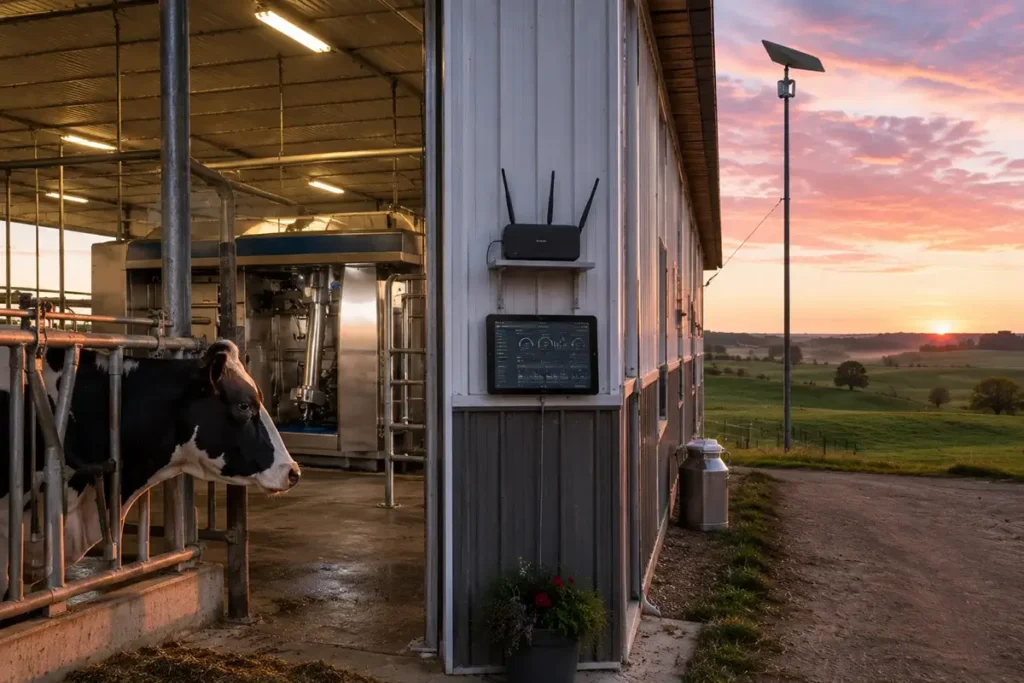
Wisconsin’s identity as “America’s Dairyland” is more than a license plate slogan — the state leads the nation in cheese production and has the highest density of dairy farms of any state. Modern Wisconsin dairy operations are among the most technologically sophisticated farming enterprises in the world, with robotic milking systems, automated feeding systems, herd health monitoring platforms, and precision nutrition management requiring reliable broadband connectivity for full operational capability.
The dairy farm connectivity need is particularly acute because dairy operations run 24 hours a day, 365 days a year — there is no “off season” during which connectivity outages are operationally acceptable. A dairy farm that loses internet connectivity loses real-time access to robotic milker performance data, milk quality monitoring alerts, and herd health tracking systems that modern operations depend on for early problem detection. Starlink Priority ($250/month) with cellular backup is the recommended configuration for Wisconsin dairy operations that lack telephone or electric cooperative fiber coverage. The $3,000/year connectivity investment is small relative to the milk revenue loss that delayed problem detection can cause on a large dairy operation.
The Driftless Area: Connectivity in the Coulee Country
Wisconsin’s Driftless Area — shared with neighboring Iowa, Minnesota, and Illinois — is one of the most geographically distinctive regions in the Midwest and presents specific Starlink installation considerations that rural residents need to understand before ordering. The narrow coulee (valley) topography creates sky obstruction challenges that differ fundamentally from Wisconsin’s flatter agricultural regions.
For Driftless Area properties, the Starlink app’s sky obstruction scanner is essential due diligence. Properties at the bottom of narrow north-south oriented coulees may have significant ridge obstruction on the northern horizon — precisely where Starlink’s satellites are most needed. A 20–35 foot mast mounted at the coulee-bottom property’s highest accessible point (the barn rooftop, a hillside position slightly up from the valley floor) often provides dramatically better sky access than a ground-level installation. For coulee-bottom properties where any available location shows more than 15% obstruction in the Starlink scanner, consult with local Starlink installers experienced with Driftless Area terrain before purchasing.
Ridge-top Driftless Area properties — common for Wisconsin family farms that traditionally built on the ridge for drainage and practical access — typically have excellent Starlink sky access and deliver some of the strongest performance in the state due to low coverage cell density in this sparsely populated region.
Practical Tips for Rural Wisconsin Residents
- Check your telephone or electric cooperative first. Wisconsin’s cooperative network is among the Midwest’s most broadband-active. Nelson Telephone, West Wisconsin Telcom, and several electric cooperatives have fiber programs that may serve your area.
- Driftless Area residents: Run the Starlink app obstruction scanner before ordering. Coulee-bottom properties may need a mast. Ridge-top properties typically have excellent conditions.
- Northwoods cabin owners: Starlink Roam with service pausing during winter months is the most cost-effective seasonal approach. Wisconsin’s northern lake cabins are typically occupied Memorial Day through Labor Day — pause during the October–April period to reduce annual cost substantially.
- Dairy operations: Do not accept inadequate connectivity for a 24/7 operation. If cooperative fiber or cable isn’t available, Starlink Priority with Verizon cellular backup provides the reliability that dairy operations require.
Frequently Asked Questions
What is the best internet for rural Driftless Area Wisconsin?
For ridge-top and upper-slope Driftless Area properties, Starlink is typically the best immediately available broadband with good to excellent performance. Check Riverland Energy Cooperative for member broadband programs in the coulee country — they have been among the most active BEAD applicants for Driftless Area deployment. For coulee-bottom properties, perform a Starlink sky scan before ordering and be prepared for a mast installation if needed. T-Mobile Home Internet may be available at some Driftless Area addresses along highway corridors.
Is Starlink available in the Wisconsin Northwoods?
Yes. Starlink is available statewide in Wisconsin with no waitlist, including throughout the Northwoods. Performance in Vilas, Forest, and Oneida county rural coverage cells is often excellent due to very low subscriber density. The forested terrain creates more sky obstruction challenges than the open agricultural areas — use the app scanner before ordering for any heavily forested Northwoods property. Cold-weather performance down to -30°F is within Starlink’s operating range, though temperatures approaching -40°F (which occur in extreme northern Wisconsin winters) should prompt cold-weather installation precautions.

When will BEAD fiber reach rural northern Wisconsin?
Wisconsin’s BEAD implementation prioritizes Forest, Florence, Langlade, and Vilas counties as among the state’s highest-priority unserved areas. Electric cooperative and telephone cooperative fiber projects using BEAD funding are in planning and early deployment phases for several Northwoods communities. Realistic service delivery timelines for the most remote Northwoods addresses range from 2027–2031. Starlink provides immediate broadband-quality connectivity for any Northwoods property today regardless of when future infrastructure arrives.
Door County and Peninsula Connectivity
Wisconsin’s Door County — the state’s thumb-like peninsula extending into Lake Michigan between Green Bay and the lake — is one of the Midwest’s premier tourism destinations and increasingly a year-round community for remote workers attracted by the scenery, quality of life, and cultural amenities of the Fish Creek, Ephraim, Sister Bay, and Sturgeon Bay communities. Door County has better connectivity than the Northwoods counties, driven by the tourism economy’s infrastructure investment, but rural properties on the eastern shore and northern tip still have connectivity gaps that Starlink addresses effectively.
The Door Peninsula’s north-south orientation and relatively open landscape provide good Starlink sky access from most properties. Cherry orchards — Door County’s signature agriculture — have adopted precision viticulture and orchard management tools that benefit from reliable broadband for sensor monitoring, spray scheduling, and market access. Several Door County farmers report that Starlink has enabled precision agriculture technology adoption that was impossible with their previous DSL connectivity.
For Door County vacation home owners and seasonal residents, Starlink Roam with service pausing during the November–April off-season reduces annual connectivity costs significantly while maintaining excellent summer-season performance for the tourist influx that drives the local economy. Year-round residents and business operators on Door Peninsula benefit most from Starlink Standard or from telephone cooperative fiber where available — Charter Communications serves some Door County communities with cable internet, and checking current availability is worthwhile before defaulting to satellite.
Remote Work and Rural Wisconsin
Wisconsin has seen meaningful remote worker in-migration to its rural communities — the Northwoods lake country, the Driftless Area’s scenic coulees, and the Door Peninsula have all attracted urban professionals seeking the Wisconsin outdoor lifestyle with the connectivity to maintain their careers. This in-migration has increased rural internet demand and accelerated investment in communities that previously lacked adequate broadband for professional work.
For Wisconsin remote workers in rural areas without telephone cooperative fiber, Starlink Priority ($250/month) provides the most reliable connectivity for professional work requiring consistent video calls, VPN access, and large file transfers. The state’s major employers — from Oshkosh Corporation to Epic Systems to the major Wisconsin health systems — have formalized remote work programs that require adequate home broadband, creating both the demand and the employer support for rural connectivity upgrades. Contact the Wisconsin Economic Development Corporation for information on any state programs supporting rural broadband for business and remote work purposes.



Leave a Reply