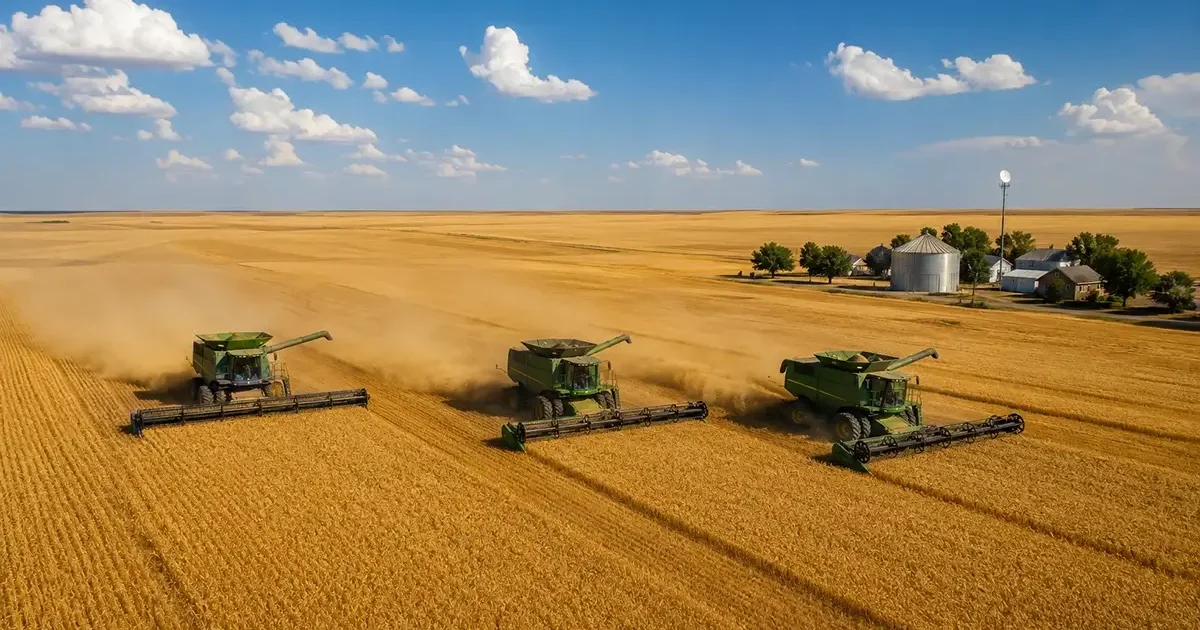
Kansas is the heartland of American agriculture — the wheat fields, feedlots, and grain operations that have fed the nation for generations now require the same digital infrastructure that enables competitive farming anywhere in the world. Yet rural Kansas has some of the most significant broadband gaps of any Great Plains state, with western Kansas communities in particular experiencing connectivity situations comparable to rural Montana or Wyoming. The state’s flat terrain is ideal for many broadband technologies, and its agricultural density creates demand that should support investment — but the extreme distances between communities in western Kansas have historically defeated commercial broadband economics. In 2026, a combination of telephone cooperative fiber upgrades, electric cooperative programs, and Starlink’s universal availability is transforming rural Kansas connectivity. This comprehensive guide covers rural internet options across all of Kansas’s distinct regions.
In This Guide
- Kansas Rural Broadband Overview
- Best Internet by Kansas Region
- Starlink in Kansas
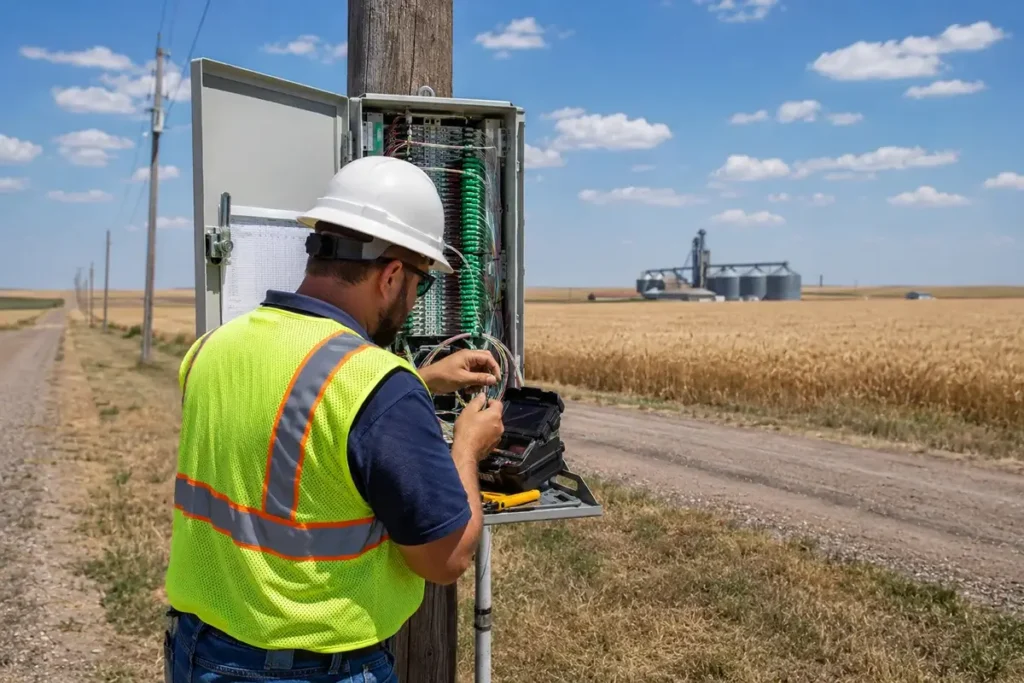
- Kansas Telephone Cooperatives
- Kansas Electric Cooperatives
- Kansas State Broadband Programs
- Western Kansas: The High Plains Challenge
- Kansas Agriculture and Precision Farming
- Practical Tips for Rural Kansas Residents
- Frequently Asked Questions
Kansas Rural Broadband Overview
Kansas covers 82,278 square miles of predominantly flat to gently rolling terrain — geography that is theoretically favorable for broadband infrastructure deployment. The challenge is economic: 60 of Kansas’s 105 counties have experienced population loss over the past decade, reducing the subscriber base that ISPs need to justify infrastructure investment. Western Kansas counties like Greeley, Wichita, Scott, and Lane are among the least densely populated counties east of the Rocky Mountains, making commercial broadband investment economics particularly challenging.
According to the FCC National Broadband Map, Kansas has significant unserved address concentrations in its western High Plains counties and in rural agricultural communities throughout the central and south-central parts of the state away from the I-70, US-50, and US-54 corridor towns. The state’s large eastern metro areas (Kansas City, Topeka, Wichita) have competitive broadband, creating a stark urban-rural divide.
Kansas has approximately 20 rural telephone cooperatives serving specific geographic areas, many of which have been progressively upgrading from DSL to fiber. The state’s rural electric cooperatives have also been increasingly active in broadband programs. Both institution types have been key partners in the state’s rural broadband investment strategy.
Best Internet by Kansas Region
Northeast Kansas / Kansas City Metro Orbit (Leavenworth, Jefferson, Douglas, Franklin Counties)
Northeast Kansas benefits from proximity to the Kansas City metro’s fiber and cable infrastructure. Several rural communities within 30–50 miles of KC have cable or fiber coverage from providers serving the metro’s rural fringe. T-Mobile Home Internet availability is better in northeast Kansas than anywhere else in the state. Telephone cooperatives serving northeast Kansas communities have been among the state’s more progressive in fiber deployment.
Southeast Kansas / Ozark Border (Crawford, Cherokee, Labette, Montgomery Counties)
Southeast Kansas’s communities have moderate connectivity — better than the western plains but with significant gaps in rural agricultural and timber communities away from the Pittsburg and Chanute corridors. Several southeast Kansas telephone cooperatives serve portions of this region with DSL and in some cases fiber. The region’s flat-to-rolling terrain makes Starlink installation straightforward.
Central Kansas Agricultural Heartland (Rice, Ellsworth, Lincoln, Mitchell Counties)
Central Kansas’s wheat and beef cattle communities have significant rural broadband gaps away from the I-70 and US-281 corridors. Telephone cooperatives including Pioneer Communications have been among Kansas’s most active in rural fiber deployment. Electric cooperatives in central Kansas have broadband programs at various stages of development. The flat central Kansas terrain is ideal for Starlink installation.
Western Kansas High Plains (Greeley, Wichita, Scott, Lane, Meade, Stanton Counties)
Western Kansas’s High Plains communities represent the state’s most severe rural broadband gap — an expanse of flat, open agricultural land where communities of a few hundred people may be 30–60 miles apart and where commercial broadband deployment economics have never been favorable for any provider. See the dedicated western Kansas section below.
Kansas Telephone Cooperatives
Kansas’s rural telephone cooperatives have been the backbone of rural broadband in the state:
- Pioneer Communications (Ulysses): Serving far southwest Kansas communities with fiber broadband — one of Kansas’s most progressive rural telephone cooperatives for fiber deployment in a challenging region.
- Nex-Tech (Hays): Serving members across north-central and northwest Kansas with fiber broadband — among the largest rural telephone-based fiber networks in the state.
- IdeaTek: Serving south-central Kansas communities with fiber broadband expansion.
- Twin Valley (Milford): Serving north-central Kansas members with broadband services.
- Rural Telephone (Lenora): Serving northwest Kansas communities with telephone and expanding broadband services.
Kansas State Broadband Programs
Kansas’s broadband programs are coordinated through the Kansas Department of Commerce‘s Office of Broadband. Kansas received approximately $452 million in BEAD Program federal funding — a meaningful investment for a state with a relatively modest total population but significant rural territory requiring infrastructure investment. BEAD implementation priorities include western Kansas High Plains communities, tribal broadband needs for Kansas’s four federally recognized tribes (Iowa, Kickapoo, Potawatomi, and Sac & Fox), and rural agricultural communities throughout the central and southeast regions.
Western Kansas: The High Plains Challenge
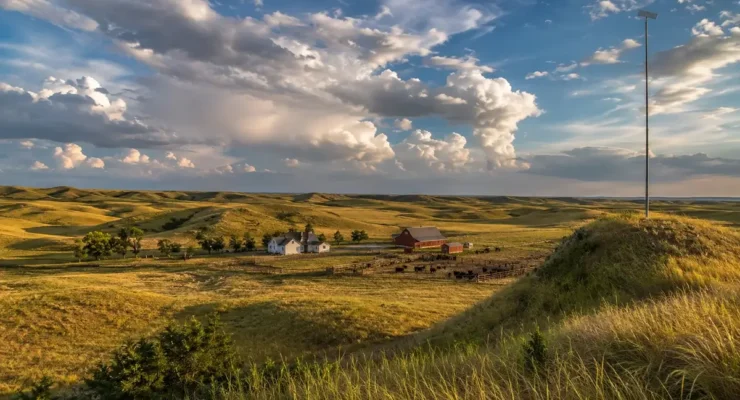
Western Kansas’s High Plains — the flat, semiarid grassland country west of Dodge City extending to the Colorado border — is one of the most extreme rural broadband environments in the continental United States. Greeley County (population approximately 1,200, 778 square miles) and adjacent counties have connectivity situations where the economics of any wired broadband deployment require per-household subsidies that have historically not been available at adequate scale.
For western Kansas ranches and farm operations, Starlink has been transformative in the same way as west river South Dakota and eastern Montana — providing the first broadband-quality internet these operations have ever had. The flat High Plains terrain provides essentially unrestricted sky access from any property location, and the ultra-low-density coverage cells deliver consistently fast performance — commonly 110–150 Mbps download speeds in the most remote counties.
Pioneer Communications’ fiber network reaching into southwest Kansas communities including Ulysses, Liberal, and surrounding rural areas has been particularly significant for Seward and Grant county agricultural operations that now have gigabit fiber connectivity that rural communities in this region would not have had without the cooperative’s sustained investment. For communities beyond Pioneer’s reach, Starlink combined with the precision agriculture tools of the modern High Plains farming operation provides the connected infrastructure that these businesses require to compete.
Kansas Agriculture and Connectivity
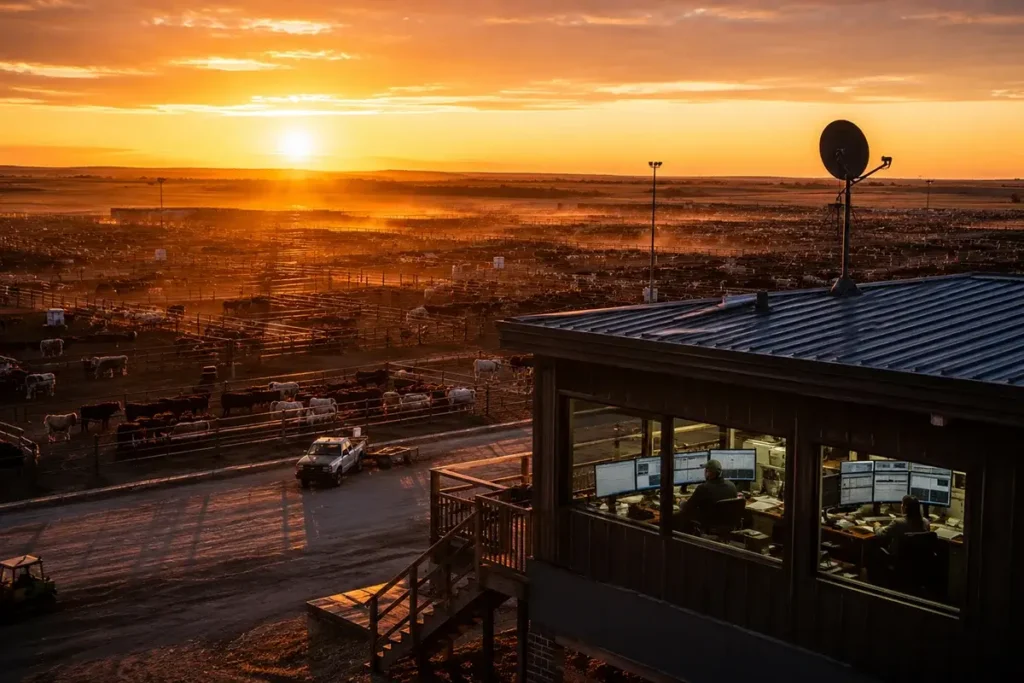
Kansas is the nation’s top wheat-producing state and a major beef cattle producer — agricultural operations that generate significant broadband demand for precision agriculture, commodity market access, and livestock management. Modern Kansas wheat operations use GPS guidance, yield monitoring, variable rate seeding, and remote weather monitoring that all require reliable broadband. Feed yard operations in the southwest Kansas cattle corridor have adopted remote monitoring systems for animal health tracking, feeding management, and regulatory compliance reporting.
For Kansas farm and ranch operations without cooperative fiber or adequate DSL coverage, Starlink provides the operational connectivity that modern agriculture requires. The state’s flat terrain makes installation effortless and performance in rural coverage cells is consistently strong. Kansas State University’s agricultural extension programs have been advocating for rural broadband as an agricultural productivity resource, recognizing that connectivity is foundational infrastructure for competitive farming in the precision agriculture era. Information on Kansas agricultural broadband programs is available through Kansas State Research and Extension programs that document the economic benefits of farm broadband connectivity.
Practical Tips for Rural Kansas Residents
- Western Kansas residents: Starlink is typically your best and often only viable broadband option. The flat terrain makes installation effortless and performance in low-density coverage cells is consistently excellent. Order Starlink Priority for farm business operations requiring reliable high-volume data access.
- Check Nex-Tech and Pioneer Communications coverage. Both have extensive rural Kansas fiber networks that may serve your area — gigabit fiber at competitive rates is the better long-term solution where available.
- Kansas wind and severe weather: Kansas experiences significant severe weather including tornadoes, hailstorms, and high straight-line winds. Ensure your Starlink dish is mounted securely with appropriate hardware for high-wind conditions. Hail can damage the dish surface — standard Starlink dish is rated for 1-inch hail but larger hail (which Kansas occasionally produces) can cause surface damage. Consider hail guard covers available from aftermarket suppliers if you’re in a region with frequent severe hail events.
Frequently Asked Questions
Is internet available in western Kansas near the Colorado border?
Starlink is available throughout Kansas including in the most remote western counties near the Colorado border. Greeley, Wichita, Scott, and Lane county properties can order Starlink with immediate delivery and experience some of the fastest rural Starlink performance in the state. Pioneer Communications provides fiber in some southwest Kansas communities including Ulysses and Liberal — check Pioneer’s coverage map for your specific address as an alternative. T-Mobile and Verizon cellular coverage exists along US-50 and US-83 corridors but is limited or absent in the most remote High Plains areas between highway corridors.
What is the fastest internet available in rural Kansas?
In areas served by Nex-Tech, Pioneer Communications, or other Kansas telephone cooperative fiber networks, gigabit symmetric fiber (1,000 Mbps up and down) is available — the fastest rural broadband available anywhere. Outside cooperative fiber areas, Starlink Standard delivers 65–115 Mbps download speeds in rural Kansas’s low-density coverage cells. In far western Kansas’s most remote areas, Starlink users frequently report 120–150 Mbps download speeds in the ultra-low-density coverage cells — among the fastest rural Starlink performance in the Great Plains region.
Telehealth and Rural Kansas Healthcare Access
Kansas has some of the most severe rural healthcare access challenges in the Midwest — a state where many western Kansas counties have no resident physicians and where specialist care may be 2–3 hours away for rural residents. Telehealth has been identified by the Kansas Hospital Association and rural health advocates as one of the most promising solutions for rural healthcare access — but only when rural patients have adequate internet connectivity for video visits.
Western Kansas rural residents on legacy HughesNet or Viasat cannot effectively use telehealth video visits due to the 600 ms latency that makes video calls feel like a frustrating international call. The switch to Starlink transforms this picture — rural Kansas patients on Starlink can access telehealth visits with specialists in Wichita, Kansas City, or anywhere in the country with the same natural conversation quality as an in-person visit. For rural Kansas communities where the nearest specialist practice is a 3-hour round trip, Starlink-enabled telehealth is a genuine healthcare access transformation, not merely a convenience upgrade.
Wind Energy and Rural Kansas Connectivity
Kansas is one of the nation’s leading wind energy producers — the flat, persistently windy Great Plains provide ideal conditions for utility-scale wind generation. Across the High Plains and Flint Hills, wind turbine farms create specific rural connectivity demand for SCADA monitoring, maintenance crew operations, and energy management systems. Wind energy companies operating in remote western Kansas counties use Starlink Business as their standard connectivity platform for operations buildings and maintenance facilities, benefiting from the same ultra-low-density coverage cell performance that makes Starlink exceptional for farm and ranch operations in this region.
The economic activity generated by wind energy — construction, maintenance, and operational employment in remote communities — has supported some infrastructure investment in counties that would otherwise lack commercial broadband incentive. Rural telephone cooperatives in wind energy corridors have been able to justify tower upgrades and service expansions that benefit both the energy sector commercial customers and rural residential subscribers in these communities.
Kansas Rural Connectivity: Current State Summary
In 2026, the rural Kansas internet landscape is more complete than at any prior point in the state’s history. Nex-Tech’s expansive fiber network reaching across north-central and northwest Kansas, Pioneer Communications’ southwest Kansas fiber program, and Starlink’s universal coverage across even the most remote High Plains counties collectively mean that virtually every Kansas rural property now has at least one viable broadband option — a situation that simply did not exist before 2021. For Kansas rural residents, the practical decision process is: check Nex-Tech or Pioneer for fiber availability first (best long-term performance and value), then T-Mobile for the $50/month flat rate where available, then Starlink as the universal fallback. This priority ordering ensures the most cost-effective option gets tried first while ensuring that Starlink’s reliable broadband is always the backstop for any property where the first options aren’t available. Contact the Kansas Department of Commerce broadband office for current BEAD project maps showing where additional fiber infrastructure is planned for your county in the 2026-2030 deployment period.


Leave a Reply