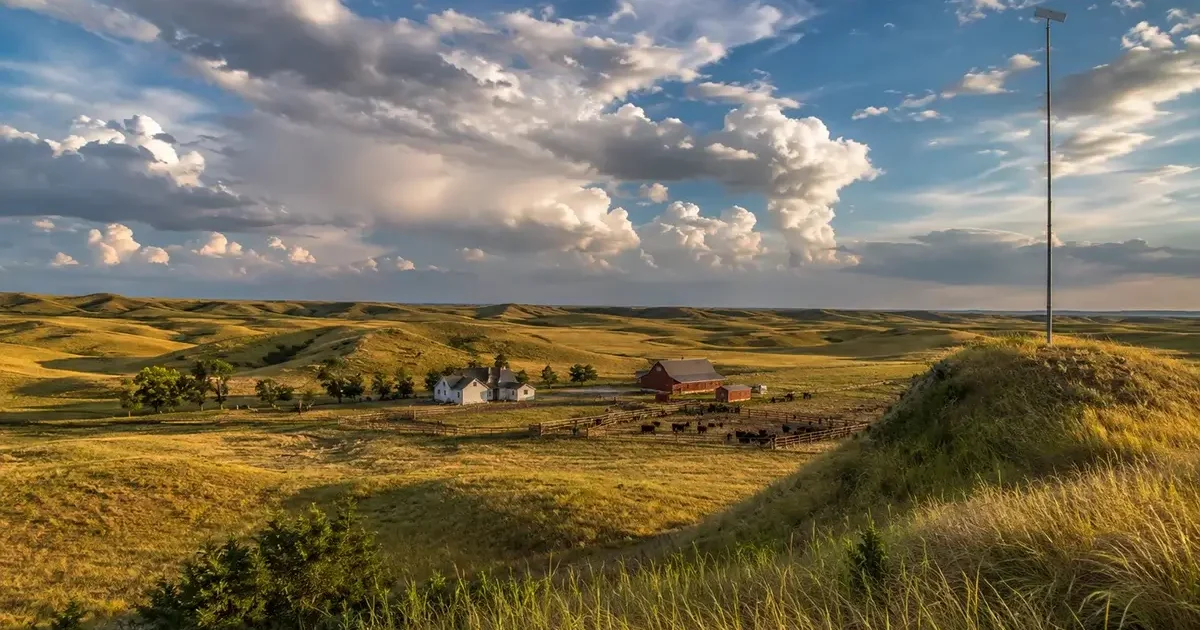
Nebraska’s rural broadband landscape has a unique character shaped by both the state’s geography and its political culture. As a state with a strong tradition of agricultural cooperativism — home to some of the nation’s most innovative rural telephone and electric cooperatives — Nebraska has developed rural broadband infrastructure through the cooperative model at a pace that outperforms most comparable Great Plains states. Yet the state’s sand hills, western Panhandle communities, and most remote agricultural counties still face significant connectivity gaps that no amount of cooperative innovation has yet been able to fully address. In 2026, Nebraska’s combination of progressive cooperative fiber programs, active state investment, and Starlink’s universal coverage creates the most complete rural broadband picture the state has ever had. This comprehensive guide covers rural internet options across Nebraska’s distinct geographic regions.
In This Guide
- Nebraska Rural Broadband Overview
- Best Internet by Nebraska Region
- Starlink in Nebraska
- Nebraska Telephone Cooperatives
- Nebraska Electric Cooperatives and PPDs
- Nebraska State Broadband Programs
- The Nebraska Sand Hills: A Connectivity Frontier
- Nebraska Agriculture and Connectivity
- Practical Tips for Rural Nebraska Residents
- Frequently Asked Questions
Nebraska Rural Broadband Overview
Nebraska has approximately 650,000 rural residents across 93 counties — a population that is heavily dependent on agriculture and that has driven strong rural cooperative development over the past century. Nebraska’s rural telephone cooperatives are among the most innovative in the Great Plains, with several having deployed fiber broadband to rural members years or decades ahead of the typical rural cooperative timeline. Nebraska’s network of Public Power Districts (PPDs) — publicly owned electric utilities unique to Nebraska — has been an increasingly important broadband partner for rural communities.
According to the FCC National Broadband Map, Nebraska’s rural broadband gaps are concentrated in the Sand Hills region (Cherry, Hooker, Thomas, Blaine, Loup, Garfield counties), the western Panhandle (Kimball, Banner, Cheyenne, Sioux counties), and remote agricultural communities across the south-central and southwest portions of the state. Nebraska’s more densely populated agricultural counties in the east have better connectivity driven by the Omaha-Lincoln corridor’s infrastructure influence.
Best Internet by Nebraska Region
Eastern Nebraska / Platte River Valley (Dodge, Saunders, Seward, York Counties)
Eastern Nebraska’s agricultural communities within the Omaha-Lincoln corridor’s influence have relatively good connectivity for rural communities. Several telephone cooperatives serve rural eastern Nebraska with fiber broadband. T-Mobile Home Internet availability is better in eastern Nebraska’s more densely populated rural counties than in the Sand Hills or Panhandle. The flat terrain makes Starlink installation completely effortless.
Central Nebraska / Sandhills Transition (Valley, Greeley, Howard, Nance Counties)
Central Nebraska’s transitional zone between the Platte River agricultural corridor and the Sand Hills has moderate connectivity with significant gaps in communities away from the US-30 and US-281 corridors. Several Nebraska telephone cooperatives including Nebraska Central Telephone have been active in fiber deployment for central Nebraska rural members.
Nebraska Sand Hills (Cherry, Hooker, Thomas, Blaine, Loup Counties)
The Nebraska Sand Hills — a vast region of grass-covered sand dunes covering nearly one-quarter of Nebraska’s land area — is one of the most unique and isolated rural landscapes in the central United States. Cherry County, the largest county east of the Rocky Mountains by area, covers 5,960 square miles with a population of approximately 5,500 people. The Sand Hills’ remoteness combined with the difficult terrain for infrastructure routing (the sandy soil complicates buried cable construction) creates connectivity economics that have historically defeated commercial investment. Starlink is essentially the only viable broadband option for most Sand Hills ranch and farm properties. See the dedicated section below.
Western Panhandle (Scotts Bluff, Sioux, Dawes, Banner, Kimball Counties)
Nebraska’s western Panhandle has moderate to limited connectivity. Scottsbluff-Gering has cable broadband; surrounding rural communities depend on telephone cooperative DSL at varying quality levels. The scenic Pine Ridge and Wildcat Hills terrain creates sky obstruction considerations for Starlink in some locations. The open Panhandle plains properties have excellent Starlink sky access.
Nebraska Telephone Cooperatives
Nebraska’s rural telephone cooperatives are among the most broadband-progressive in the Great Plains:
- NCTC (Nebraska Central Telephone Cooperative): Serving members in central Nebraska with fiber broadband — one of the state’s most comprehensive rural fiber deployments.
- Great Plains Communications: Serving members across multiple Nebraska counties with extensive fiber broadband networks.
- Hamilton Telephone Company: Serving Hamilton County and surrounding members with fiber broadband.
- Northeast Nebraska Telephone Company: Serving far northeast Nebraska members with fiber services.
- SandHills Telephone Cooperative: Serving members in the Sand Hills region — one of the state’s most challenging deployment environments — with expanding broadband programs.
Nebraska Electric Cooperatives and PPDs
Nebraska’s unique Public Power District (PPD) system — publicly owned electric utilities that cover most of rural Nebraska — has been an increasingly important broadband partner. Unlike investor-owned utilities, Nebraska’s PPDs operate as public entities with service mandates that include supporting rural economic development:
- Consumers Public Power District: Serving members in south-central Nebraska with broadband development programs.
- Dawson Public Power District: Serving members in Dawson County and surroundings with broadband expansion using BEAD funding.
- Twin Valleys Power District: Serving southwest Nebraska members with broadband development.
- Sandhills Public Power District: Serving Sand Hills members with broadband programs using ReConnect and BEAD funding.
Nebraska State Broadband Programs
Nebraska’s broadband programs are coordinated through the Nebraska Department of Economic Development. Nebraska received approximately $327 million in BEAD Program federal funding — reflecting the state’s significant rural broadband gap particularly in the Sand Hills and Panhandle regions. Nebraska’s BEAD implementation specifically prioritizes the Sand Hills counties and Panhandle communities as the state’s highest-urgency unserved zones.
The Nebraska Sand Hills: A Connectivity Frontier
The Nebraska Sand Hills deserve specific attention as one of the most distinctive and challenging rural broadband environments in the United States. This vast expanse of stabilized sand dunes — the largest sand dune region in the Western Hemisphere, supporting one of North America’s finest grassland ecosystems — is home to cattle ranching operations that may span 20,000–50,000+ acres each.
SandHills Telephone Cooperative has been working to deploy broadband to its member communities using a combination of fiber where economically feasible and fixed wireless where terrain and density make fiber impractical. The sandy soil conditions that make the Sand Hills a world-class cattle ranching environment make buried cable construction expensive and technically challenging — sandy soil shifts, provides poor structural support for direct burial, and can cause cable abrasion over time.
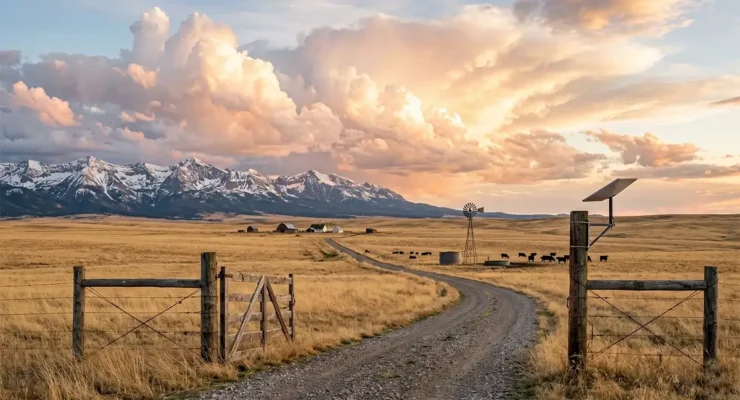
For Sand Hills ranchers, Starlink has been the most impactful technology change in rural operations since rural electrification. A Cherry County cattle operation spread across tens of thousands of acres can now monitor remote water tanks via LoRaWAN sensors connected through Starlink, conduct video calls with veterinarians without driving hours to town, access real-time cattle markets, and manage USDA program paperwork from the ranch headquarters — all capabilities that required either a long drive to town or simply going without until Starlink’s arrival. The open grassland terrain provides perfect Starlink sky access from any Sand Hills location.
Nebraska Agriculture and Connectivity
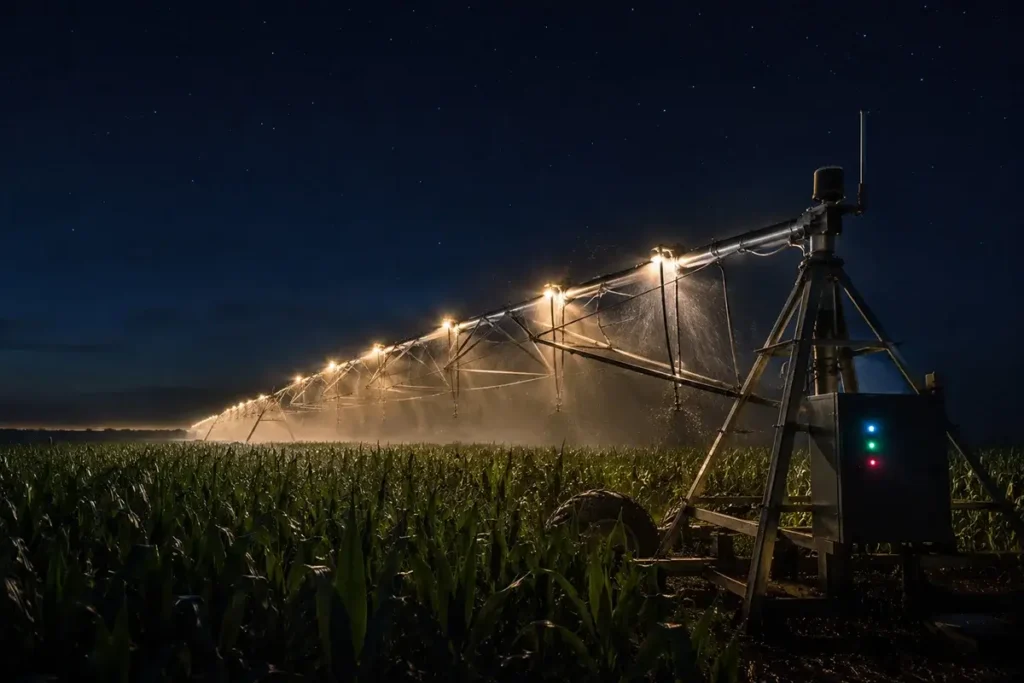
Nebraska’s agricultural economy — corn, soybeans, sorghum, sugar beets, beef cattle, and hog production — requires the same precision agriculture connectivity as any modern US agricultural state. The state’s center-pivot irrigation systems are increasingly connected via remote monitoring platforms that track water flow, pressure, and energy consumption from central management dashboards — systems that require reliable broadband to function as designed. Nebraska’s irrigation-intensive corn belt communities in the Platte River Valley and south-central counties have better broadband access than the Sand Hills, but still have farms that rely on Starlink for the precision agriculture platform connectivity their operations require.
Practical Tips for Rural Nebraska Residents
- Sand Hills ranchers: Starlink is your broadband solution. The open grassland terrain provides perfect installation conditions. Consider Starlink Priority for ranch business operations — the unlimited priority data is valuable during calving season when connectivity demand peaks across monitoring systems, veterinary video calls, and market tracking applications.
- Check NCTC, Great Plains Communications, and SandHills Telephone for fiber. Several Nebraska cooperatives have fiber programs that may serve your area at competitive prices with superior performance to satellite.
- Nebraska PPD members: Contact your Public Power District about broadband programs. Nebraska’s PPDs are increasingly active in broadband, and programs not well-publicized may be available or planned for your area.
Frequently Asked Questions
Is Starlink available in the Nebraska Sand Hills?
Yes. Starlink is available throughout Nebraska including across the entire Sand Hills region. Cherry County’s open grassland provides essentially unrestricted Starlink sky access from any property location, and the very low coverage cell density in Sand Hills counties delivers consistently fast performance — commonly 110–140 Mbps in the most remote areas. SandHills Telephone Cooperative members should also check cooperative broadband availability as an alternative or complement to satellite service.
What is the best rural internet for Nebraska center-pivot irrigation management?
For center-pivot remote monitoring systems, the connectivity requirements are modest — most irrigation monitoring systems transmit small data packets for tank levels, pressure readings, and operational status that require under 1 Mbps of upload bandwidth. These systems work on Starlink, cellular home internet, or even a dedicated cellular M2M SIM card at very low monthly cost. The farm office broadband — for operator interface dashboards, market access, and business operations — benefits from Starlink’s or cooperative fiber’s faster speeds. A Starlink Standard connection at the farmstead supports both the dashboard monitoring interface and all farm office applications simultaneously.
Rural Tourism and Recreation Connectivity
Nebraska’s growing rural tourism sector — the Sandhills Journey Scenic Byway, the Niobrara River canoe corridor, Chimney Rock and the Oregon Trail corridor, and the increasingly popular Sandhills’ dark sky and wildlife tourism — creates rural internet demand from tourism businesses that need connectivity for online booking, payment processing, guest Wi-Fi, and social media marketing that drives modern hospitality business.
Sandhill cranes viewing at Kearney — one of North America’s premier wildlife spectacles, drawing 500,000+ visitors annually to watch 600,000 sandhill cranes staging on the Platte River — creates seasonal internet demand in rural communities along the Platte Valley. Lodging operations, outfitters, and restaurants serving this concentrated seasonal tourism need reliable connectivity during the March viewing season even if their locations are in rural agricultural corridors without traditional commercial broadband.
Starlink has enabled tourism businesses in Nebraska’s rural corridors to establish the online presence and operational connectivity that competitive modern hospitality requires. A rural bed-and-breakfast on the Sandhills Journey Scenic Byway that previously had only marginal DSL can now maintain real-time booking capability on Airbnb and VRBO, process credit cards reliably, and provide adequate guest Wi-Fi — capabilities that translate directly to higher occupancy rates and better online reviews that compound over seasons into a competitive rural tourism business.
Nebraska Broadband: Trajectory to 2030
Nebraska’s broadband trajectory is among the more optimistic of the Great Plains agricultural states, driven by the state’s progressive cooperative culture and its Public Power District system that has embraced broadband as a public utility responsibility. NCTC’s extensive fiber network, SandHills Telephone’s ongoing deployment, and PPD broadband programs are collectively reaching rural Nebraska communities that have never previously had adequate broadband. BEAD Program investment is accelerating this trajectory further, with specific priority for Sand Hills and Panhandle communities that remain beyond current cooperative coverage. The state’s goal of 90%+ rural broadband availability by 2030 is ambitious but achievable given the combined investment levels of federal, state, and cooperative programs currently underway. For current project maps and county-level deployment timelines, check the Nebraska Department of Economic Development broadband office website for the most up-to-date information on funded projects reaching your specific county.
Nebraska Rural Connectivity: Current State Summary
Nebraska’s rural broadband picture in 2026 is more optimistic than most comparable Great Plains agricultural states — a result of the state’s progressive cooperative culture, its unique Public Power District infrastructure, and sustained investment in rural connectivity that predates the BEAD Program by years. NCTC’s extensive fiber network, Great Plains Communications’ rural service, SandHills Telephone’s ongoing deployment, and PPD broadband programs collectively serve a meaningful portion of Nebraska’s rural population with broadband options that would have been unimaginable a decade ago.
For the rural Nebraska addresses still beyond all cooperative and wired broadband reach — primarily in the most remote Sand Hills counties and far western Panhandle communities — Starlink provides the only immediately available broadband-quality connectivity. The flat Nebraska terrain and ultra-low-density coverage cells in the most remote areas deliver consistently excellent Starlink performance, making satellite internet a genuinely capable solution rather than a marginal compromise. As BEAD Program deployments progress through 2027-2030, an increasing share of rural Nebraska addresses will gain wired alternatives — but the path to near-universal connectivity in the most remote Sand Hills and Panhandle communities extends realistically to 2030 and beyond for the most isolated ranch and farm operations that have waited longest for adequate broadband. Starlink today, cooperative fiber eventually — that is the practical rural Nebraska broadband strategy for 2026.



Leave a Reply