
North Dakota’s rural broadband challenge is shaped by the most extreme population density conditions of any contiguous US state — at fewer than 12 people per square mile, North Dakota is the least densely populated state in the continental United States. The economics of providing broadband to such a sparse population over such vast distances have historically limited commercial ISP investment, leaving agricultural communities and energy sector workers across the state’s rolling prairie and Badlands country with minimal connectivity options. In 2026, North Dakota’s combination of telephone cooperative fiber upgrades, electric cooperative broadband programs, and Starlink’s universal coverage is beginning to transform rural connectivity across the state. The energy sector’s demands — oil production in the Bakken Formation, wind farm operations, and agricultural technology — have created broadband demand that is driving investment beyond what residential demand alone would support. This complete guide covers rural internet options across all of North Dakota’s distinct regions.
In This Guide
- North Dakota Rural Broadband Overview
- Best Internet by North Dakota Region
- Starlink in North Dakota
- North Dakota Telephone Cooperatives
- North Dakota Electric Cooperatives
- North Dakota State Broadband Programs
- Bakken Oil Patch Connectivity
- Standing Rock and Other ND Tribal Nations
- Practical Tips for Rural ND Residents
- Frequently Asked Questions
North Dakota Rural Broadband Overview
North Dakota’s broadband landscape is defined by the state’s extraordinary geographic character — vast wheat and sunflower fields stretching to the horizon, the Missouri River’s dramatic breaks country in the west, the Badlands’ otherworldly terrain, and the oil-rich Williston Basin of the northwest. The state’s approximately 780,000 residents are distributed across 70,698 square miles — creating the infrastructure economics of trying to serve vast distances with very few potential subscribers per mile of cable run.
According to the FCC National Broadband Map, North Dakota has significant unserved address concentrations in its western counties — Slope, Golden Valley, Billings, Grant, Sioux, and Emmons counties among the most severely underserved — and on the Standing Rock and Spirit Lake tribal reservations. The state’s eastern agricultural plain has better connectivity, particularly the Red River Valley communities near the Minnesota border and the I-94 corridor cities of Fargo, Bismarck, and Minot’s rural orbits.
North Dakota has 17 rural telephone cooperatives serving specific geographic areas, many of which have been actively upgrading from DSL to fiber broadband using USDA ReConnect and state funding. The state’s electric cooperatives have also been increasingly active in broadband deployment. Together, these cooperative institutions form the backbone of rural North Dakota’s broadband infrastructure.
Best Internet by North Dakota Region
Red River Valley / East Border (Cass, Richland, Ransom, Sargent Counties)
The Red River Valley along the Minnesota border has North Dakota’s best rural connectivity, driven by the Fargo-Moorhead metro’s infrastructure influence and the relatively dense agricultural population of the valley. Cass County’s rural communities near Fargo have cable and some fiber coverage. Several Red River Valley telephone cooperatives serve communities with fiber broadband — Dakota Central Telecommunications and James Valley Telecommunications among the most advanced. T-Mobile Home Internet availability is better in east North Dakota than in the far west. The flat, open Red River Valley terrain is ideal for Starlink installation.
Central Plains / James River Valley (Stutsman, Barnes, Eddy, Foster Counties)
Central North Dakota’s agricultural communities along the James River corridor have moderate connectivity — better than the far west but with significant gaps in communities away from the I-94 and US-281 corridors. Several central ND telephone cooperatives serve communities with DSL and in some cases fiber. Dickey Rural Networks and similar cooperatives have been active in fiber deployment for central ND members. The gently rolling central plains terrain makes Starlink installation straightforward.
Missouri Slope / Badlands (Slope, Billings, Golden Valley, Bowman Counties)
Southwest North Dakota’s Missouri Slope and Badlands country is among the most sparsely populated and least-connected rural territory in the continental United States. Slope County — with a population of approximately 750 people across 1,220 square miles — has essentially no fixed broadband infrastructure outside of the small town of Amidon (population approximately 20). Golden Valley and Billings counties have similarly extreme conditions. Starlink is essentially the only viable broadband option for the vast majority of properties in this region, and performance in the ultra-low-density coverage cells is frequently exceptional — 120–150+ Mbps download speeds have been reported by Slope and Billings county users.
Bakken Oil Country (Williams, Mountrail, McKenzie, Dunn Counties)
The Williston Basin oil country of northwest North Dakota has better connectivity than the adjacent Badlands and Missouri Slope, driven by the energy sector’s infrastructure investment. Williston’s boom economy brought cellular tower upgrades and some commercial broadband investment. Rural areas between the oil field communities depend on telephone cooperative DSL and Starlink. See the dedicated Bakken section below for energy sector connectivity details.
North Dakota Telephone Cooperatives
North Dakota’s 17 rural telephone cooperatives are among the most important broadband providers for rural communities:
- Dickey Rural Networks: Serving south-central ND communities with fiber broadband — one of the state’s most progressive rural telephone cooperative fiber programs.
- Dakota Central Telecommunications: Serving members in the Jamestown area with fiber broadband deployment.
- James Valley Telecommunications: Serving Red River Valley adjacent communities with fiber services.
- MCT (formerly Minot Telephone): Serving Minot-area rural communities with broadband expansion.
- Nemont Telecommunications: Serving far northwest North Dakota including portions of Bakken oil country with fiber broadband — critical for energy sector connectivity.
North Dakota State Broadband Programs
North Dakota’s broadband programs are coordinated through the North Dakota Department of Commerce‘s broadband division. North Dakota received approximately $270 million in BEAD Program federal funding — a smaller allocation than more populous states but significant relative to North Dakota’s rural population. BEAD implementation is prioritizing the state’s most severely unserved western counties and tribal lands.
North Dakota has also operated the Community Broadband Grant Program, which has funded rural broadband infrastructure across multiple funding rounds using state appropriations. Several North Dakota telephone cooperatives have been key recipients of both state Community Broadband grants and federal ReConnect grants for fiber deployment in previously unserved rural communities. For current program information and project maps, contact the North Dakota Department of Commerce broadband team.
Bakken Oil Patch Connectivity
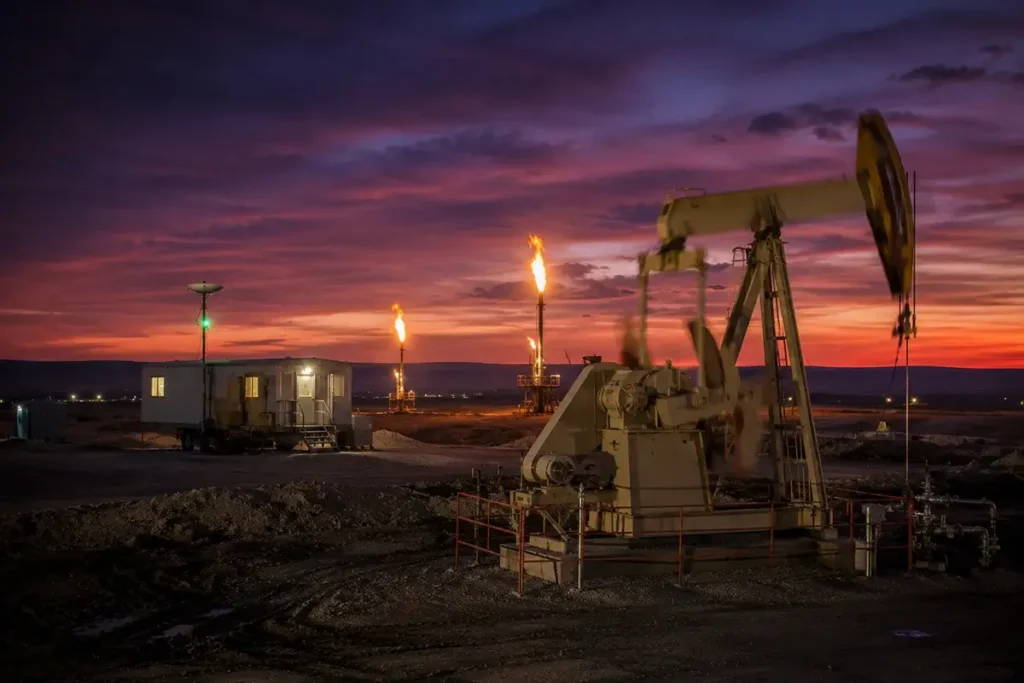
The Williston Basin’s Bakken Formation oil and gas industry has unique and urgent connectivity needs that differ from traditional agricultural rural broadband. Oil field operations require connectivity for SCADA systems monitoring wellheads and pipeline pressure, equipment telematics from drilling rigs and production equipment, safety communication systems at remote well sites, and worker accommodation connectivity at man camps serving rotating crews far from permanent communities.
Starlink has been widely adopted across Bakken oil field operations for worker accommodation buildings, field offices, and manned well sites where cellular coverage is inadequate. Several Bakken oil field contractors use Starlink Business as their standard connectivity solution for temporary field office deployments, appreciating the self-installation capability that doesn’t require a service technician visit to a remote well pad location. Nemont Telecommunications’ expanding fiber network has improved permanent connectivity in some Bakken communities, but the most remote well pad operations in Mountrail and McKenzie counties depend on satellite connectivity.
Standing Rock and Other ND Tribal Nations
North Dakota has four federally recognized tribal nations: Standing Rock Sioux, Spirit Lake, Three Affiliated Tribes (Mandan, Hidatsa, and Arikara), and Turtle Mountain Band of Chippewa. All four nations have reservation lands with significant broadband access deficits. The Three Affiliated Tribes on the Fort Berthold Reservation — in the heart of the Bakken oil country — have pursued broadband using tribal economic development resources from oil royalty revenue. Standing Rock Sioux Tribal Utility Authority has been among the more active tribal broadband programs in North Dakota. Turtle Mountain Band of Chippewa in the far north has been pursuing broadband for its remote northern reservation community. Tribal members should contact their specific nation’s utility or economic development office about tribal broadband programs.
Practical Tips for Rural North Dakota Residents
- Southwest ND residents: Starlink is your best and often your only option. Order without hesitation — the Slope, Billings, and Golden Valley county coverage cells deliver some of the fastest rural Starlink performance anywhere in the country. The flat-to-rolling terrain provides essentially unrestricted sky access from virtually any location.
- ND winter preparedness: North Dakota winters include some of the most severe weather in the continental US — extended periods below -30°F are common. Ensure your Starlink router is in a heated space, monitor dish performance during extreme cold events, and have a cellular backup plan for the rare occasions when extreme weather affects satellite performance.
- Bakken area energy workers: Nemont Telecommunications’ fiber network is expanding in the Williston area — check current service availability. For remote well site and man camp operations, Starlink Business provides the most reliable self-installable broadband without requiring a service technician visit to remote locations.
Frequently Asked Questions
What is the best internet for a North Dakota wheat farm?
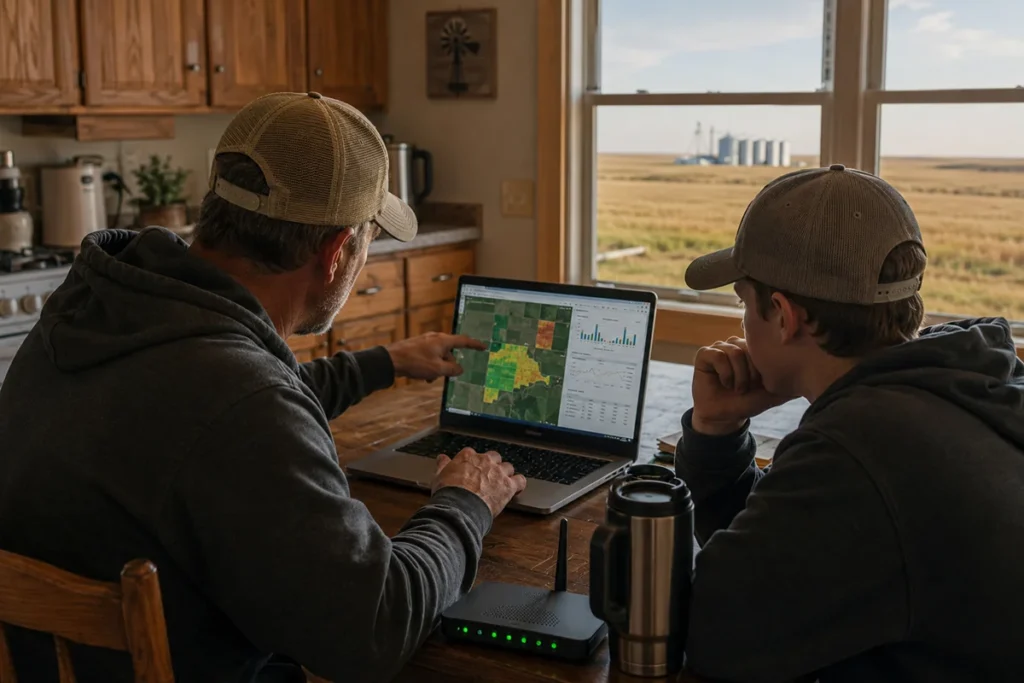
For North Dakota wheat farms without telephone cooperative fiber coverage, Starlink Priority ($250/month) is the recommended solution for farm business operations. The flat prairie terrain delivers excellent performance, and Starlink Priority’s unlimited priority data eliminates data management overhead during planting and harvest when precision agriculture data sync and operational communication demands peak simultaneously. Check Dickey Rural Networks and other ND telephone cooperatives for fiber availability before investing in satellite — cooperative fiber at gigabit speeds is the better long-term option where available.
Is T-Mobile Home Internet available in rural North Dakota?
T-Mobile Home Internet availability in rural North Dakota is limited to communities near the I-94, US-2, and US-83 corridors where T-Mobile has adequate tower density. In the most remote western counties, T-Mobile Home Internet eligibility is essentially nonexistent. Check T-Mobile’s website with your specific address — if eligible, the $50/month flat rate is significantly cheaper than Starlink for locations where T-Mobile coverage is adequate. For the majority of rural North Dakota properties beyond the major corridors, Starlink is the only viable broadband option.
Wind Energy and Rural ND Connectivity
North Dakota has become one of the nation’s leading wind energy producers, with thousands of wind turbines spread across the state’s prairie landscape generating significant economic activity and unique connectivity demands. Wind farm operations require monitoring connectivity for turbine performance telemetry, SCADA systems tracking output and mechanical status, maintenance crew communication, and the administrative functions of wind energy companies operating remote installations across vast distances.
Starlink Business has become the standard connectivity solution for wind farm operations buildings and maintenance facilities in rural North Dakota, providing the broadband speeds and reliability that wind energy management systems require at locations where no other broadband option exists. Several North Dakota wind energy operators report that Starlink has replaced the expensive VSAT connections that previously served remote wind farm operations centers, reducing connectivity costs while substantially improving performance.
The intersection of North Dakota’s wind energy industry and its rural broadband challenge creates an interesting economic dynamic — wind energy companies represent significant commercial demand for rural broadband that helps make tower and infrastructure investments economically viable in areas where residential demand alone would be insufficient. Rural telephone cooperatives in wind energy corridors have benefited from the commercial demand that wind farm connectivity needs create, which in turn supports the deployment economics for the residential broadband that rural communities need.
North Dakota Broadband: Looking to 2030
North Dakota’s broadband trajectory is improving but the state’s extreme rural character means progress will be measured in years and decades rather than months for the most remote areas. The BEAD Program’s $270 million investment — significant relative to North Dakota’s rural population — combined with telephone cooperative fiber programs and Starlink’s universal availability creates the most complete rural broadband picture North Dakota has ever had. For residents of Slope, Billings, and Golden Valley counties, the realistic path to wired broadband extends to 2029–2033 at earliest. Starlink provides the only available broadband-quality connectivity for these communities today, and its consistent excellent performance in ultra-low-density coverage cells means rural North Dakotans are not waiting on inferior service — they’re accessing broadband that meets modern needs while infrastructure eventually catches up to their remote locations.

Leave a Reply