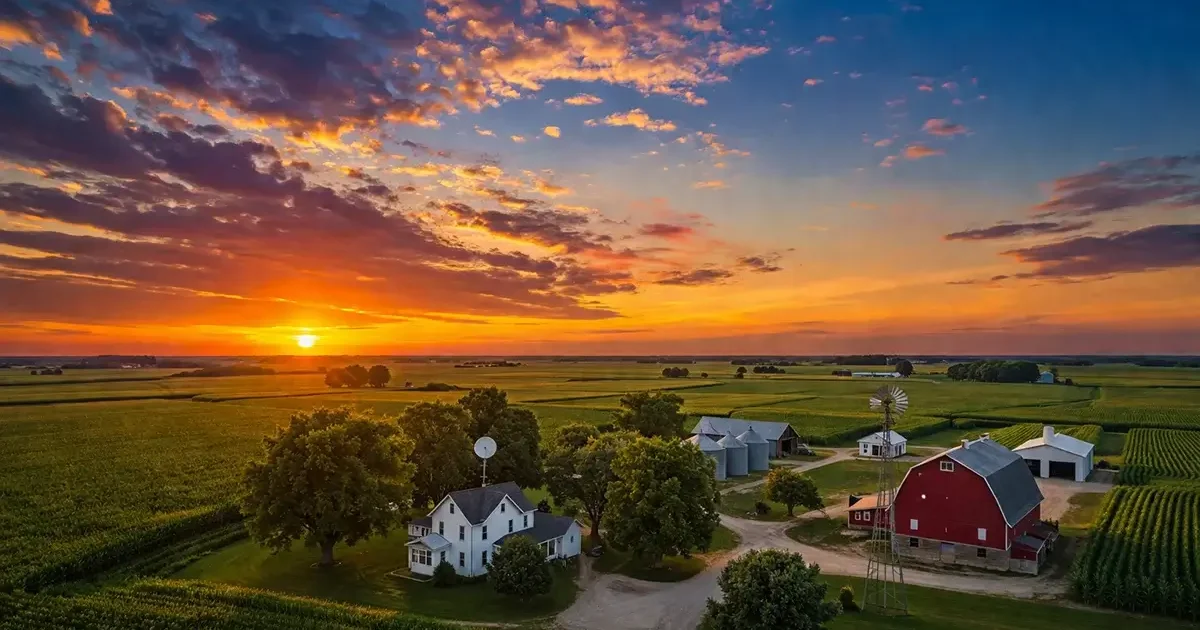
Iowa’s rural broadband situation is more nuanced than most. The state has a relatively strong rural telecommunications infrastructure compared to southern and Appalachian states — Iowa’s legacy of rural telephone cooperatives, active RECs (Rural Electric Cooperatives), and a state government that has prioritized broadband for over a decade have created better baseline coverage than most agricultural states. But “better than Mississippi” still leaves Iowa with significant rural connectivity gaps, particularly in the state’s most sparsely populated counties in the north and west, on remote farmsteads far from rural service corridors, and in communities that fall between coverage areas of competing providers without adequate service from any of them. This complete guide covers rural internet options across all of Iowa’s regions in 2026.
In This Guide
- Iowa Rural Broadband Overview
- Best Internet by Iowa Region
- Starlink in Iowa
- T-Mobile and Verizon in Rural Iowa
- Iowa Telephone Cooperatives
- Iowa Rural Electric Cooperatives
- Iowa State Broadband Programs
- Precision Agriculture and Iowa Connectivity
- Practical Tips for Rural Iowa Residents
- Frequently Asked Questions
Iowa Rural Broadband Overview
Iowa is an agricultural state where broadband connectivity has become as fundamental to farm operations as electricity. The state’s 86,000+ farms — producing corn, soybeans, pork, cattle, and dairy at scales that require sophisticated precision agriculture technology — increasingly depend on reliable broadband for everything from GPS autosteer correction signals to grain market monitoring, equipment telematics, and farm management software platforms.
Iowa’s telecommunications infrastructure has historically been shaped by a dense network of rural telephone cooperatives — small, member-owned organizations that built telephone service to Iowa’s farms and small towns generations ago and have now transitioned many of their members to fiber broadband. Iowa has approximately 12 rural telephone cooperatives still actively operating, and several are among the most technically progressive rural telephone utilities in the country. Where telephone cooperatives have built fiber, rural Iowa broadband is genuinely excellent. Where cooperative coverage ends and legacy commercial providers take over, the quality drops significantly.
According to the FCC National Broadband Map, Iowa’s rural broadband gaps are concentrated in the state’s northwest and north-central regions, on remote farmsteads far from the nearest cooperative or cable headend, and in communities served by legacy telephone DSL that has not been upgraded to meet modern speed standards.
Best Internet by Iowa Region
Northwest Iowa (Lyon, Osceola, Dickinson, Emmet, Palo Alto Counties)
Northwest Iowa’s flat glaciated plains present minimal terrain challenges for broadband deployment but significant economic challenges — very low population density spread across vast agricultural landscapes means few potential customers per mile of infrastructure. Several northwest Iowa telephone cooperatives serve specific corridor communities with DSL or fiber. Farmers in the more remote northwest Iowa counties — particularly on farmsteads miles from the nearest incorporated town — often rely on Starlink as their primary broadband. T-Mobile Home Internet is available at some northwest Iowa addresses along the US-59 and US-71 corridors. The flat terrain makes Starlink installation completely straightforward with no obstruction concerns.
Northeast Iowa (Allamakee, Clayton, Fayette, Delaware Counties)
Northeast Iowa’s Driftless Area — a region of unglaciated hills and valleys unique in the Midwest — creates more terrain challenges than the rest of Iowa’s prairie landscape. The scenic bluffs along the Mississippi River and the upper Iowa River valley feature terrain that limits fixed wireless coverage in some hollows and valleys. Northeast Iowa Telephone, Mediacom, and several rural telephone cooperatives serve communities in this region. Allamakee and Clayton counties, bordering Wisconsin and Minnesota along the Mississippi, have communities with a mix of cooperative fiber, cable DSL, and satellite-dependent farmsteads.
Central Iowa Rural Fringe (Boone, Story, Madison, Warren, Jasper Counties)
The rural counties surrounding Des Moines have relatively better connectivity than most of rural Iowa, driven by metro infrastructure spillover. Rural addresses within 20–30 miles of Des Moines often have Mediacom cable service or Aureon/Iowa Telecommunications fiber in cooperative territory. Rural communities farther from the metro depend more heavily on telephone cooperative DSL, WISP coverage, and Starlink. T-Mobile Home Internet availability is better in central Iowa’s relatively denser rural landscape than in the northwest.
Western Iowa (Monona, Harrison, Shelby, Audubon, Cass Counties)
Western Iowa’s Missouri River valley and adjacent counties have moderate connectivity. Council Bluffs and the Omaha metro’s eastern fringe provide cable and fiber coverage to communities near the river corridor. Rural counties farther from the corridor depend on telephone cooperative service and Starlink. The flat Missouri River floodplain terrain is ideal for Starlink; the Loess Hills — Iowa’s unique western-facing ridge line — create more terrain variation that may require sky obstruction assessment for some properties.

Iowa Telephone Cooperatives: The Broadband Backbone
Iowa’s rural telephone cooperatives are among the most important rural broadband providers in the state. Several have invested in fiber-optic upgrades that make their service territory among the best-connected rural areas in the Midwest:
- Northwest Iowa Telephone Company (NITCO): Serving northwest Iowa communities with fiber broadband — one of the state’s most progressive rural telcos.
- Northeast Iowa Telephone: Serving Allamakee, Clayton, and neighboring counties with fiber service.
- Iowa Telecommunications Services / CenturyLink Legacy Areas: Lumen/CenturyLink serves many rural Iowa communities with DSL ranging from marginal to adequate speeds depending on distance from switching equipment.
- Heartland Technology Solutions: Regional cooperative-affiliated technology provider expanding broadband in several Iowa counties.
Iowa telco cooperative members should check whether their cooperative has deployed or is planning fiber upgrades — the pace of cooperative fiber deployment in Iowa has accelerated significantly with BEAD and ReConnect funding.
Iowa Rural Electric Cooperatives and Broadband
Iowa’s 38 rural electric cooperatives serve members across the state’s agricultural landscape. Unlike southern states where electric cooperatives are leading broadband deployment, Iowa’s electric cooperatives have generally been less active in broadband than Iowa’s telephone cooperatives — reflecting the fact that telephone cooperatives have been the traditional broadband path in Iowa’s rural communities. However, several Iowa REC’s have launched or are planning broadband programs:
- Farmers Electric Cooperative (Kalona): One of Iowa’s most innovative cooperatives, deploying fiber broadband to members in Washington and Johnson counties.
- Midland Power Cooperative: Exploring broadband options for members in Boone, Story, and Hamilton counties.
- Other Iowa RECs: Multiple Iowa electric cooperatives are evaluating broadband programs as BEAD funding makes deployment economics more favorable. Contact your specific REC for current status.
Iowa State Broadband Programs
Iowa’s broadband programs are coordinated by the Office of the Chief Information Officer (OCIO) under the Governor’s office, which administers the Iowa Empower Rural Iowa Broadband grant program. Iowa received approximately $416 million in BEAD Program federal funding — a somewhat smaller allocation than more rural states but still representing a substantial investment in closing the state’s remaining broadband gaps.
Iowa’s state broadband grant program has been active since 2020, funding fiber deployment across the state’s most underserved rural communities across multiple funding rounds. The program has been praised for its efficient administration and focus on genuinely unserved areas. For current Iowa broadband program information, the OCIO broadband website maintains maps of funded projects, coverage areas, and grant application information for ISPs. Rural Iowans can check whether their address falls within a funded project area through the OCIO’s online resources.
Iowa is also one of the more active states in the FCC broadband map challenge process — the state has filed institutional challenges on behalf of communities where ISP coverage claims have been demonstrated to be inaccurate. For individual rural Iowans who believe their address is incorrectly mapped, the Iowa OCIO broadband team can provide guidance on filing personal challenges at broadbandmap.fcc.gov.
Precision Agriculture and Iowa Farm Connectivity
Iowa farms are among the most technologically sophisticated in the world. The state’s corn-soybean-pork production systems increasingly rely on precision agriculture technologies that require reliable broadband connectivity for full operational benefit. Key Iowa farm connectivity applications:
| Application | Minimum Bandwidth | Connectivity Priority |
|---|---|---|
| GPS autosteer RTK correction | Under 1 Mbps | Reliability over speed |
| John Deere Operations Center sync | 2–5 Mbps | High — daily field data |
| Grain market platforms (DTN, CME) | 3–5 Mbps | High — time-sensitive pricing |
| Livestock barn monitoring cameras | 3–8 Mbps per camera | High during farrowing/calving |
| Tile drainage monitoring (IoT) | Under 1 Mbps | Low latency acceptable |
| Remote grain bin monitoring | Under 1 Mbps | Reliability over speed |
| Crop insurance documentation | 5–10 Mbps | Seasonal — post-harvest |
| Aerial imagery (drone data upload) | 25+ Mbps | Upload speed critical |
For Iowa farm operations, Starlink Business ($250/month) provides the most reliable broadband solution for properties beyond cooperative fiber or cable coverage. The upload speed advantage of Starlink over legacy satellite is particularly significant for drone imagery upload and John Deere Operations Center data sync — operations that can involve multi-gigabyte file transfers that take hours on HughesNet’s 3 Mbps upload and under an hour on Starlink’s 15–25 Mbps upload. See our full guide to internet for farms for complete precision agriculture connectivity recommendations.
Practical Tips for Rural Iowa Residents
- Check your telephone cooperative first. Iowa’s telephone cooperatives are frequently the best rural broadband option in their service areas — often fiber at 100 Mbps–1 Gbps at competitive prices. If you’re in cooperative territory, call them before investing in satellite hardware.
- Iowa’s flat terrain is Starlink-friendly. The entire state has minimal sky obstruction concerns — virtually any Iowa farmstead has excellent northern sky clearance for Starlink with no mast required. Installation is one of the easiest in the Midwest.
- T-Mobile Home Internet is worth checking in central and eastern Iowa. T-Mobile’s rural 5G Extended Range coverage is meaningfully better in Iowa’s more densely populated central and eastern counties than in the sparsely populated northwest. At $50/month, it’s worth checking eligibility at your address before committing to Starlink’s higher cost.
- Farm operations should plan for both farmstead and field connectivity. Starlink at the farmstead covers office operations and barn monitoring. For in-field real-time GPS corrections and machine telematics, cellular data from John Deere’s integrated modem or an in-cab hotspot remains the most practical solution for most Iowa farm operations.
Frequently Asked Questions
Does Iowa have good rural broadband compared to other agricultural states?
Iowa ranks better than most agricultural states on rural broadband access metrics — largely due to its legacy of rural telephone cooperatives that have transitioned to fiber broadband ahead of the national curve. However, the state still has significant gaps in its northwest and north-central regions, on remote farmsteads, and in communities served by legacy DSL. Relative to Iowa’s needs as a technologically sophisticated agricultural economy, the connectivity gap remains a meaningful barrier for farms and rural communities that lack access to cooperative fiber.
Is Starlink a good option for Iowa grain farms?
Yes, for farmsteads without access to cooperative fiber or cable. Starlink Standard at $120/month provides the broadband connectivity needed for all grain farming office operations — market monitoring, USDA program management, equipment telematics, and business administration. For heavy-use operations with multiple employees, drone imagery processing, or consistent large file transfers, Starlink Priority at $250/month provides unlimited priority data without the 1 TB threshold concern.
What is the fastest rural internet available in Iowa?
In Iowa telephone cooperative and electric cooperative fiber service areas, gigabit symmetric service (1,000 Mbps up and down) is available at many rural Iowa addresses — the fastest rural internet available anywhere. Outside cooperative fiber territory, Starlink Priority delivers 100–180 Mbps download speeds with 15–35 Mbps upload — the best satellite performance available. In areas with strong T-Mobile 5G Ultra Capacity coverage (limited in Iowa’s most rural areas), 100–300 Mbps speeds are achievable through T-Mobile Home Internet.
Rural Healthcare and Connectivity in Iowa
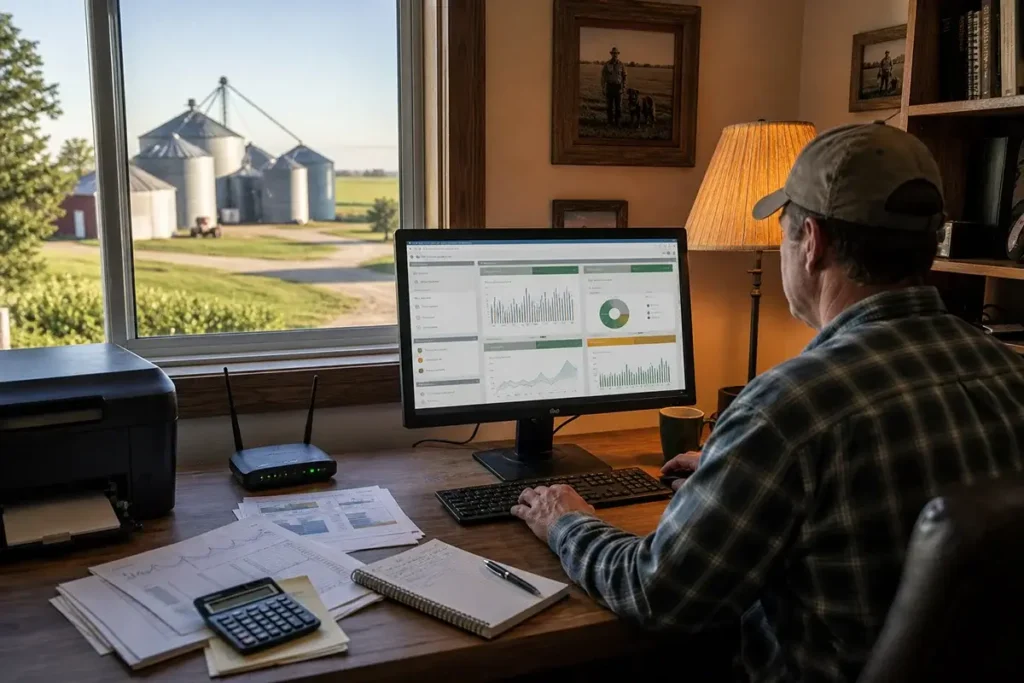
Iowa’s rural healthcare system — anchored by a network of critical access hospitals and rural health clinics serving agricultural communities — depends increasingly on telehealth for specialist access and chronic disease management. Iowa has rural healthcare deserts particularly in the northwest and north-central counties where the nearest specialist may be 60–90 minutes from patients. Telehealth programs through UnityPoint Health, Mercy Medical, and Iowa’s federally qualified health centers have expanded to serve rural Iowa patients, but the effectiveness of these programs depends on home internet quality.
For rural Iowa patients on legacy satellite with high latency, telehealth video appointments feel stilted and clinically degraded compared to the natural conversation possible on Starlink or telephone cooperative fiber. Iowa’s strong telephone cooperative fiber network — where it reaches — provides excellent telehealth-capable connectivity. For farmers and rural residents beyond the cooperatives’ reach, Starlink enables the same telehealth quality. The Iowa Department of Public Health has recognized rural broadband as a social determinant of health in the state’s rural health equity frameworks.
Iowa’s Broadband Future: 2026–2030
Iowa’s rural broadband trajectory is one of the more optimistic of any agricultural state. The combination of a strong pre-existing telephone cooperative network that is actively upgrading to fiber, an electric cooperative sector that is increasingly deploying broadband, and $416 million in BEAD Program funding targeted at remaining gaps creates a clear path toward near-universal rural broadband in Iowa by 2030.
The state’s most optimistic outcome — all rural Iowa farm operations with access to at least 100/20 Mbps broadband by 2030 — is achievable if BEAD Program deployment proceeds on schedule and cooperatives continue their current investment pace. This outcome would position Iowa’s agricultural sector well for the next decade of precision agriculture technology adoption, where reliable broadband is the enabling infrastructure for everything from autonomous equipment to AI-driven crop management systems. Monitor progress through the Iowa OCIO broadband office’s deployment tracker and your local cooperative’s member communications for the most current status on deployments reaching your specific address.




Leave a Reply