
Michigan’s rural broadband landscape is shaped by the state’s distinctive geography — the two-peninsula state that separates the Great Lakes has dramatically different connectivity profiles depending on whether you’re in the Lower Peninsula’s agricultural southern counties, the forested northern Lower Peninsula’s lake country, or the remote Upper Peninsula’s iron and copper country. Michigan has approximately 2.4 million rural residents spread across the state’s 83 counties, and the connectivity challenges they face range from the manageable (Lower Peninsula agricultural communities with approaching fiber options) to the extreme (Upper Peninsula communities where some areas rival Alaska’s connectivity isolation). This comprehensive guide covers rural internet options across all of Michigan’s distinct regions in 2026.
In This Guide
- Michigan Rural Broadband Overview
- Best Internet by Michigan Region
- Starlink in Michigan
- Cellular Coverage in Rural Michigan
- Michigan Electric Cooperatives and Broadband
- Michigan State Broadband Programs
- Michigan Upper Peninsula: America’s Connectivity Frontier
- Michigan Agriculture and Connectivity
- Practical Tips for Rural Michigan Residents
- Frequently Asked Questions
Michigan Rural Broadband Overview
Michigan is a state where the rural broadband story is told differently depending on which peninsula you call home. The Lower Peninsula’s southern agricultural counties have better connectivity than the state average, driven by proximity to Detroit, Grand Rapids, Lansing, and the Kalamazoo-Battle Creek corridor’s infrastructure influence. Northern Lower Peninsula lake country communities — the resort and second-home communities around Traverse City, Petoskey, and Gaylord — have seen significant infrastructure investment driven by the tourism economy and the influx of remote workers attracted by the area’s quality of life. The Upper Peninsula (the “U.P.”) is a different world — geographically vast, sparsely populated, and with connectivity challenges that in some remote reaches are as severe as any in the continental United States.
According to the FCC National Broadband Map, Michigan has significant concentrations of unserved addresses in the Upper Peninsula, the northern Lower Peninsula’s most rural communities, and agricultural communities in the western Lower Peninsula beyond the major fruit belt corridor. Michigan’s tribal nations — 12 federally recognized tribes with reservation lands concentrated in the northern Lower Peninsula and Upper Peninsula — have specific connectivity challenges that state and federal tribal broadband programs are addressing.
Michigan has been an active state in broadband investment. The Michigan High-Speed Internet Office (MIHI), established in 2021, has administered state broadband programs and is implementing Michigan’s substantial BEAD Program allocation alongside electric cooperative and telephone company investments that are rapidly transforming connectivity in many previously underserved Michigan rural communities.
Best Internet by Michigan Region
Southwest Michigan / Fruit Belt (Berrien, Van Buren, Allegan, Ottawa Counties)
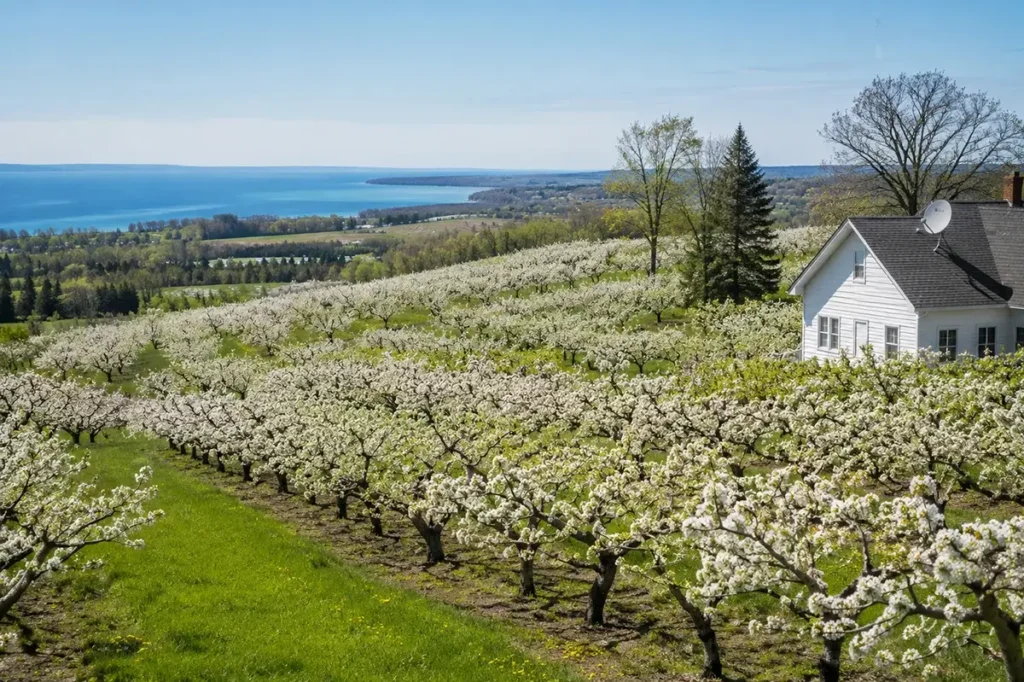
Southwest Michigan’s fruit belt — blueberries, apples, peaches, wine grapes, and cherries along Lake Michigan’s eastern shore — has relatively better connectivity than most rural Michigan, driven by both the agricultural economy and the Lake Michigan resort corridor’s infrastructure investment. Some fiber and cable coverage exists in communities along the fruit belt highway corridors. Van Buren County and Allegan County have electric cooperative broadband programs expanding in rural communities. T-Mobile Home Internet availability is better in southwest Michigan than in more remote regions. Starlink serves the entire region with good performance.
Northern Lower Peninsula / Lake Country (Charlevoix, Emmet, Antrim, Otsego, Montmorency Counties)
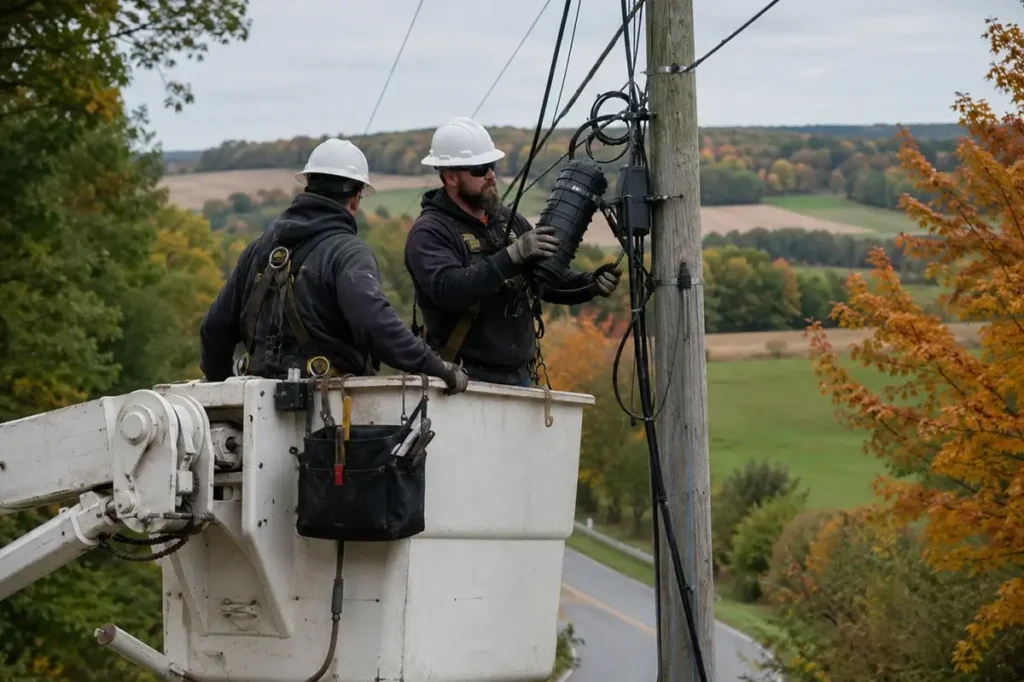
Northern Michigan’s lake country has seen significant broadband investment driven by tourism and the remote worker influx. Traverse City and its surrounding communities have cable and some fiber coverage extending into suburban rural areas. However, communities on inland lakes, in national forest areas, and along remote rural roads beyond the Traverse City and Petoskey orbits depend primarily on Starlink and WISP coverage. Several northern Michigan telephone cooperatives — including Cherryland Electric Cooperative and Great Lakes Energy — have active broadband programs for rural members. This region’s popularity with remote workers and second-home owners has created strong demand that is driving WISP expansion and cooperative broadband investment.
Central Lower Peninsula (Clare, Gladwin, Osceola, Mecosta, Isabella Counties)
Central Lower Peninsula’s agricultural and forest communities have limited broadband infrastructure outside of the major towns. Clare, Gladwin, and Osceola counties have significant rural connectivity gaps. Several Michigan telephone cooperatives serve portions of this region with DSL. Isabella County’s Mount Pleasant (home to Central Michigan University) has better connectivity, but surrounding rural agricultural communities are significantly less served. Electric cooperative broadband programs are expanding in parts of this region using state and BEAD funding.
Upper Peninsula (Marquette, Luce, Schoolcraft, Mackinac, Chippewa, Keweenaw Counties)
The Upper Peninsula deserves extended treatment as one of the most uniquely challenging rural broadband environments in the continental United States — see the dedicated section below.
Michigan Electric Cooperatives and Broadband
Michigan has approximately 14 rural electric cooperatives serving rural members across the state, and several have become active broadband deployers:
- Great Lakes Energy (GLE): One of Michigan’s largest rural electric cooperatives, serving members across 13 counties in northwest Lower Michigan. GLE has been one of the most aggressive Michigan cooperative broadband deployers, building fiber to rural members using USDA ReConnect and BEAD funding.
- Cherryland Electric Cooperative: Serving members in Leelanau, Benzie, and Grand Traverse counties with expanding broadband programs in the Traverse City area’s rural orbit.
- Thumb Electric Cooperative: Serving members in Michigan’s Thumb peninsula — Sanilac, Huron, and Tuscola counties — with broadband development plans.
- Cloverland Electric Cooperative: Serving Upper Peninsula members in Chippewa, Luce, Mackinac, and Schoolcraft counties with broadband expansion — critical for some of Michigan’s most isolated communities.
- Ontonagon County REA: Serving the western Upper Peninsula’s most remote copper country communities with broadband development.
Michigan State Broadband Programs
Michigan’s High-Speed Internet Office (MIHI) administers state broadband programs under the Michigan Department of Labor and Economic Opportunity. Michigan received approximately $1.56 billion in BEAD Program federal funding — one of the larger Midwestern state allocations, reflecting both Michigan’s large rural population and the severity of connectivity gaps particularly in the Upper Peninsula. MIHI’s BEAD implementation specifically prioritizes Upper Peninsula communities, northern Lower Peninsula communities, and tribal lands as the highest-priority deployment zones.
Michigan has also been active in the USDA ReConnect Program across multiple funding rounds, with several Michigan electric cooperatives and telephone companies receiving ReConnect grants. For current program information and project maps, visit the Michigan High-Speed Internet Office website.
Michigan Upper Peninsula: America’s Connectivity Frontier
The Michigan Upper Peninsula is 16,452 square miles of predominantly forested terrain — larger than Maryland and Connecticut combined — with a population of only about 300,000 people. Keweenaw County, at the tip of the Keweenaw Peninsula, is one of the most isolated counties in the Great Lakes region. Communities in Luce, Schoolcraft, and Ontonagon counties have connectivity situations comparable to remote Alaska communities in terms of the economic and geographic barriers to infrastructure deployment.
Starlink has been transformational for Upper Peninsula rural communities — often providing the first broadband-quality internet that families, small businesses, and municipal offices in remote U.P. communities have ever had access to. The U.P.’s predominantly forested landscape creates more sky obstruction challenges than Michigan’s Lower Peninsula, particularly for properties deep in the state and national forests that dominate the interior. Properties in clearings, lake shores with open water to the south, and developed community areas typically have adequate sky access. Deep forest properties may need mast installation to clear the spruce, fir, and hardwood canopy.
Cloverland Electric Cooperative’s fiber deployment — using USDA ReConnect and BEAD funding — represents the most significant infrastructure investment in several U.P. communities in decades. For U.P. residents within Cloverland’s deployment zones, fiber broadband will deliver gigabit symmetric service that completely transforms the connectivity picture in communities where adequate internet has never previously existed.
Practical Tips for Rural Michigan Residents
- Upper Peninsula residents: Check Cloverland Electric’s broadband deployment maps for your specific area. If fiber is coming within 12–18 months, Starlink as a bridge makes sense. If you’re many years from any infrastructure, order Starlink now — the U.P.’s beauty and isolation make it one of the most rewarding Starlink deployments in the country once you get the dish above the tree canopy.
- Northern Lower Peninsula lake country residents: Great Lakes Energy and Cherryland Electric have active broadband programs that may serve your area or be planning to. Check before defaulting to satellite — cooperative fiber at $60–$80/month beats Starlink’s $120/month on value when available.
- Michigan Thumb agricultural residents: Check Thumb Electric Cooperative’s broadband status for your area. The flat Thumb peninsula terrain makes Starlink installation completely effortless and delivers consistently excellent performance in the low-density rural cells.
- Winter consideration: Michigan’s heavy snowfall — particularly in the lake-effect snow belt of the western Lower Peninsula and the Upper Peninsula — creates more snow load on Starlink dishes than most US states. Mount the dish at an angle that promotes snow shedding. The built-in heater handles normal snowfall but heavy wet lake-effect snow can occasionally require brief manual clearing in the most extreme events.
Frequently Asked Questions
What is the best internet for rural Upper Peninsula Michigan?
Starlink is the best immediately available broadband for the vast majority of rural Upper Peninsula properties. The U.P.’s forest cover means sky obstruction is more common than in open agricultural states — use the Starlink app scanner carefully before ordering for any forested site. Cloverland Electric Cooperative’s fiber deployment is reaching some U.P. communities using ReConnect and BEAD funding — check Cloverland’s current service map if you are in their member territory. T-Mobile and Verizon cellular coverage is limited in the most remote U.P. areas; Starlink is typically the only viable broadband option for off-corridor U.P. properties.
Is Starlink available in Michigan’s Upper Peninsula?
Yes. Starlink is available statewide in Michigan including throughout the Upper Peninsula with no waitlist. The U.P.’s latitude (up to 47° north) is well within Starlink’s coverage range, and performance in the U.P.’s very low-density coverage cells is frequently excellent — users report 90–130 Mbps speeds in the most remote areas where few users share the coverage cell. Sky obstruction from tree canopy is the primary installation challenge for many U.P. forest properties.
When will BEAD fiber reach remote Upper Peninsula communities?
Michigan’s BEAD implementation has prioritized Upper Peninsula communities as the state’s highest-urgency deployment zone. Electric cooperative fiber projects using ReConnect and BEAD funding are in various stages of planning and deployment across the U.P. Realistic service delivery timelines range from 2027 for communities in active Cloverland deployment zones to 2030–2033 for the most remote Keweenaw, Ontonagon, and interior Luce County communities. In the interim, Starlink provides broadband-quality connectivity that is available today regardless of infrastructure development timelines.
Michigan Agriculture and Connectivity
Michigan’s agricultural economy is remarkably diverse — the state is among the nation’s top producers of blueberries, cherries, apples, dairy, asparagus, dry beans, and specialty crops that require sophisticated management. Modern Michigan farm operations depend on broadband connectivity for precision agriculture, commodity market access, and business operations in ways that directly affect profitability and competitiveness.
For Michigan farm operations without telephone cooperative fiber or cable coverage, Starlink Business ($250/month) provides the most reliable broadband solution. The state’s diverse terrain — from the flat southwestern agricultural plains to the hilly cherry and apple orchards of the Leelanau and Old Mission peninsulas to the dairy farms of the Thumb — creates varying installation contexts that the Starlink app’s sky scanner evaluates accurately before any hardware purchase. Great Lakes Energy Cooperative’s active fiber programs serve members in several key agricultural regions of northwest Lower Michigan; contact GLE directly about current availability in your agricultural county.
Michigan’s Thumb region — the agricultural peninsula extending into Lake Huron — deserves specific mention as one of the state’s most productive agricultural areas with moderate but improving broadband access. Thumb Electric Cooperative has been working on broadband development for Thumb agricultural members. The flat Thumb terrain makes Starlink installation straightforward with no obstruction concerns, and the sparse coverage cell density in the Thumb’s agricultural interior delivers consistently strong Starlink performance. Michigan State University Extension’s agricultural programs increasingly assume broadband connectivity for accessing digital resources and participating in extension educational programs — a demand signal that cooperative leadership has been incorporating into broadband development planning for Michigan’s agricultural communities.
Michigan Tribal Nations and Broadband
Michigan has 12 federally recognized tribal nations with reservation lands concentrated in the northern Lower Peninsula and Upper Peninsula. The Little Traverse Bay Bands, the Sault Ste. Marie Tribe of Chippewa Indians, the Keweenaw Bay Indian Community, and other Michigan tribal nations all have specific broadband needs for their reservation and trust land communities. Several Michigan tribal nations have pursued broadband connectivity using tribal economic development resources and federal tribal broadband funding programs through the NTIA and USDA.
The Michigan High-Speed Internet Office (MIHI) coordinates with tribal nations on BEAD Program planning specifically to ensure that BEAD implementation addresses tribal connectivity needs while respecting tribal sovereignty and self-determination. Tribal members on Michigan reservation lands should contact their tribal government’s economic development or utility office about tribal broadband programs available to them. The pace of tribal broadband deployment in Michigan has accelerated significantly with BEAD Program funding becoming available and should be verified directly with tribal government offices rather than assumed based on prior year information.




Leave a Reply