
Telehealth has permanently transformed rural healthcare delivery. What began as a pandemic-era emergency measure has become a foundational component of the rural healthcare system — connecting patients with specialists hundreds of miles away, enabling chronic disease management without repeated long-distance travel, and making mental health services accessible to rural communities that previously had none. But telehealth’s promise is only realized when the underlying internet connection can actually support a reliable video call. This comprehensive guide covers the internet requirements for every major telehealth application used in rural America, which connections work, which fail, and how rural patients and healthcare providers can build the connectivity infrastructure telehealth requires.
In This Guide
- Telehealth in Rural America: The 2026 Landscape
- Internet Requirements for Telehealth Applications
- Which Internet Connections Support Telehealth?
- Why HughesNet and Viasat Fail for Telehealth
- Starlink for Telehealth: A Complete Picture
- Major Telehealth Platforms and Their Requirements
- Rural Mental Health and Telehealth Connectivity
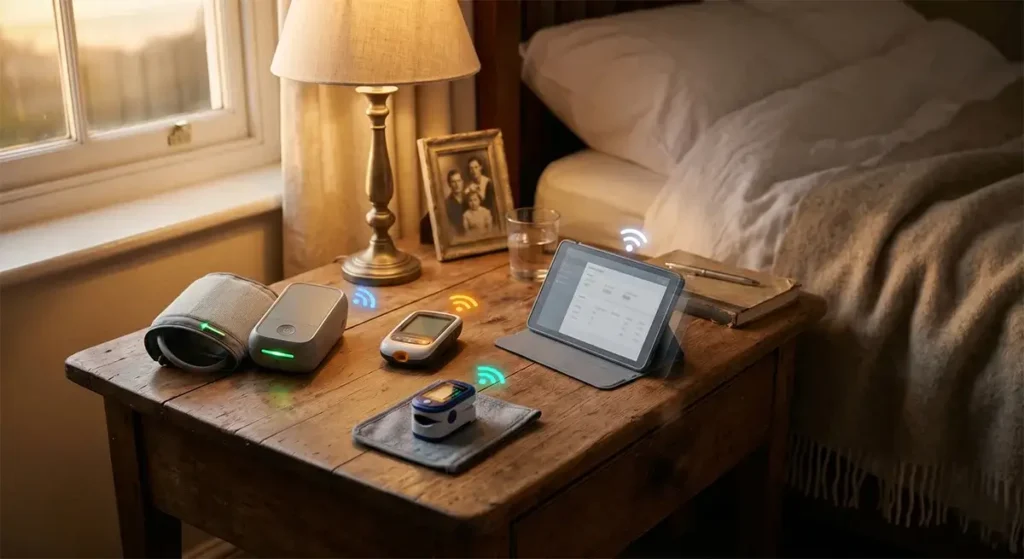
- Remote Patient Monitoring Devices
- Rural Healthcare Providers and Telehealth Infrastructure
- Programs to Help Rural Patients Get Connected
- Frequently Asked Questions
Telehealth in Rural America: The 2026 Landscape
The scale of telehealth adoption in rural America is staggering. According to the Health Resources and Services Administration (HRSA), telehealth visits in rural areas increased by over 1,000% between 2019 and 2023 — and that utilization has remained permanently elevated. Rural Medicare beneficiaries now account for a disproportionate share of telehealth service utilization compared to their urban counterparts, reflecting both the availability of coverage and the genuine access barriers that telehealth removes.
The scope of telehealth services now available to rural patients extends far beyond simple primary care video visits. Rural residents can access cardiologists, neurologists, psychiatrists, endocrinologists, oncology consultants, dermatologists, speech therapists, physical therapists, and dozens of other specialist types through telehealth platforms — specialties that may not have a single practitioner within 100 miles of many rural communities. For a rural patient managing a chronic condition like Type 2 diabetes, congestive heart failure, or depression who previously faced a 3-hour round trip for each specialist visit, monthly telehealth check-ins eliminate a practical barrier that was causing missed appointments, delayed care, and worse health outcomes.
But none of this works without internet. A rural telehealth visit that degrades into an agonizingly delayed, pixelated, dropped-call experience is worse than no telehealth at all — it discourages future attempts and undermines trust in the modality. The internet connection is not a peripheral concern in rural telehealth; it is the infrastructure on which the entire care delivery model depends.
Internet Requirements for Telehealth Applications
Different telehealth applications have different technical requirements. Understanding the specific demands of the applications your healthcare providers use helps identify whether your connection can support them adequately:
| Telehealth Application Type | Download Required | Upload Required | Latency Limit | Most Sensitive Factor |
|---|---|---|---|---|
| Standard video visit (SD, 480p) | 1.5 Mbps | 1.5 Mbps | Under 200 ms | Upload speed and latency |
| HD video visit (720p) | 3–5 Mbps | 3–5 Mbps | Under 150 ms | Upload speed and latency |
| Telestroke / neurology (HD+) | 5–10 Mbps | 5–10 Mbps | Under 100 ms | All three — highest standards |
| Remote cardiac monitoring (Holter, ECG) | 2–5 Mbps | 1–3 Mbps | Low — not real-time sensitive | Upload reliability |
| Remote blood pressure/glucose monitoring | 1 Mbps | 1 Mbps | Not sensitive | Connection consistency |
| Mental health counseling (video) | 3–5 Mbps | 3–5 Mbps | Under 150 ms | Privacy and connection stability |
| Physical therapy (video, coaching) | 3–5 Mbps | 3–5 Mbps | Under 200 ms | Upload for patient camera clarity |
| Medical imaging review (provider-side) | 25+ Mbps | 5+ Mbps | Low — file transfer | Download speed for image loading |
The universal requirement across all real-time telehealth video applications is upload speed — the connection from your home to the internet. Most broadband marketing focuses on download speed, but for a video call, your upload speed determines how clearly the healthcare provider sees and hears you. A 100 Mbps download / 1 Mbps upload connection (common with some fixed wireless setups) will produce a choppy, pixelated video that the provider cannot see clearly — rendering the telehealth visit clinically inadequate regardless of the fast download speed.
Which Internet Connections Support Telehealth?
Starlink — Fully Supports All Telehealth: Starlink’s 20–60 ms latency and 8–18 Mbps upload speed (Standard) or 15–35 Mbps upload (Priority) comfortably support all telehealth video applications including HD video specialist visits. For rural patients whose telehealth needs are their primary internet use case, Starlink is the recommended solution. The latency improvement over legacy satellite is the critical clinical factor — 600 ms latency makes telehealth video calls feel like a degraded international call; Starlink’s 25–45 ms latency makes the visit feel like a local call.
T-Mobile or Verizon Home Internet — Fully Supports Telehealth Where Available: Cellular home internet’s 30–80 ms latency and 5–25 Mbps upload enables all standard telehealth video applications. The lower cost ($25–$50/month vs $120/month for Starlink) makes it particularly valuable for rural seniors and low-income rural households where internet cost is a healthcare access barrier. Verify consistent performance during typical appointment hours — some rural towers experience daytime congestion that may affect video call quality.
Fixed Wireless WISP — Fully Supports Telehealth When Available: A local WISP delivering 25+ Mbps with 10–40 ms latency is an excellent telehealth-capable connection at typically lower cost than Starlink. The challenge is availability — the rural properties most in need of telehealth access are often those most distant from WISP tower coverage.
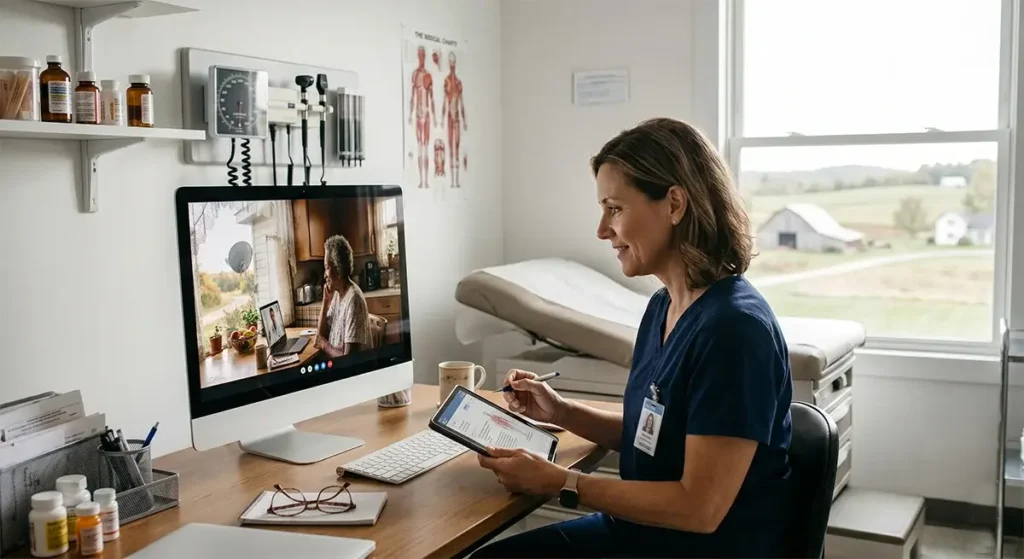
HughesNet and Viasat — DO NOT Adequately Support Real-Time Telehealth: The 600–800 ms latency of geostationary satellite services creates a fundamental barrier to effective telehealth video visits. The conversation delay makes the clinical interaction unnatural and difficult. Patients on these services frequently report their providers recommending they “try to find a better connection” — which is precisely the problem this guide addresses.
Why HughesNet and Viasat Specifically Fail for Telehealth
The failure of geostationary satellite for telehealth is not merely a matter of inadequate speed — it is a fundamental physics problem with direct clinical consequences. Consider what happens in a typical telehealth visit on a 600 ms connection:
The patient speaks. The audio travels to the geostationary satellite (35,786 km), down to a ground station, through the internet to the provider’s location (600 ms total). The provider hears the patient, starts to respond, and their reply travels back through the same 600 ms path. The total round-trip delay from the patient speaking to hearing the provider’s response is over 1.2 seconds.
This delay — 1.2 seconds of round-trip latency — destroys the natural rhythm of clinical conversation. Both parties begin talking simultaneously without realizing it. The provider cannot hear subtle verbal cues that indicate pain, distress, or confusion in the patient’s responses. The patient cannot follow the natural conversation rhythm of a clinical assessment. What should be a therapeutic interaction becomes a technical obstacle course.
For mental health telehealth in particular, this communication degradation is clinically significant. Therapeutic relationships built on subtle vocal and visual cues — the foundation of effective counseling — are severely compromised by satellite latency that prevents natural conversational exchange.
Major Telehealth Platforms and Their Technical Requirements
Teladoc Health: Minimum requirements of 600 Kbps upload/download for basic video visits. Recommended 1.5 Mbps+ for HD video. Latency not specified but below 200 ms strongly recommended for adequate session quality. All broadband options except geostationary satellite meet these requirements.
MDLive: Recommends 5 Mbps or faster for video visits. Explicitly notes that satellite internet connections with high latency may experience difficulties. Starlink, T-Mobile, Verizon, and fixed wireless all meet MDLive’s requirements. HughesNet and Viasat are specifically problematic due to latency.
Doxy.me (Common in rural primary care): The most widely used telehealth platform in rural primary care settings. Uses WebRTC technology optimized for lower-bandwidth connections — can operate adequately at 500 Kbps upload. However, HD quality requires 2–5 Mbps. Doxy.me includes a built-in connection test that patients can run before appointments to verify their connection will support the visit.
Epic MyChart Video Visits: Used by most major health systems for patient-facing telehealth. Requires 5–10 Mbps download and 2–5 Mbps upload for HD video. Works reliably on all low-latency rural internet options including Starlink.
VA Video Connect (for Veterans): The Department of Veterans Affairs’ telehealth platform serves a large rural veteran population. Minimum requirements of 1.5 Mbps upload/download. The VA has specifically designated rural broadband access as a veterans’ healthcare equity issue and has worked with USDA and FCC to prioritize rural broadband funding in areas with high concentrations of rural veterans.
Programs to Help Rural Patients Get Connected for Telehealth
Several programs specifically target connectivity as a rural healthcare access barrier:
FCC Lifeline Program ($9.25/month discount): Qualifying low-income rural households can receive a monthly discount on internet service applicable to satellite and fixed internet providers. Apply through your ISP or at fcc.gov/lifeline-consumers.
HRSA Telehealth Network Grants: HRSA funds rural healthcare providers (not individual patients) to build telehealth infrastructure including patient-side connectivity equipment in some programs. Ask your rural health clinic or critical access hospital whether they participate in telehealth network programs that include patient connectivity support.
State Medicaid Telehealth Coverage: All 50 states now cover some form of telehealth under Medicaid. Many states have specifically expanded Medicaid telehealth coverage for rural beneficiaries and have funded “telehealth hubs” at rural locations (libraries, health clinics, community centers) where patients without adequate home internet can access telehealth visits using provided connectivity.
USDA Community Facilities grants: Fund broadband-enabled telehealth infrastructure in rural health clinics and critical access hospitals, improving provider-side telehealth capabilities that make rural health outreach more effective.
Frequently Asked Questions
Can I do telehealth on HughesNet?
Technically yes, but the quality will be significantly degraded by HughesNet’s 600–800 ms latency. Video will be consistently delayed, conversations will feel awkward and overlapping, and the clinical value of the visit is substantially reduced. For any rural patient who regularly uses telehealth, upgrading to Starlink or a low-latency cellular home internet option is a genuine healthcare access investment, not just an internet convenience upgrade.
What internet speed do I need for a Medicare telehealth appointment?
Medicare doesn’t specify minimum internet speeds for telehealth coverage, but the platforms used by Medicare-accepting providers typically require 3–5 Mbps upload and download for HD video. The more important requirement is latency under 150 ms — which eliminates HughesNet and Viasat as adequate options regardless of their download speeds. Starlink, T-Mobile Home Internet, Verizon Home Internet, and local fixed wireless all meet both the speed and latency requirements for Medicare telehealth visits.
My rural health clinic offers telehealth. How do I connect from home?
Ask your clinic for the specific telehealth platform they use (Doxy.me, Epic MyChart, Teladoc, etc.) and run that platform’s connection test from your home internet. Most platforms include a connection quality checker accessible without an account. If your home connection fails the test, the clinic’s staff or care coordinators may be able to suggest local connectivity resources — many rural health clinics are aware of local internet options and some maintain relationships with local ISPs specifically to help patients connect.
Will my insurance cover telehealth appointments if I use Starlink?
Insurance telehealth coverage is determined by your plan and provider — not by which internet service you use. Medicare, Medicaid, and most commercial insurance plans that cover telehealth do not specify or restrict the internet connection type the patient uses. What matters is that the video connection is stable enough to support the visit — which Starlink, T-Mobile Home Internet, and other low-latency rural internet options all provide. If a telehealth visit is technically inadequate (poor video, frequent disconnections) due to internet quality, the provider may reschedule rather than bill the visit — another reason why adequate rural internet matters practically for telehealth access.
Can I do telehealth from a rural location while traveling in an RV?
Yes. Starlink Roam’s portability makes telehealth from an RV fully viable — deploy the dish at your campsite, connect your device, and conduct your telehealth appointment as if from home. Most telehealth platforms require only that you be in the same state as your provider for the visit to be covered — check your specific state’s telehealth laws and your provider’s policies regarding patient location. Starlink’s consistent 25–50 ms latency from rural RV locations supports high-quality telehealth video regardless of which rural state you’re visiting.




Leave a Reply