
Five years after the BEAD Program was authorized, three years after Starlink achieved nationwide coverage, and one year into the largest rural broadband infrastructure deployment in American history, what is the actual state of rural broadband in 2026? This annual report synthesizes data from the FCC National Broadband Map, state broadband office reports, industry deployment data, and community-level connectivity assessments to provide the most accurate picture available of rural internet access in America today. For rural Americans making connectivity decisions, policy makers evaluating program effectiveness, and advocates working to close the digital divide, this report provides the factual foundation for evidence-based action.
In This Guide
- Headline Numbers: Rural Broadband in 2026
- How Far We’ve Come Since 2020
- Starlink’s Impact on Rural Connectivity
- BEAD Program: Where Are We?
- Where the Gaps Remain Worst
- Technology Trends Shaping Rural Internet 2026
- Digital Equity: Adoption Gaps Beyond Access
- The Rural Cooperative Broadband Movement
- The Economic Impact of Rural Broadband
- Looking Ahead: 2027–2030
Headline Numbers: Rural Broadband in 2026
The rural broadband picture in 2026 is simultaneously better than it has ever been and still profoundly inadequate relative to what rural Americans need and deserve. Key metrics:
| Metric | 2020 | 2023 | 2026 (Current) |
|---|---|---|---|
| Rural Americans without 25/3 Mbps fixed broadband | ~21 million | ~14 million | ~8 million (est.) |
| Rural Americans without 100/20 Mbps broadband | ~60 million | ~42 million | ~28 million (est.) |
| Rural properties with Starlink service available | ~20% (limited rollout) | ~95% | ~99.9% |
| BEAD Program funds deployed to construction | N/A (program not yet enacted) | $0 (planning phase) | ~$8 billion (early construction) |
| LEO satellite internet subscribers (all providers) | <100,000 | ~2.5 million | ~5.5 million (est.) |
| Rural areas with at least one low-latency broadband option | ~45% | ~75% | ~92% |
The improvement in rural broadband access between 2020 and 2026 is dramatic by historical standards — driven primarily by Starlink’s deployment making low-latency satellite internet available as a universal rural option for the first time. However, the remaining 8 million rural Americans without any 25/3 Mbps fixed broadband, and the 28 million without 100/20 Mbps service, represent a connectivity gap that is still deeply consequential for the communities experiencing it.
How Far We’ve Come Since 2020
The 2020–2026 period represents the most significant six-year period of rural broadband improvement in the technology’s history. Several converging forces drove this improvement:
SpaceX Starlink’s commercial launch (2021–2022): The arrival of low-Earth orbit satellite internet created a universal rural broadband option for the first time — any rural property with a clear sky view could access broadband-quality internet regardless of its location, terrain, or existing infrastructure. This alone eliminated the “no option at all” scenario that millions of rural Americans previously faced.
Federal investment at unprecedented scale: The Infrastructure Investment and Jobs Act of 2021 appropriated $65 billion for broadband infrastructure — including the $42.45 billion BEAD Program, the largest single federal broadband investment in history. This investment, combined with Emergency Connectivity Fund, Capital Projects Fund, and ReConnect Program expenditures, has put more federal money into rural broadband infrastructure than all prior decades combined.
Electric cooperative broadband movement: America’s 900+ rural electric cooperatives have been deploying broadband to their rural members at an accelerating pace, leveraging existing infrastructure, right-of-way, and member relationships to reach communities that commercial ISPs have never served. The cooperative broadband movement is fundamentally changing the competitive landscape in rural America.
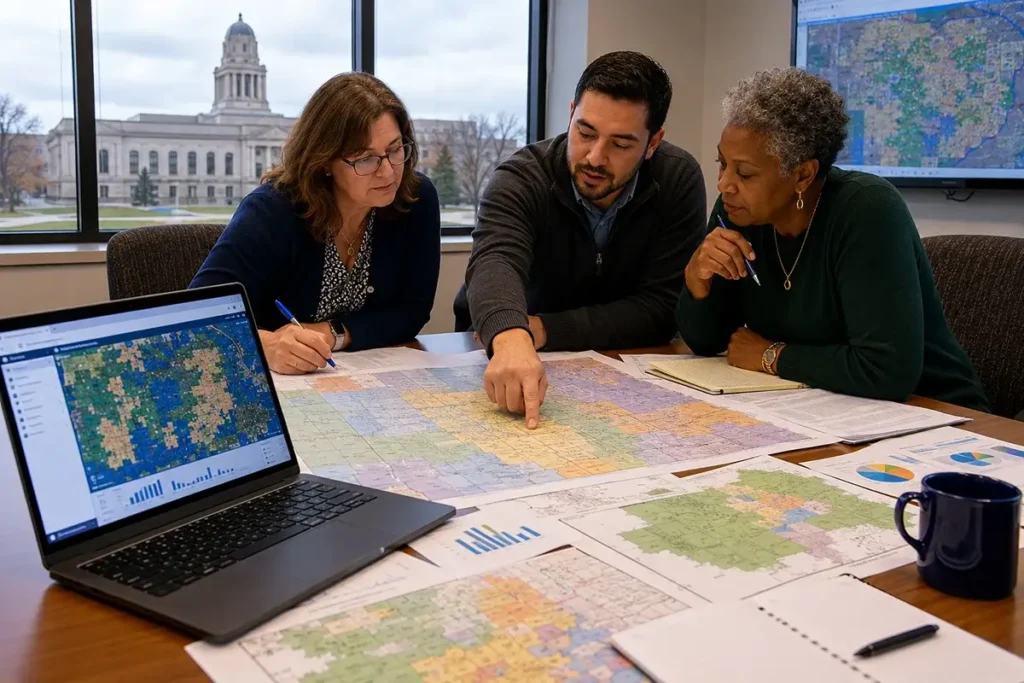
Starlink’s Impact on Rural Connectivity: A Quantitative Assessment
Starlink’s impact on rural connectivity is best understood through adoption data and before/after comparisons. Several key findings from research on rural Starlink adoption:
Rural counties that previously had no low-latency broadband option have seen the most dramatic quality-of-life improvements from Starlink adoption. According to research compiled by the Rural Health Information Hub, rural areas with Starlink adoption have documented increases in telehealth utilization, agricultural precision technology adoption, and remote work employment rates compared to similarly situated rural communities without adequate broadband.
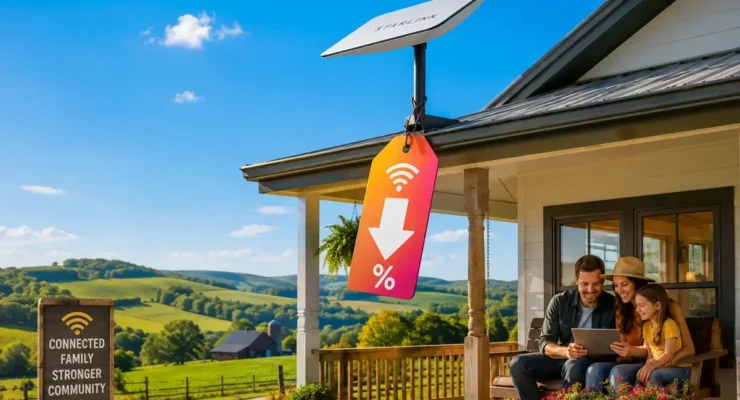
The price point remains the primary barrier to Starlink adoption in the rural communities that most need it. At $120/month, Starlink is the most expensive standard rural internet option — a meaningful barrier in rural counties where median household incomes are 15–25% below the national average. The Lifeline Program’s $9.25/month discount and the former Affordable Connectivity Program (which provided up to $30/month before its 2024 discontinuation) were insufficient to bridge this affordability gap for the lowest-income rural households.
BEAD Program: Progress Report 2026
The BEAD Program’s $42.45 billion represents the largest infrastructure investment commitment in rural broadband history. As of 2026, implementation is in the early construction phase after a planning period that many observers found too slow:
Timeline summary:
- 2021: Infrastructure bill enacted, BEAD Program authorized
- 2022: NTIA releases BEAD Program guidance and allocates funds to states
- 2023–2024: States complete planning, mapping challenges, and ISP selection processes
- 2025: First BEAD contracts signed, early construction begins in pilot states
- 2026: Active construction underway in approximately 30 states; first rural communities receiving BEAD-funded service
- 2027–2031: Projected main deployment period for most BEAD-funded projects nationwide
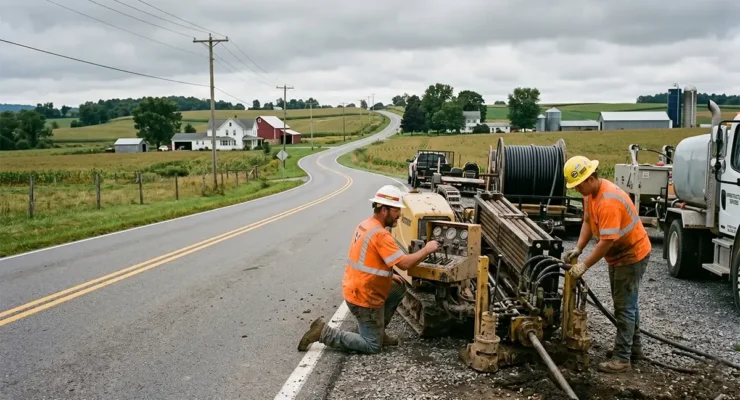
The BEAD Program’s slower-than-hoped implementation reflects the genuine complexity of deploying infrastructure in the most remote and difficult rural environments in the country. The communities most in need of BEAD investment — the rural Appalachian hollows, the western Great Plains ranch country, the tribal reservation lands — are precisely the communities where construction is most expensive, logistically challenging, and time-consuming.
Where the Gaps Remain Worst in 2026
Despite the overall progress, specific communities and regions continue to experience profound connectivity deficits that 2026’s investment has not yet reached:
Tribal reservation lands: The connectivity gap on Native American reservation lands remains the most severe in the country, combining geographic isolation, historical infrastructure underinvestment, and economic barriers to adoption. Reservations on the Great Plains (Pine Ridge, Standing Rock, Cheyenne River), in the Southwest (Navajo Nation, Pueblo communities), and in Alaska represent the deepest remaining connectivity deficits.
Appalachian hollows: The narrow coal-mining hollows of eastern Kentucky, southwest Virginia, and West Virginia continue to have connectivity situations where both the terrain (blocking wireless signal and making fiber construction expensive) and the economics (declining population and severe poverty limiting commercial viability) make broadband deployment extraordinarily challenging even with substantial subsidy.
Mississippi Delta: The persistent poverty and limited infrastructure investment history of the Mississippi Delta creates a connectivity gap that is simultaneously one of the most severe in the country and one of the hardest to close through market mechanisms even with government subsidy.
Technology Trends Shaping Rural Internet 2026
Several technology developments are reshaping rural broadband options and economics in 2026:
Amazon Kuiper’s commercial launch: Project Kuiper’s entry into the LEO satellite market provides the first genuine competition for Starlink in the satellite broadband space. Early Kuiper pricing ($49.99–$99.99/month versus Starlink’s $120/month) creates meaningful competitive pressure that may drive Starlink pricing adjustments in competitive markets. As Kuiper’s constellation matures and coverage expands, rural Americans will benefit from this competition regardless of which service they use.
5G fixed wireless expansion: T-Mobile’s aggressive rural 5G expansion using mid-band spectrum is bringing 100+ Mbps fixed wireless to more rural addresses annually. Verizon’s C-Band deployment is reaching rural corridors previously served only by LTE. The expansion of 5G fixed wireless as a viable rural broadband alternative to satellite is meaningfully improving options and reducing prices for rural Americans within tower coverage.
CBRS and private wireless for rural: Citizens Broadband Radio Service (CBRS) deployment by rural WISPs and electric cooperatives is creating a new tier of mid-band wireless that delivers 100–500 Mbps performance over 5–10 mile coverage ranges — filling the gap between long-range/lower-speed low-band cellular and the short-range/higher-speed mmWave technologies.
The Economic Impact of Rural Broadband
The economic case for rural broadband investment has been documented across multiple dimensions. Research from agricultural extension services, rural economic development organizations, and academic institutions consistently finds:
Rural properties with broadband access sell for higher prices than comparable properties without broadband — documented premiums of 3–8% in markets where broadband access is a documented differentiating factor. Rural businesses with broadband report revenue growth and employment stability advantages over businesses without adequate connectivity. Remote work adoption enabled by rural broadband has measurably slowed population outmigration from rural counties in states with active broadband investment.
The agricultural productivity benefits alone justify substantial broadband investment. Research documented by the USDA Economic Research Service shows that farms with broadband access adopt precision agriculture technologies at substantially higher rates and report measurable input cost reduction advantages that translate directly to farm profitability — suggesting that rural broadband investment pays dividends in agricultural competitiveness that extend well beyond the direct value of internet access.
Looking Ahead: 2027–2030
The 2027–2030 period will be the most consequential four years in rural broadband history — the period when BEAD Program construction shifts from early deployment to full-scale implementation, when Kuiper’s constellation matures enough to provide genuine Starlink competition, and when the cumulative effect of cooperative fiber deployment begins to cover a majority of previously unserved rural communities.
By 2030, if current investment trajectories continue, the United States will have come closer to universal rural broadband than at any prior point in the technology’s history. The remaining gap — the most remote, most economically challenged, and most geographically isolated communities — will still require sustained investment beyond what the BEAD Program alone provides. But for the first time, the combination of satellite, cellular, cooperative fiber, and BEAD-funded wired infrastructure creates a realistic pathway to near-universal rural connectivity within this decade.
For rural Americans making connectivity decisions today: don’t wait for 2030’s infrastructure to get broadband-quality internet. Starlink is available now at virtually any rural US address, delivers the performance needed for all modern internet applications, and will remain a valuable service regardless of what fiber or 5G infrastructure eventually reaches your community. The best time to get rural broadband is now.
Frequently Asked Questions
How many Americans still lack rural broadband in 2026?
Approximately 8 million rural Americans lack access to fixed broadband at the FCC’s minimum 25/3 Mbps standard, and approximately 28 million lack access to the more meaningful 100/20 Mbps standard that most modern internet applications require for comfortable multi-device household use. These numbers represent significant improvement from 2020’s 21 million without 25/3 Mbps, driven primarily by Starlink’s deployment making satellite broadband universally available as an option — though cost barriers prevent many low-income rural households from subscribing even when service is technically available.
Is the BEAD Program working?
The BEAD Program is in its early construction phase in 2026, making it too early for a comprehensive effectiveness assessment. Early deployments in pilot states have reached rural communities that previously had no wired broadband option. The program’s implementation has been slower than advocates hoped — the complexity of deploying in the most remote rural environments, combined with regulatory and planning requirements, has pushed substantial construction into the 2027–2030 timeframe. The program’s design — with affordability requirements, digital equity provisions, and preference for fiber as the technology of choice — positions it to deliver durable infrastructure rather than the temporary fixes that have characterized some prior rural broadband programs.
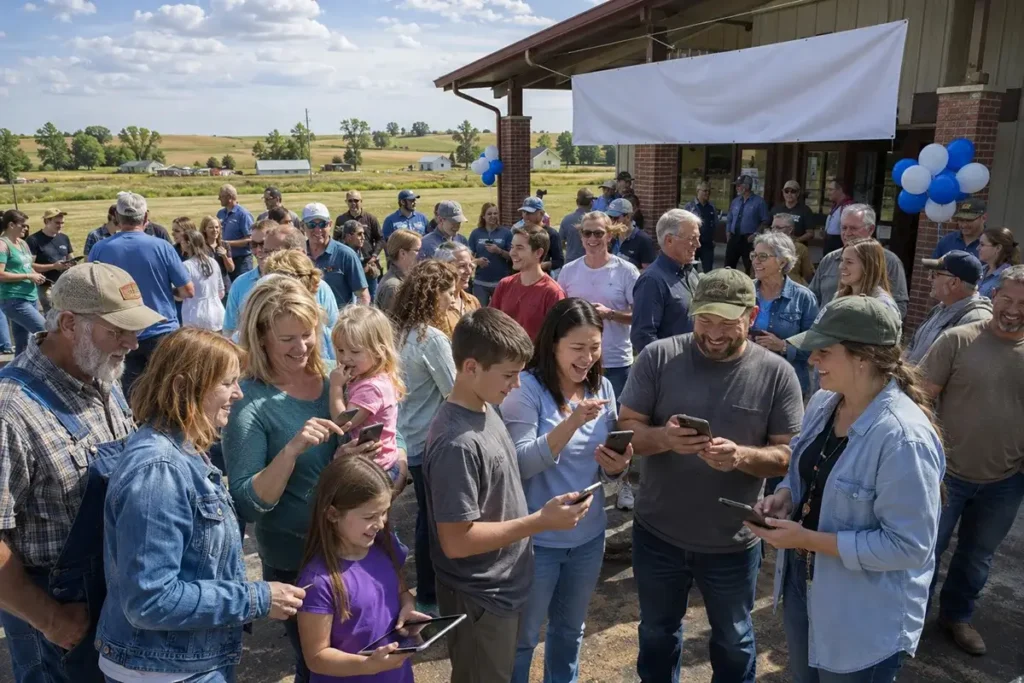
Digital Equity: Adoption Gaps Beyond Infrastructure Access
The rural broadband conversation frequently focuses exclusively on infrastructure — where fiber is being built, which coverage cells have Starlink, which counties have BEAD-funded projects. But the FCC’s broadband map and infrastructure investment tell only part of the story. Even where broadband is technically available, adoption barriers prevent many rural households from actually connecting — and unconnected households experience all the same economic, educational, and healthcare disadvantages as households in areas without any broadband option.
The three primary adoption barriers in rural communities are cost (Starlink’s $120/month is unaffordable for households at or near the poverty line), digital literacy (older adults unfamiliar with internet use may not adopt even when service is available), and device access (a broadband connection is useless without a device to connect). BEAD Program digital equity requirements address the cost barrier through affordability mandates, but the literacy and device access gaps require community programs — digital literacy training, device lending and donation programs, and library-based support — that go beyond pure infrastructure investment.
According to research by Pew Research Center on rural digital inclusion, adults 65 and older in rural areas have the lowest broadband adoption rates of any demographic-geographic combination in the country — a finding that is particularly significant given that rural seniors disproportionately depend on internet access for telehealth, Medicare management, and social connection that prevents the isolation associated with adverse health outcomes. Closing the digital equity gap in rural America requires not just infrastructure but sustained investment in the human side of digital inclusion.


Leave a Reply